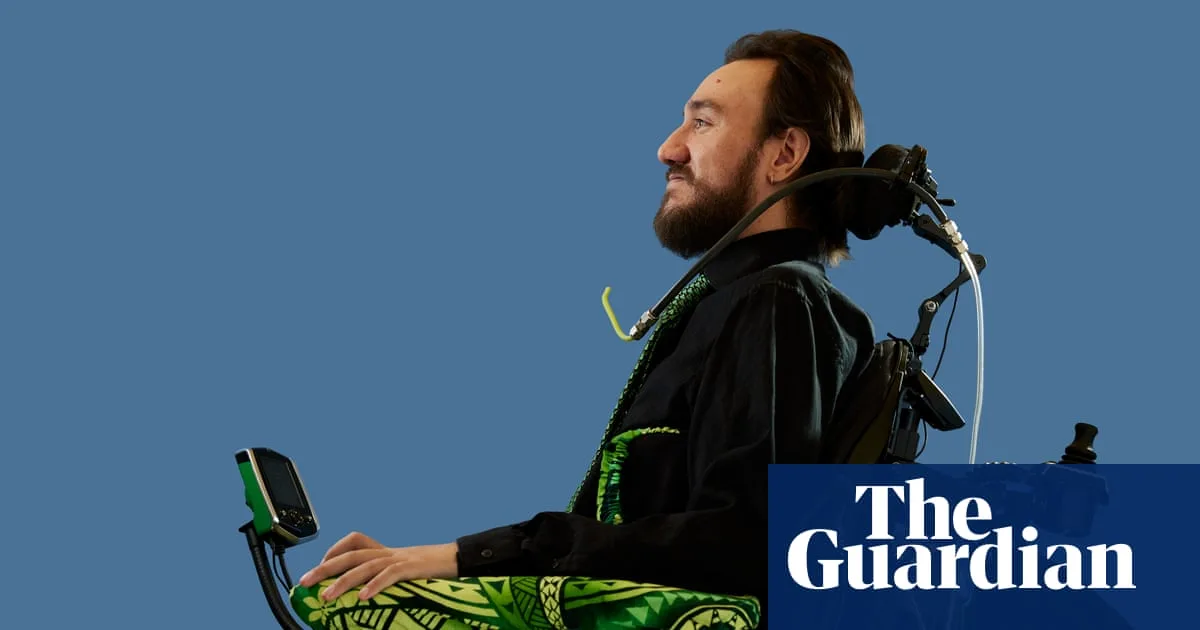
One of the pioneering British patients to receive Elon Musk's groundbreaking Neuralink brain-computer implant has provided a compelling account of living with this futuristic technology. Sebastian Gomez-Pena, a former medical student who became paralysed from the neck down following a catastrophic accident two years ago, is participating in the United Kingdom's inaugural clinical trial of the Neuralink device. This innovative system enables users to operate computers using only their thoughts.
A Life Transformed by Technology
'It is a massive change in your life where you can suddenly no longer move any of your limbs,' Gomez-Pena revealed in an exclusive interview with Sky News. 'This kind of technology kind of gives you a new piece of hope.' The billionaire technology entrepreneur Elon Musk has proposed that the implant could eventually become available to the general population, expressing his ultimate vision of creating a mass-market brain-computer interface. This would directly connect human minds with advanced machines to achieve what he describes as 'symbiosis with artificial intelligence.'
From Medical Student to Trial Participant
Gomez-Pena, an accomplished cellist and rugby enthusiast, was in his third year of medical school when tragedy struck. At just twenty-one years old, he dived into shallow water while on holiday, striking his head and sustaining permanent spinal cord damage. He now stands as one of seven participants in the UK trial, which is rigorously assessing the safety and reliability of the Neuralink device in patients with severe paralysis.
Neuralink has articulated its mission as aiming to 'restore autonomy to those with unmet medical needs and unlock new dimensions of human potential.' The electrodes within the Neuralink chip are engineered to read neural signals, which are subsequently translated into motor controls. This capability could govern external technologies such as computers or smartphones, or even manage bodily functions like muscle movement.
The Surgical Procedure and Technological Marvel
The implant was meticulously inserted during a five-hour operation conducted at University College London Hospital. British surgeons and engineers collaborated closely with Neuralink personnel throughout the procedure. The surgery itself was executed by the company's sophisticated R1 surgical robot, specifically designed to implant microscopic electrodes into delicate brain tissue with extraordinary precision.
The device interfaces with 1,024 electrodes implanted approximately four millimetres into the surface of the brain, targeting the region responsible for hand movement. Ultra-thin threads, measuring ten times finer than a human hair, convey nerve signals to a compact processor embedded within a circular opening in the patient's skull. From this point, data is transmitted wirelessly to a computer, where artificial intelligence software learns to interpret his brain activity patterns.
Remarkable Control and Daily Impact
Once the implant is in place, simply contemplating moving his hand or tapping a finger can manoeuvre a cursor or register a mouse click on a screen. 'Everyone in my position tries to move some bit of their body to see if there is any form of recovery, but now when I think about moving my hand, it's cool to see that… something actually happens,' Gomez-Pena explained. 'You just think it, and it does it.'
While controlling a mouse via a brain implant is not entirely novel—early experiments extend back several decades—the progress demonstrated remains profoundly impressive to researchers. Scientists have previously showcased monkeys and humans controlling robotic limbs, playing video games, and even conducting online shopping using neural interfaces. Nevertheless, Gomez-Pena's medical team reports that his progress has been exceptional.
'It's mindblowing - you can see the level of control that he has,' remarked Harith Akram, a neurosurgeon and lead investigator of the UCLH trial.
Global Trials and Future Aspirations
Neuralink has tested this technology in twenty-one individuals across the United States, Canada, the United Kingdom, and the United Arab Emirates. All participants suffer from severe paralysis resulting from spinal injuries, strokes, or neurodegenerative conditions such as ALS. The inaugural recipient was Noland Arbaugh from Arizona, who received his implant precisely two years ago this month.
Arbaugh has since been able to resume his education, a full decade after being compelled to withdraw due to a paralysing spinal cord injury. 'I can't even begin to describe how happy I am to be back in school,' he expressed. 'Not just passing my classes, but doing it in style. This is literally the best semester of college (grades-wise) I've ever had. [Telepathy] has given me back parts of my life that I thought were lost forever, and I'm finally starting to feel like myself again.'
Akram indicated that the early results are highly promising. 'This technology is going to be a game-changer for patients with severe neurological disability,' he asserted. 'Those patients have very little really to improve their independence, especially now that we live in a world where we are so dependent on technology.'
Expanding Horizons and Ambitious Visions
Neuralink also harbours plans to explore reversing blindness by transmitting data from cameras, via the chip, directly into the brain's vision-processing centres. Accessing other brain regions necessitates implanting electrodes deeper into the organ safely and reliably—a challenge the company acknowledges it has yet to fully overcome.
Yet Elon Musk, Neuralink's visionary and occasionally controversial founder, entertains even grander aspirations for the technology. During an event last year, he proposed the concept of users connecting their device to an Optimus robot manufactured by his other enterprise, Tesla. 'You should actually be able to have full body control and sensors from an Optimus robot. So you could basically inhabit an Optimus robot. It's not just the hand. It's the whole thing,' Mr Musk elaborated. 'It'd be kind of cool. The future is going to be weird. But kind of cool.'