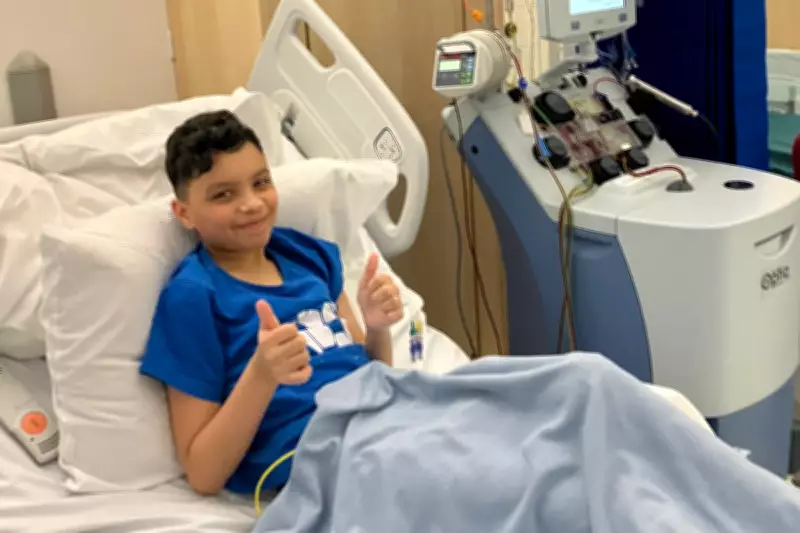
A 13-year-old boy has made medical history in the United Kingdom by becoming one of the first children to receive a groundbreaking gene-editing treatment for a debilitating blood disorder. Adam Rehman, who was born with beta-thalassaemia, has returned to hospital to personally thank the medical staff after undergoing the revolutionary one-time therapy known as Casgevy, also referred to as exa-cel.
A Life Transformed by Advanced Medical Science
The treatment, which carries a staggering price tag of £1.65 million, utilises Crispr gene-editing technology to modify Adam's own stem cells. This innovative approach enables his body to produce healthy red blood cells, effectively curing the condition that had dominated his young life. Prior to receiving this therapy, Adam had been dependent on monthly blood transfusions since he was just eight months old, a routine that severely limited his daily activities and overall quality of life.
The Emotional Impact of Medical Freedom
According to his dedicated nurse, the Casgevy treatment has given Adam his "freedom back," allowing him to participate in activities and experiences that were previously impossible. This emotional transformation highlights not just the clinical success of the procedure, but its profound personal impact on patients and their families. The ability to engage in normal childhood pursuits represents a monumental shift for those living with chronic health conditions.

Understanding Thalassaemia and Treatment Breakthroughs
Beta-thalassaemia is a serious inherited blood disorder that affects the body's ability to produce haemoglobin, leading to severe anaemia and requiring regular transfusions for survival. The development of Casgevy represents a significant milestone in genetic medicine, offering hope to thousands of patients worldwide who suffer from similar conditions. This treatment approach marks a departure from traditional management strategies toward potentially curative interventions.
The NHS's role in providing this cutting-edge treatment underscores the health service's commitment to adopting innovative therapies for complex conditions. As gene-editing technologies continue to advance, medical professionals anticipate broader applications for genetic disorders that have historically been difficult to treat effectively. Adam's story serves as a powerful testament to the rapid evolution of medical science and its capacity to transform lives through targeted genetic interventions.