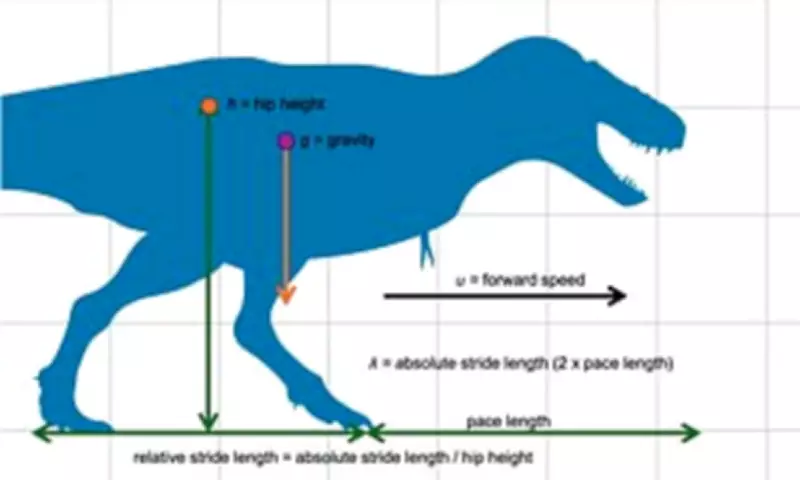
He may have been the King of the Dinosaurs, but Tyrannosaurus rex likely ran on his tip-toes, according to a groundbreaking new study. This discovery challenges long-held perceptions about how the prehistoric predator moved across the ancient landscape.
Contradicting Jurassic Park Imagery
Since the release of Jurassic Park, the iconic T.Rex has been associated with terrifying, earth-shaking rumbles created by its massive feet as it roamed. The cinematic portrayal suggested a heavy, heel-first stomp that would have sent vibrations through the ground. However, new analysis indicates that instead of this dramatic stomping motion, the dinosaur may have taken shorter, toe-first steps that fundamentally contradict everything experts previously believed about how the extinct species moved.
Scientific Methodology and Findings
A team of scientists gathered comprehensive data on T.Rex anatomy, fossilized tracks, and modern bird locomotion as part of their extensive study. They combined this information to create a detailed model showing precisely how the dinosaur's feet may have struck the ground during movement.

'Detailed reconstructions of track formation show a "toe-first" pattern reinforcing this behaviour being widespread among T.Rex,' the study explicitly states. 'This kind of locomotion would represent a significant shift in our understanding of how T.Rex moved.'
The research, led by scientists at the College of the Atlantic in Maine, USA, also revealed that with this bird-like gait, T.Rex may have moved approximately 20 percent faster than previously estimated. Their model indicates a top speed for the massive predator would have fallen within the range of five to 11 metres per second – equivalent to 24.6 miles per hour (39.6kmph).
Comparative Speed Analysis
For context, Olympic sprinter Usain Bolt has previously reached a top speed of 27.78mph (44.72kmph) – the fastest speed ever recorded by a human. This places T.Rex's potential velocity remarkably close to human maximum capabilities, despite its enormous size and weight.
The study further suggests the giant reptile likely took proportionally short stride lengths with higher stride frequencies, similar to modern birds. This efficient movement pattern would have allowed for both speed and agility in hunting scenarios.
Historical Significance of the Research
'The locomotion of the dinosaur Tyrannosaurus rex, the largest known terrestrial predator, has been of interest for over a century,' the scientists noted in their paper. 'This work examines the importance and role of the foot in the locomotion of T.Rex.'
Based on meticulous studies of trackways, T.Rex anatomy, and the behaviour of contemporary birds, the researchers concluded: 'Our results indicate that the distal [front] portions of the toes of T.Rex would make first contact with the ground.'
Writing in the prestigious journal Royal Society Open Science, they added: 'Our study represents, to our knowledge, the first quantitative analysis of the effects of foot-strike patterns in the gait of Tyrannosaurus.'
Broader Paleontological Context
A separate study published in 2024 suggests that T.Rex may have been 70 percent heavier than previously thought – potentially weighing up to 15 tonnes. Dr. Jordan Mallon, one of the study authors, commented: 'Our study suggests that, for big fossil animals like T.Rex, we really have no idea from the fossil record about the absolute sizes they might have reached. It's fun to think about a 15 tonne T.Rex, but the implications are also interesting from a biomechanical or ecological perspective.'
Meanwhile, additional research indicates that T.Rex may have boasted iron-coated teeth to help them rip apart prey efficiently. Scientists have discovered that the serrated edges of Komodo dragons' teeth are tipped with iron, which may provide crucial clues about how dinosaurs killed and consumed their meals.
The Cretaceous-Paleogene Extinction Event
Around 66 million years ago, non-avian dinosaurs were completely wiped out, with more than half the world's species obliterated in a mass extinction that paved the way for mammalian dominance and eventually human appearance.

The Chicxulub asteroid is frequently cited as the primary cause of this catastrophic event. When the massive space rock slammed into shallow seas in what is now the Gulf of Mexico, it released an enormous dust and soot cloud that triggered global climate change, eliminating 75 percent of all animal and plant species.
Researchers believe the specific soot necessary for such worldwide devastation could only have originated from a direct impact on hydrocarbon-rich rocks in Mexico's shallow waters. Within just ten hours of impact, a colossal tsunami wave ripped through the Gulf coast, causing earthquakes and landslides as far away as Argentina.
Investigators found small particles of rock and debris called spherules that were ejected into the atmosphere during the asteroid collision, covering the planet with a thick layer of soot. The loss of sunlight caused a complete collapse of aquatic systems since the phytoplankton base of nearly all aquatic food chains would have been eliminated.
Tragically, more than 180 million years of evolutionary development that brought the world to the Cretaceous period was destroyed in less than the lifetime of a single Tyrannosaurus rex – approximately 20 to 30 years.