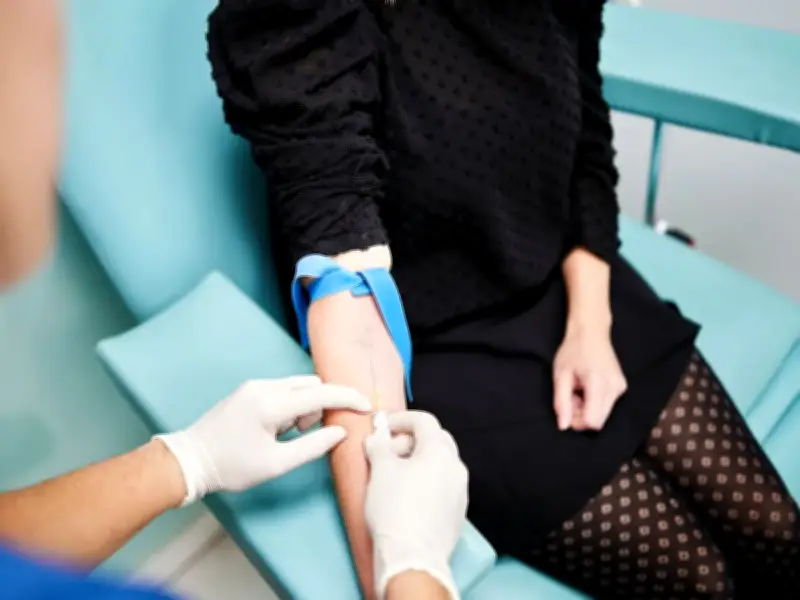
The NHS is launching a trial of a new blood test that can detect multiple cancers, with the aim of helping GPs identify patients who need urgent support sooner.
The government-backed trial, called STRIDE-RCT, will recruit 20,000 participants from 200 GP surgeries. Patients aged over 45 with symptoms such as bloating, stomach cramps, heartburn, diarrhoea and constipation will be offered the test, which looks for DNA shed by tumours as well as tell-tale proteins in the blood.
How the trial works
The trial will evaluate tests from three companies that look for signs of several cancers in a single sample and suggest where in the body they come from. Most of the tests, developed by the University of Birmingham, will ask patients to have one or two tubes of blood taken at their GP practice, alongside routine blood tests.
The cancers covered include bowel, small bowel, stomach, oesophageal, pancreatic, liver, bile duct and gallbladder, ovarian, endometrial, kidney, bladder and prostate cancer. The tests will use artificial intelligence to analyse samples, and the trial will assess how well they work alongside GPs' judgement before an assessment is made on rolling them out nationwide.
Why early detection matters
Abdominal cancers are often found too late. Around 70,000 people are diagnosed with pancreatic, stomach, liver, ovarian or bowel cancer in England each year, and there are almost 35,000 deaths from these cancers. Only around nine in ten people diagnosed with bowel cancer at stage 1 survive at least five years, compared with around one in ten at stage 4.
Health Secretary Yvette Cooper said: "The earlier cancers are diagnosed, the more chance they can be successfully treated, and lives can be saved. This world-first trial will establish whether simple blood tests can help GPs identify much sooner the patients who need urgent support."
Next steps
GPs will also record how strongly they suspect cancer to help researchers assess how well the tests work alongside clinical judgement. Professor Peter Johnson, NHS England's director for cancer, said: "Detecting abdomen cancer early is notoriously difficult because the symptoms can easily be mistaken for other less serious conditions but the NHS is determined to find a solution."
Jonathan Reynolds, Secretary of State for Business, Innovation, Science and Trade, said: "Cancer affects all of us at some point in our lives, and millions of people up and down the country will know how it feels to face that awful uncertainty while they wait for a diagnosis. Finding cases early is key, giving patients a clear path to treatment and helping save lives. The UK is a world leader in medical science research, and this trial shows how important that leadership is in bringing forward breakthroughs that can make a real difference to people."