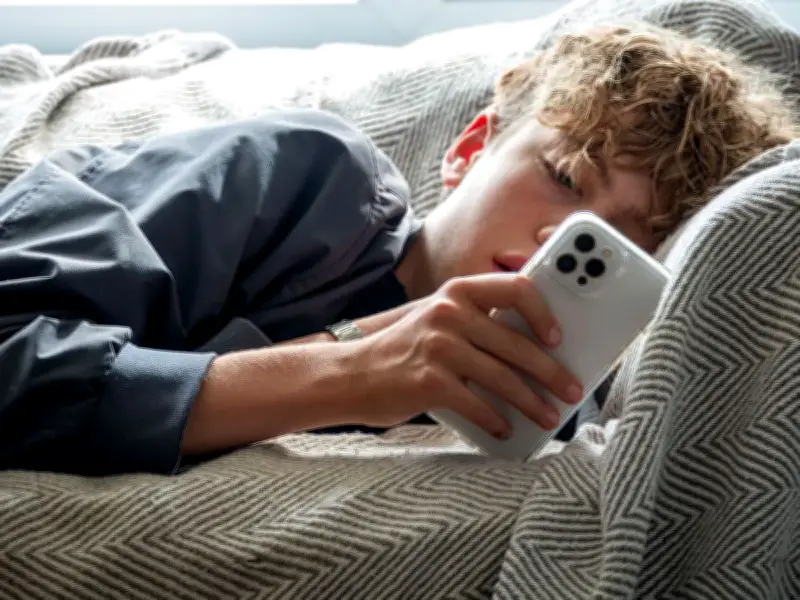
A new survey has found that around one in 10 teenagers believe being without phones, tablets and other electronic devices would leave them feeling calmer or even relieved.
The YouGov polling, carried out for The Children's Society, found 13% of 13 to 18-year-olds said they would feel calm without their devices, while 10% said they would feel relaxed or relieved. However, the majority admitted life without screens would be difficult, with almost two-thirds (63%) saying they would feel bored. Around a fifth said they would feel anxious, lonely or stressed.
Teenagers often overwhelmed by devices
The survey also found that one in five teenagers often feel overwhelmed by electronic devices such as phones, computers, tablets and smart watches. Girls were slightly more likely to report feeling overwhelmed, with 23% saying they often felt this way compared with 18% of boys.
Adults appeared to believe teenagers would struggle even more without their screens. While 60% thought young people would become bored without their devices, 59% believed they would feel anxious and 57% thought they would be stressed. But just 5% of adults believed teenagers would feel relieved, while 4% thought they would feel calm and 3% expected them to feel relaxed.
Loneliness and support concerns
The survey highlighted a complicated picture around loneliness and support. More than eight in 10 teenagers (81%) said they felt supported by family and friends, yet half reported feeling lonely or isolated. Four in 10 said they felt both lonely and supported.
Older teenagers were particularly likely to experience loneliness, with 61% of 16 to 18-year-olds reporting feeling lonely or isolated compared with 42% of those aged under 16.
Mark Russell, chief executive of The Children's Society, said: "It is far too hard to be a teenager in Britain today and these findings really challenge some of our assumptions about teenage life.
"Young people are telling us they can have people around them who care and still feel lonely or isolated. Too many teens are dealing with pressure and worries on their own, without somewhere they feel they belong or someone they feel able to talk to."
Call for more drop-in services
Many young people also felt they had too few affordable places to spend their free time. Almost seven in 10 teenagers (69%) said there were not enough free or affordable places for them to go, while 61% of adults believed there were not enough places where teenagers could spend time and feel safe.
Gabrielle Ernest, area practice manager for The Children's Society, said: "Young people tell us what's often missing is somewhere they can go that does not cost anything or need an appointment, where someone knows their name. That's what a drop-in service gives them."
The findings have prompted the charity to call for more drop-in services where teenagers can spend time together and access trained professionals without needing an appointment. Mr Russell added: "Through Save Teenhood, we will campaign alongside young people for change and we will push for more drop-in services where teenagers can find support. Young people have told us what is missing, we believe Britain's teens deserve a new deal - it's time to Save Teenhood."