UK dog and cat owners are being urged to watch out for hidden Halloween dangers, including xylitol in sugar-free sweets, which can be toxic to dogs even in small amounts. David Martin, group director of animal welfare at inspiring vet care, is warning families about lesser-known risks as the spooky season approaches.
Xylitol and sweet dangers
While most owners know to keep chocolate and sweets away from their animals, Martin highlighted xylitol as a less familiar threat. He said: “Many know that Halloween sweets and chocolate can be extremely dangerous for pets, but one lesser-known danger is xylitol, an artificial sweetener found in some sugar-free sweets. In dogs, even small amounts can cause a rapid drop in blood sugar and potentially liver damage.”
He advised keeping sweets away from pets and reminding guests and children to do the same, adding that owners should contact their vet immediately if they suspect their pet has eaten something harmful.
Stress from visitors and decorations
Constant doorbell ringing, knocking and unfamiliar visitors can cause what Martin called “trigger-stacking” in pets, when multiple stressful experiences build up and leave an animal anxious and frightened. He noted that a normally friendly dog may become reactive, while a frightened pet may try to bolt through an open door.
Owners could turn off their doorbell or leave sweets outside for trick-or-treaters to reduce interruptions. Providing a quiet room with familiar bedding, toys and fresh water, and playing TV or radio, may help distract pets from outside noises.
Costume and fire risks
Halloween decorations also carry risks. Glow sticks can cause excessive drooling and mouth irritation if bitten, and their plastic casing could be a choking hazard. Fake cobwebs, ribbons and string can be dangerous if swallowed, and electrical cables should be kept away from pets. Candles inside pumpkins should be placed out of reach, as Martin said there is a risk of painful burns and potentially a fire if knocked over.
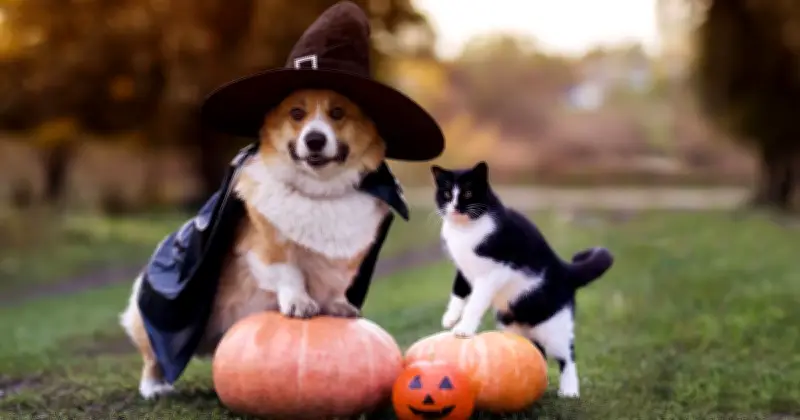
Martin advised against dressing pets in costumes, saying they can overheat, restrict breathing or movement, and make it harder for animals to communicate through body language such as tail wagging and ear movements. He said: “Therefore, we do not recommend dressing your pet up and instead let them enjoy Halloween without a costume.”
Alcoholic drinks should also be kept out of reach because alcohol is toxic to pets if swallowed. Owners should ensure microchip details and ID tags are up to date in case pets escape while guests are arriving or leaving.
Martin added that pets do not necessarily understand Halloween, and what people find fun can be frightening or dangerous for animals. He advised giving anxious pets space rather than forcing them to join in, and contacting a vet immediately if a pet has eaten something toxic or swallowed a dangerous object.