Newborn Babies Demonstrate Ability to Anticipate Musical Rhythm
Groundbreaking research has uncovered that newborn babies possess the remarkable ability to anticipate rhythm in pieces of music, providing profound insights into a fundamental human characteristic. The study, published in the esteemed journal Plos Biology, indicates that this capacity for rhythm detection and prediction is present from the earliest stages of life, potentially forming part of our innate biological toolkit.
Early Development of Musical Response
Dr Roberta Bianco, the first author of the research based at the Italian Institute of Technology in Rome, explained that babies in the womb begin responding to music by approximately eight or nine months. This response is observable through measurable changes in their heart rate and body movements. "Previous research has also demonstrated that aspects of musical memory can persist from the womb into the birth period," Dr Bianco added, highlighting the continuity of auditory development.
However, the depth to which different musical elements were processed by such immature brains remained unclear until this investigation. The new findings specifically suggest that newborns can detect and predict patterns related to rhythm, but not melody, indicating a fundamental distinction in how these musical components are neurologically processed.

Methodology and Key Findings
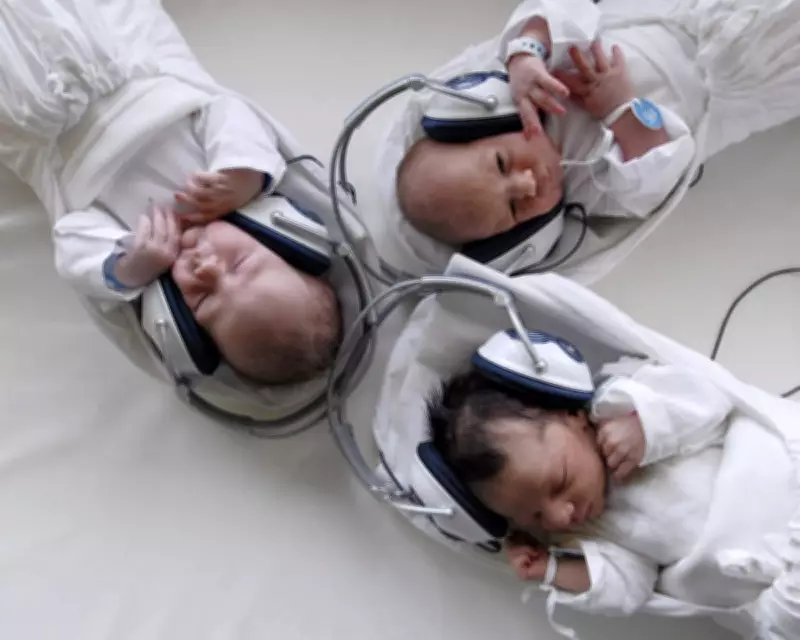
The research team employed electroencephalography (EEG) to collect brain activity data from sleeping newborns who were fitted with specialised earphones. The infants were exposed to original compositions by Bach, as well as modified versions where pitches and note timings were systematically shuffled, presented in random order.
Using sophisticated computer models, the researchers estimated how surprising each note in a piece would be based on the preceding rhythmic or melodic structure of the music. They then meticulously analysed the EEG signals from 49 newborns to determine whether these surprises were reflected in their brain activity patterns.
The results were striking: surprises in rhythm within the original musical pieces were indeed reflected in the newborns' brain activity, strongly suggesting that babies can track and predict rhythmic patterns in real music. Conversely, surprises in melody showed no corresponding reflection in brain activity. Furthermore, newborns' brain activity did not reflect surprises in either rhythm or melody when listening to the shuffled music versions.
Dr Bianco elaborated on this crucial distinction: "Since the order of pitches and time intervals were randomised within a piece, the brain cannot extract regularities to build expectations upon." This finding underscores the importance of structured patterns for neurological processing even in the earliest stages of development.
Evolutionary and Biological Perspectives
Dr Bianco noted that previous studies have indicated macaque monkeys also demonstrate greater sensitivity to rhythmic patterns than melodic ones, suggesting deep evolutionary roots. "Rhythm appears to be built upon very ancient auditory abilities that we share with other primates," she explained, "while melody seems to depend on human brain specialisations that are shaped by learning after birth."
This distinction helps explain why melodies vary significantly across different cultures, whereas rhythm tends to follow more universal patterns. "In essence, rhythm may constitute part of our biological toolkit, while melody represents something we grow into through experience and cultural exposure," Dr Bianco concluded.
The research suggests that the human brain is biologically predisposed to make predictions when listening to music, particularly concerning rhythm. "Importantly, these predictions extend beyond simply anticipating regular intervals: they involve detecting patterns in the music and learning how those patterns unfold over time," Dr Bianco emphasised.

Prenatal Influences and Future Research Directions
Dr Bianco proposed that such abilities in newborns likely have their origins in very basic biological and sensory experiences during gestation. "Before birth, the foetal environment is dominated by regular rhythms, such as the mother's heartbeat and the repeated motion associated with her walking," she noted, suggesting that these consistent rhythms may provide the developing brain with an early sense of timing and predictability.
While babies can hear music during the final trimester of pregnancy, Dr Bianco observed that melodies become distorted in the womb, whereas rhythmic structure remains relatively intact. This preservation of rhythmic information may contribute to the early development of rhythm perception capabilities.
Dr Giovanni Di Liberto of Trinity College Dublin, who was not involved in the study, praised the research while noting that it did not fully account for whether mothers played music to their babies before birth. However, he acknowledged that the study opens promising avenues for investigating this prenatal influence further.
Broader Implications for Language Development
Professor Usha Goswami of the University of Cambridge commented that the study's conclusions align with her own work with infants, which suggests that language acquisition begins with speech rhythm perception. "Individual differences in children's speech processing appear to depend on speech rhythm perception rather than pitch structure perception," she stated, "and this paper provides an evolutionary perspective on this fundamental relationship."
The research represents a significant advancement in understanding the neurological foundations of musical perception and its connections to broader cognitive development, particularly in the crucial early stages of human life.