

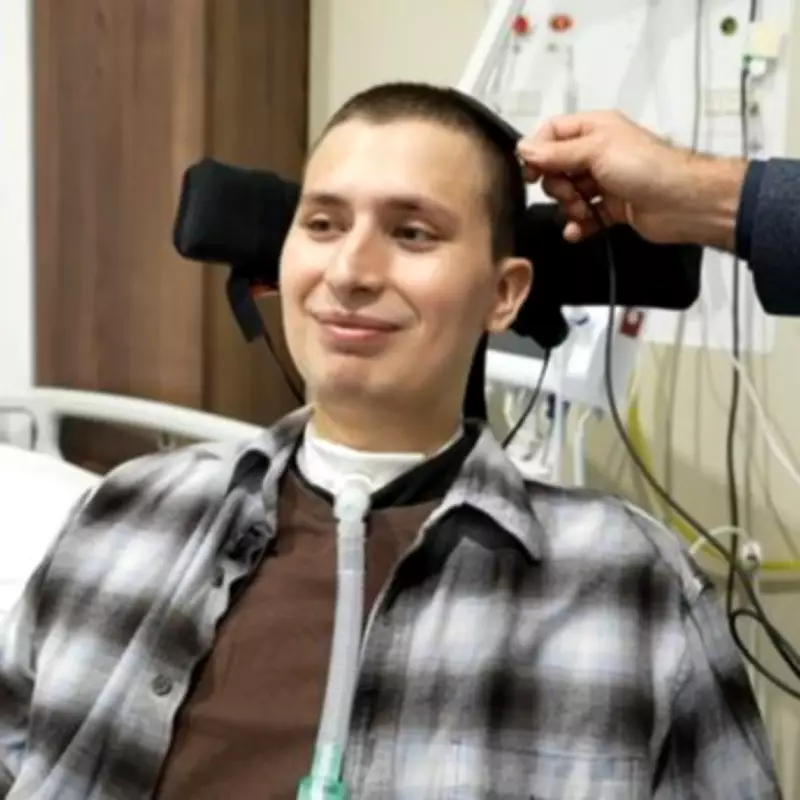
A British medical student who has become one of the first people in the United Kingdom to receive Elon Musk's Neuralink brain chip implant has described the revolutionary experience as nothing short of "magical." Sebastian Gomez-Pena, paralysed from the neck down following a devastating diving accident, is now able to operate a computer using only his thoughts, marking a significant breakthrough in neurotechnology.
From Rugby Player to Neuralink Pioneer
Sebastian Gomez-Pena was once an avid rugby player and talented cellist, living an active life before tragedy struck during a family holiday in Venezuela. At the end of his first year at medical school, a diving accident at a pool left him with a broken neck and shattered front teeth, resulting in paralysis below the neck. The life-changing injury forced him to relearn basic functions like eating and talking, but his determination led him to explore technological solutions to improve his circumstances.
Groundbreaking UK Trial Participation
Sebastian has become one of seven British volunteers participating in a national trial assessing the safety and functionality of Neuralink's brain-computer interface. The trial represents a crucial step in bringing this cutting-edge technology to patients with severe neurological disabilities across the United Kingdom.

The coin-sized Neuralink chip was surgically implanted at University College London Hospital during a meticulous five-hour procedure. While British surgeons and Neuralink engineers monitored the operation, the actual implantation was performed by the company's specialised R1 robot, which inserted 1,024 microscopic electrodes approximately 4mm into Sebastian's motor cortex - the brain region responsible for controlling hand movements.
How the Neuralink Technology Works
The implant system represents a remarkable fusion of neuroscience and artificial intelligence. The electrodes, connected via threads roughly ten times thinner than a human hair to a chip embedded in the skull, detect brain activity and transmit signals wirelessly to a computer. Sophisticated AI software then interprets these electrical signals, translating the patient's mental intentions to move into precise digital commands.
Sebastian's experience demonstrates the technology's potential, as he can now surf the internet and resume his hobby of playing chess for the first time since his accident. He aims to return to his medical studies once he masters keyboard control through the interface, and holds hope that future developments might enable him to control bionic limbs directly with his thoughts.
Medical Community's Response
Mr Harith Akram, a neurosurgeon at UCLH and the trial's lead investigator, described the development as "very big" and "mindblowing," noting the impressive level of control Sebastian has achieved. "This technology is going to be a game-changer for patients with severe neurological disability," he stated, highlighting the potential impact on thousands of people living with paralysis across the country.
Sebastian himself expressed the emotional significance of the breakthrough: "Everyone in my position tries to move some bit of their body to see if there is any form of recovery, but now when I think about moving my hand it's cool to see that... something actually happens. It looks magical and it feels magical."
Neuralink's Broader Vision and Current Status
Elon Musk first unveiled his ambitious vision for Neuralink in 2020, describing the device as "like a Fitbit in your skull with tiny wires" and predicting it would "blow your minds." His long-term goal includes enabling users to control robotic limbs remotely through brain signals alone.
Since the first successful implant in the United States two years ago, 21 people across the US, Canada, the UK, and the UAE have received the Neuralink device. All participants share similar medical backgrounds, suffering from severe paralysis resulting from spinal injuries, strokes, or neurodegenerative conditions like ALS.

Looking ahead, Neuralink aims to expand the technology's capabilities to include speech restoration, reversal of blindness, and seamless interfacing with advanced robotic limbs. However, the company acknowledges that current trial results have not yet been published in peer-reviewed scientific journals, and further large-scale trials are necessary to confirm the device's long-term safety and reliability before it can be licensed for general medical use.
This pioneering UK trial represents not just a personal breakthrough for Sebastian Gomez-Pena, but a significant milestone in British medical innovation that could potentially transform lives across the nation and beyond.





