

The human body stands as a remarkable machine, meticulously assembled over four billion years of evolutionary history. From the intricate details of our cells to the complex structures of our limbs, eyes, liver, and brain, each component has been added in fits and starts. Yet, scientists continue to grapple with why we evolved into this particular form, pondering questions that delve into the very essence of our biological makeup.
The Enigma of Human Uniqueness
Why do humans uniquely possess a chin, a feature absent in even our closest relatives like Neanderthals? And why, relative to body weight, are human testicles triple the size of a gorilla's but only a fifth of a chimpanzee's? These questions highlight the ongoing quest to understand the "why" behind our evolutionary path, as explored in works like The Tree of Life. While answers to some mysteries are emerging, others remain shrouded in uncertainty.
Climbing the Tree of Life
The story of evolution traces how each species was built from simple beginnings, with components added sequentially to its blueprint. By ascending the evolutionary tree, we follow a twisting path through increasingly specialised branches. Humans, for instance, were animals before becoming vertebrates, mammals before evolving into primates, and so on. The groups we share these branches with reveal the order in which our body parts appeared: a body and gut (animal branch) preceded backbone and limbs (vertebrate branch), while milk and hair (mammals) came before fingernails (primates).

Convergent Evolution as a Natural Experiment
To understand why specific body parts evolved, scientists often rely on convergent evolution, where features evolve independently on separate branches of the tree of life. This phenomenon, while sometimes frustrating for biologists due to its potential to confuse species relationships, serves as a valuable natural experiment. For example, swallows and swifts were once classified as sister species, but DNA and skeletal comparisons now show swallows are closer relatives of owls.
Testicle Size: A Case Study in Evolution
Primate testicle size offers a classic example of how convergent evolution provides insights. Consider the Abyssinian black and white colobus monkey and the bonnet macaque: adult males are roughly the same size, yet their testicles differ dramatically. Colobus testicles weigh a mere 3 grams, while macaque testicles tip the scales at a hefty 48 grams. This disparity invites plausible explanations, such as the role of mating behaviours.
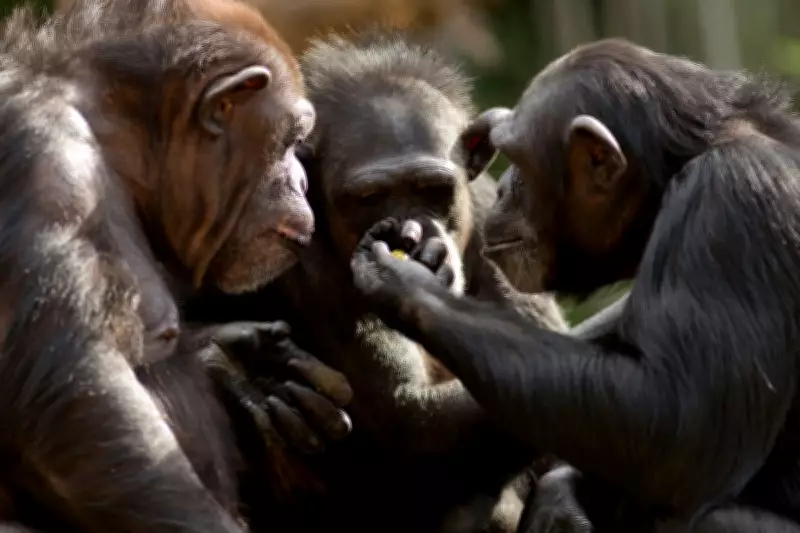
In species like colobus monkeys, where males fiercely compete for exclusive access to harems, minimal sperm production suffices. Conversely, in promiscuous species like macaques, where multiple males mate with multiple females, larger testicles produce more sperm, enhancing reproductive success. This pattern holds across mammals: larger testicles consistently correlate with promiscuity, while smaller ones align with monogamy. For instance, silverback gorillas with small testicles maintain harems, whereas big-testicled chimps and bonobos engage in highly promiscuous behaviour. Dolphins, with testicles making up to 4% of body weight, exemplify this trend, engaging in mass mating events.
Humans, with testicle size somewhere in the middle, reflect a moderate evolutionary stance, leaving room for interpretation about our ancestral mating habits.
The Human Chin: A Persistent Mystery
The human chin has long been a fertile ground for scientific debate over its purpose. Numerous plausible theories exist: it might have evolved to strengthen the jaw in combat, exaggerate the appearance of a manly beard, or result from cooking and softer diets, leaving a functionless facial promontory as jaws weakened. However, the chin's uniqueness among mammals, including Neanderthals, complicates matters.
Without convergent evolution—where the feature appears in multiple lineages—scientists lack a reliable way to test these hypotheses. This absence leaves the chin's evolutionary purpose largely speculative, highlighting how some aspects of human nature may remain enigmatic.

Implications for Evolutionary Biology
These explorations underscore the complexity of evolutionary biology, where convergent patterns offer clues but uniqueness poses challenges. As research continues, tools like DNA analysis and comparative anatomy shed light on our past, yet mysteries like the chin remind us of the limits of current understanding. The journey to unravel human evolution is ongoing, blending science with the enduring allure of the unknown.





