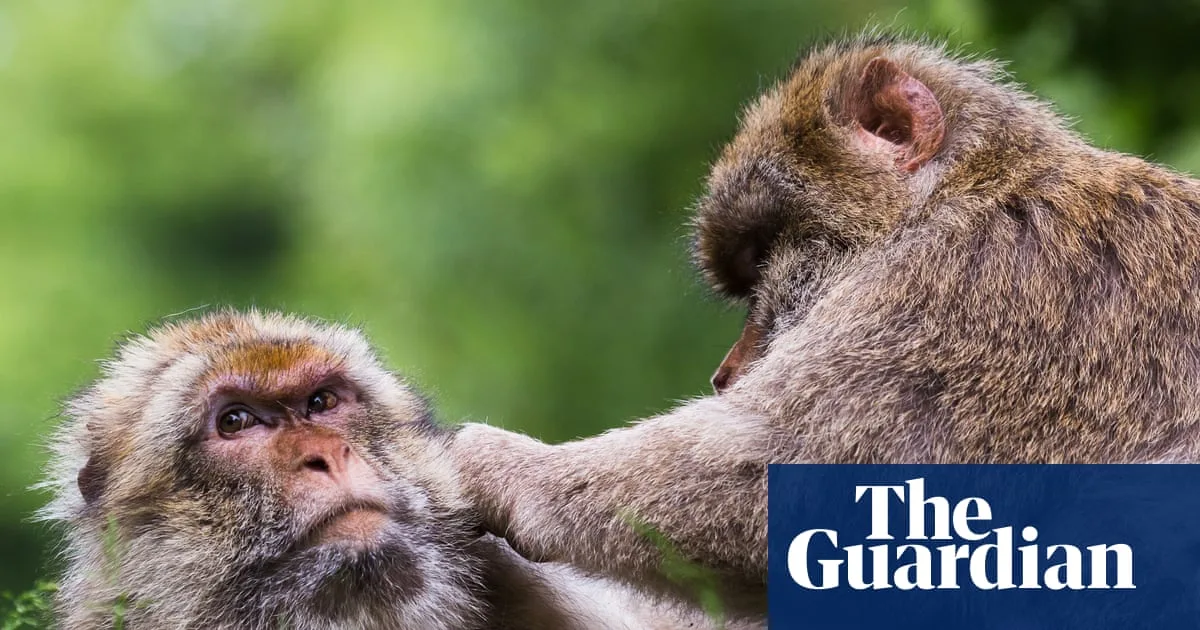
Groundbreaking Study Reveals Evolutionary Purpose of Homosexuality in Primates
A comprehensive new investigation from Imperial College London has illuminated the evolutionary origins of homosexuality, providing compelling evidence about why this behaviour persists across the animal kingdom. The research demonstrates that same-sex behaviours (SSBs) occur far more frequently than previously acknowledged and appear to serve crucial survival functions in challenging environmental conditions.
Widespread Phenomenon Across Species
From dolphins engaging in complex social interactions to chimpanzees forming intricate bonds, same-sex behaviours have been documented in thousands of animal species. Until now, the evolutionary advantages of these behaviours remained largely mysterious to scientists. The Imperial College team has systematically analysed existing research covering 491 non-human primate species, discovering that 59 distinct species regularly engage in same-sex sexual behaviour.
Professor Vincent Savolainen, co-author of the study published in Nature Ecology & Evolution, explained the significance of these findings to the Daily Mail: "Our research indicates that SSB is widespread rather than rare and has likely evolved multiple times across primate lineages. This appears to be an adaptation that helps animals navigate complex social and environmental systems."
Environmental Pressures Drive Behaviour
The researchers discovered clear patterns linking same-sex behaviour to specific environmental challenges. Primates living in drier habitats with scarcer resources showed increased SSB. Similarly, species facing greater predator threats demonstrated more frequent same-sex interactions. These behaviours were also more prevalent in species with:
- Complex social systems requiring sophisticated relationship management
- Significant size differences between males and females
- Longer lifespans necessitating stable social structures
Professor Savolainen suggests that in harsh ecological conditions, animals benefit from tight social cohesion and strong bonds within groups. Same-sex behaviour represents another mechanism for forging these essential connections. "When predators are especially common," he notes, "a tight-knit social group that can trust each other's alarm calls provides a distinct survival advantage."
Beyond Genetic Explanations
Previous research had suggested genetic factors might contribute to same-sex behaviour. In 2023, Professor Savolainen's own work found that SSB was approximately 6.4 percent heritable in rhesus macaques, indicating some genetic predisposition. However, the new analysis strongly supports the idea that environmental and social factors play a more significant role than genetics alone in determining whether same-sex behaviour actually occurs.
The study reveals that while genetic tendencies might exist, whether these behaviours manifest depends substantially on external pressures and social contexts. This leaves considerable room for environmental factors to influence behavioural expression, challenging simplistic genetic explanations.
Evolutionary Survival Strategy
Based on their comprehensive analysis, the researchers propose that same-sex behaviour "probably" evolved as a survival strategy to help highly social species withstand environmental challenges. When resources become scarce or threats increase, strong social bonds become crucial for group survival. Same-sex interactions help build and maintain these bonds, potentially outweighing the costs of lost mating opportunities in certain situations.
Evidence supporting this theory comes from multiple species. Both chimpanzees and bonobos initiate same-sex behaviour when facing ecological challenges. Even male burying beetles engage in same-sex mating when females are scarce, as this behaviour alone reduces their chances to display mating potential to competitors.
Cautious Interpretation and Future Research
Professor Savolainen emphasises caution in interpreting these findings, particularly regarding human homosexuality. "Our research doesn't make any direct claims about the evolution of homosexuality in humans," he clarifies. "However, it highlights several promising directions for future research by anthropologists and psychologists interested in the evolutionary and social contexts of same-sex behaviour."
The researchers acknowledge that their study didn't directly measure survival rates or longevity, so additional work is needed to definitively establish whether same-sex behaviour functions as a survival strategy. Professor Savolainen plans to address this question through a new study focusing specifically on SSB in macaque populations.
Broader Context of Animal Homosexuality
This research contributes to a growing scientific consensus that homosexual behaviour is significantly more common in non-human species than previously recognised. Scientists have now observed same-sex behaviour in over 1,500 different species, ranging from primates to dolphins, ducks, and numerous other animals.
Historically, scientists often dismissed this behaviour as mistaken sexual identity, suggesting animals simply confused the genders of their chosen mates. Contemporary research increasingly indicates that homosexuality represents a beneficial evolutionary strategy that has emerged independently across multiple lineages.
The prevalence of same-sex behaviour in nature challenges traditional assumptions about reproductive strategies. As Professor Savolainen's research demonstrates, evolutionary success involves more than direct reproduction—it encompasses the social cohesion and cooperative bonds that enable species to thrive in challenging environments.