

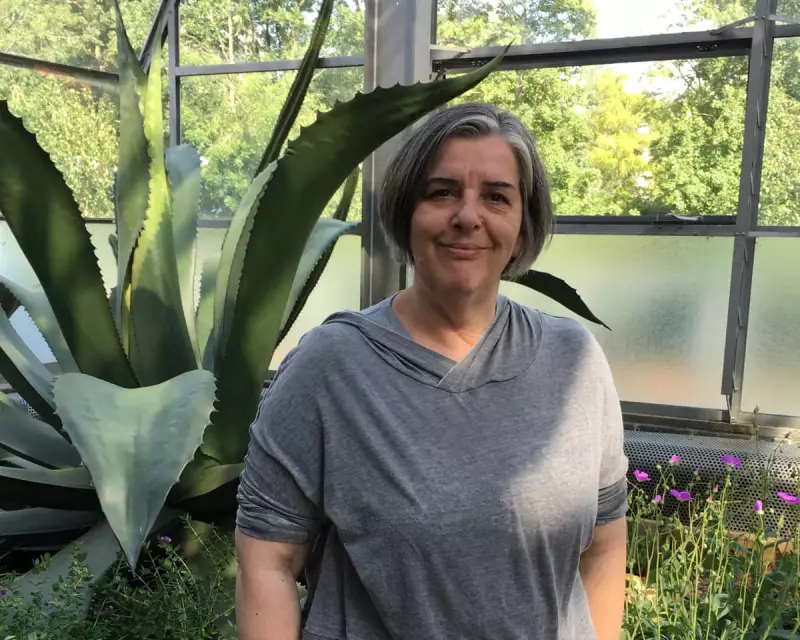
Deborah Cameron: A Pioneering Voice in Linguistics and Feminism
Deborah Cameron, a renowned sociolinguist and feminist activist, has passed away at the age of 67 after a battle with pancreatic cancer. Her death marks the loss of a towering intellectual figure whose work profoundly influenced academic and public discourse on language, gender, and power.
Academic Journey and Early Breakthroughs
Born in Glasgow on 10 November 1958, Cameron was the eldest of three children to Archibald, a salesman and jazz musician, and Alice (née Molyneux). The family later moved to Beverley, Yorkshire, where she attended Beverley High School. Her academic path began with studies in English and linguistics at Newcastle University from 1977 to 1983, followed by postgraduate work at Oxford University.
In a twist of fate, Cameron's early academic career faced a significant setback when a thesis proposal on feminism and linguistic theory was rejected by Oxford's English faculty in 1983. Undeterred, she left Oxford without a PhD but published the work as Feminism and Linguistic Theory in 1985. This book is now celebrated as a foundational text in sociolinguistics, arguing that speech differences are not inherent but shaped by social and political contexts. Its republication in 1992 cemented its status as essential reading for linguistics students globally.

Key Contributions and Publications
Cameron's scholarly output was vast and impactful. In 1995, she coined the term "Verbal Hygiene" in her book of the same name, a concept that has entered popular parlance to describe conscious efforts to regulate language, such as grammar corrections or enforcing "politically correct" usage. Her work extended across numerous publications, including Language and Sexuality (2003, co-authored with Don Kulick) and the recent Language, Sexism and Misogyny (2023).
She also collaborated on influential texts like The Lust to Kill: A Feminist Investigation of Sexual Murder (1987) with Elizabeth Frazer, which critically examined why most sexual killers are men and how language perpetuates misogyny. For a broader audience, The Myth of Mars and Venus (2007) challenged simplistic notions of gender differences in communication, with extracts featured in the Guardian.
Career and Activism
After her initial studies, Cameron held her first academic post at Roehampton Institute of Higher Education (now University of Roehampton) in south-west London. There, she combined research with feminist activism, particularly in campaigns against violence towards women. Her career included positions at the College of William and Mary in Virginia, where she met her life partner Meryl Altman in 1988, Strathclyde University in Glasgow, and the Institute of Education in London.
In 2004, she returned to Oxford as the Rupert Murdoch professor of language and communication, based at Worcester College—a role she held until 2023, becoming an emerita fellow. This appointment was notably ironic, as a member of the board had been involved in rejecting her thesis decades earlier. She also held visiting professorships at Gothenburg University in Sweden and New York University.
Public Intellectual and Social Commentary
Beyond academia, Cameron was a vocal public intellectual. In a 1994 Guardian interview, she critiqued the term "political correctness," noting how right-wing commentators had shaped its negative connotations—a precursor to modern debates around terms like "woke." She argued that such linguistic interventions could silence discourse, a theme she explored in her blog on feminist linguistic dilemmas.
Her disdain for censorship was evident in 2015 when she co-organised a letter to the Observer protesting the "no-platforming" of feminists. She also expressed scepticism towards AI, humorously outlining a plan to "defeat AI's takeover" by relying on human memory, such as baking cheese scones from a recipe stored in her brain.

Legacy and Influence
Cameron's methods in discourse analysis, detailed in works like Analysing Conversation (1987) and Working With Written Discourse (2014), empowered linguists to critically examine everyday language. Her influence extended to former students, such as Caroline Criado Perez, who credits Cameron's Feminism and Linguistic Theory with inspiring the concept of the "default male" in the bestselling book Invisible Women (2019).
Known for her plain-speaking style, which some perceived as blunt, Cameron defended direct expression as a counter to cowardice in communication, as outlined in Verbal Hygiene. Her final work, The Rise of Dogwhistle Politics, was published in November 2025, capping a prolific career.
Personal Life and Survivors
Deborah Cameron is survived by her wife Meryl Altman, whom she married in 2019, and her siblings, Kate and Rory. Her legacy as a sociolinguist, feminist scholar, and activist continues to resonate through her writings and the many lives she touched.





