

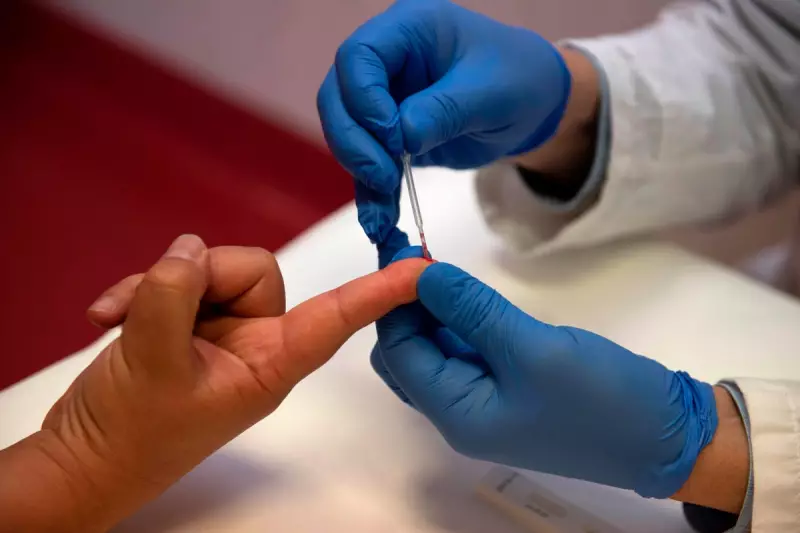
A revolutionary clinical trial has launched, aiming to validate a simple finger-prick blood test that could diagnose Alzheimer's disease years before symptoms appear. This pioneering research promises to replace the invasive and costly diagnostic methods currently in use with an affordable and accessible alternative available at local GP practices.
The Quest for a Simpler Diagnosis
Currently, confirming Alzheimer's disease is a challenging process for patients. It typically requires either a specialised PET brain scan or a lumbar puncture to extract cerebrospinal fluid. Both procedures are invasive, expensive, and not widely accessible. The new trial, spearheaded by the non-profit medical research organisation LifeArc and the Global Alzheimer's Platform Foundation (GAP), with backing from the UK Dementia Research Institute (UKDRI), seeks to change this paradigm entirely.
The study will assess whether a drop of blood from a finger prick can accurately detect three specific proteins, or biomarkers, strongly linked to Alzheimer's pathology. Researchers will analyse samples for phosphorylated tau 217 (pTau217), Glial fibrillary acidic protein (GFAP), and Neurofilament light polypeptide (NfL). The results from the blood test will be rigorously compared against those from the current gold-standard diagnostic techniques to validate its accuracy.

Global Trial and Expert Optimism
The ambitious study requires 1,000 participants from across the globe, and recruitment is already well advanced. To date, 883 volunteers from the UK, US, and Canada have been enrolled. The cohort includes a mix of individuals with no cognitive concerns, those with mild cognitive impairment, and people diagnosed with mild to moderate Alzheimer's disease. Notably, 30% of participants come from underrepresented groups, ensuring the findings are broadly applicable.
Experts involved in the project are highly optimistic about its potential. Dr Giovanna Lalli, Director of Strategy and Operations at LifeArc, stated that developing cheaper, scalable tests is vital in the fight against Alzheimer's. She emphasised that such a test would allow more patients to access promising new drugs designed to slow the disease in its early stages.
Echoing this sentiment, Professor Henrik Zetterberg, who leads the biomarker factory at the UK Dementia Research Institute, called the study "unique in its size and scope." He believes a successful, minimally invasive diagnostic method would not only revolutionise Alzheimer's care but also pave the way for better diagnosis of other neurodegenerative conditions.
A Personal Motivation and Future Impact
The human impact of this research is powerfully illustrated by participants like Dr Michael Sandberg, a London GP who joined the trial after witnessing his mother Aline's struggle with Alzheimer's. For him, the relief of receiving a negative test result was profound. He argues that simple, cost-effective screening is fundamental to unlocking the potential of new treatments.
John Dwyer, President of the Global Alzheimer's Platform Foundation, highlighted the test's potential to democratise diagnosis, making timely detection accessible to people with limited access to specialist healthcare. If the trial is successful, the finger-prick blood test could become a reality by 2028, transforming the diagnostic landscape for millions at risk of this devastating disease.






