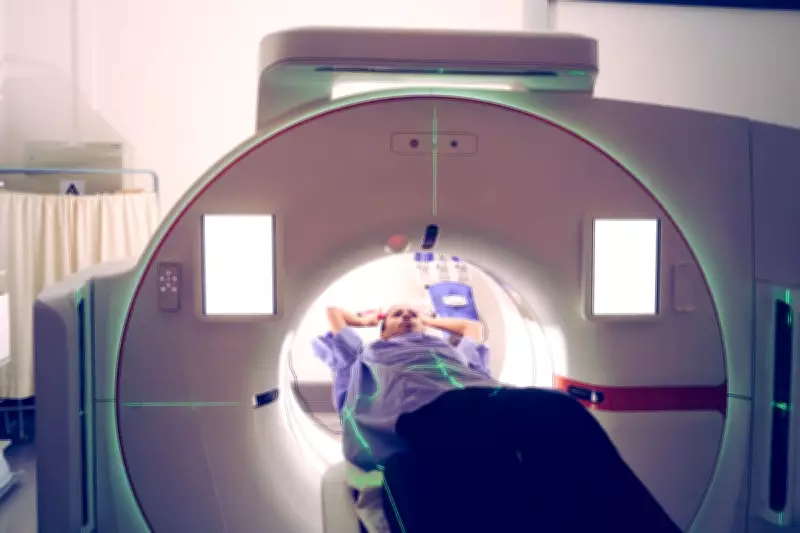
Artificial intelligence may be able to detect signs of pancreatic cancer before tumors are visible on scans, a new study suggests. The technology, developed by researchers at the Mayo Clinic, identifies patterns in the pancreas that are invisible to the human eye.
The AI framework, called Radiomics-based Early Detection MODel, was trained using nearly 1,000 CT scans from patients who were originally screened for unrelated conditions but later developed pancreatic cancer. In a head-to-head comparison with board-certified radiologists, the AI was significantly more effective at spotting early markers of the disease.
On an independent test set of 493 scans, the model identified occult cancer with a 73 percent sensitivity rate — nearly double the 39 percent achieved by human doctors. For scans taken more than two years before a formal diagnosis, the AI was nearly three times as sensitive as the radiologists.

How the AI Works
The AI model works by analyzing “radiomic” features — minute textural disruptions in the organ’s tissue. Dr. Ajit Goenka, a Mayo Clinic radiologist and study author, said that the model could identify abnormal cells that protect cancer from the immune system, a signature scientists have long recognized but struggled to visualize on standard imaging.
“We knew, based on the biology of the disease, that this is not something which is coming all of a sudden in three months,” Goenka said. “We knew that the signal was there. We just needed to find a way to be able to detect it.”
Current Challenges in Detection
Pancreatic tumors are notoriously difficult to find because the organ is located deep within the abdomen, making physical exams ineffective. There is also no routine screening available for the general public. By the time most patients develop symptoms like abdominal pain or weight loss, the cancer has typically reached an advanced stage. Pancreatic cancer currently has a five-year survival rate of just 13 percent.
Dr. Daniel Jeong, a radiologist at Moffitt Cancer Center who was not involved in the research, spoke about the limitations of current manual reviews. “I analyze these images every day,” Jeong told NBC News. “We’re really looking for a measurable mass that could represent the cancer. So these tumors need to grow to a certain level to become visible.”
Future Implications
Researchers believe the technology will be most effective as a triage tool for patients with risk factors like family history or new-onset diabetes. The model is currently being evaluated in a clinical trial that requires three to five years of patient monitoring to confirm its accuracy in real-time.
“In a disease where we have been just wandering in darkness for decades, this is a milestone that shows us the finish line, but we still have to get to the finish line,” Goenka said.
The study joins several recent advancements in the field, including early-stage trials for mRNA vaccines and experimental drugs that have shown promise in extending life expectancy for those with advanced cases.