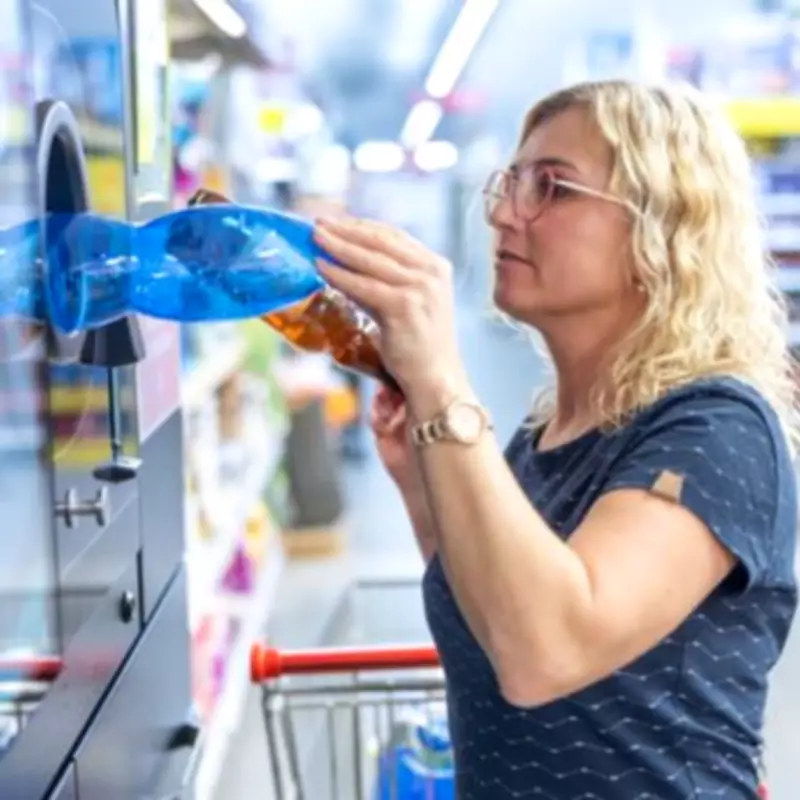
Shoppers at major UK supermarkets, including Asda, Tesco, Sainsbury's, and Morrisons, will soon be paid for returning empty bottles and cans under a new government initiative aimed at reducing waste and boosting recycling rates. The Deposit Return Scheme (DRS) is set to launch across the UK on October 1, 2027, and will see consumers receive a 20p deposit refund for each eligible container they bring back to designated collection points.
How the Deposit Return Scheme Works
Under the DRS, customers will pay a small deposit when purchasing drinks in plastic bottles or metal cans. This deposit is fully refunded when the empty container is returned to a participating retailer, such as supermarkets, convenience stores, or newsagents. No receipt or proof of purchase is required, meaning anyone can return containers they find, as long as they are in good condition.
Exchange for Change, the organisation overseeing the scheme, confirmed a flat 20p deposit on all eligible containers. This simplifies the process for businesses and consumers alike, mirroring successful schemes in countries like Germany, Sweden, and Ireland.

Benefits for the Environment
The DRS is designed to tackle littering and increase recycling rates. UK consumers use approximately 14 billion plastic drinks bottles and nine billion cans each year. Research by Keep Britain Tidy shows that small plastic bottles and non-alcoholic cans make up 43% of litter by volume. The scheme is expected to significantly reduce these figures.
Circular Economy Minister Mary Creagh stated: "This Government is committed to cleaning up our streets and ending our throwaway culture. Deposit return schemes are proven to reduce littering and drive up recycling rates."
Implementation Details
The scheme will apply to single-use drinks containers between 150ml and 3 litres made from PET plastic, steel, and aluminium in England, Northern Ireland, and Scotland. Glass bottles are excluded from these regions due to safety and storage concerns, but Wales will include glass in its separate scheme, initially without a deposit.
Retailers selling drinks covered by the scheme must pay the deposit to producers or wholesalers and then pass the charge to customers. They are obliged to refund the deposit upon return, either in cash, voucher, or via card payment. Return points can be manual or automated reverse vending machines.
Exemptions and Voluntary Participation
Urban retailers with a sales area under 100 square metres are exempt from hosting a return point but can volunteer to do so. Other organisations, including hospitality venues, schools, gyms, and community centres, can also apply to host voluntary return points.
Travis Way, managing director at EcoVend, commented: "A flat rate brings practical benefits by simplifying implementation and reducing administrative complexity. This clarity allows retailers and producers to plan with confidence."
The DRS is part of broader packaging reforms expected to create 25,000 jobs and generate over £10 billion in recycling investment over the next decade. With the launch set for October 2027, businesses and consumers are urged to prepare for this significant change in how drinks containers are handled.