The Joint Committee on Vaccination and Immunisation (JCVI) has recommended that teenagers who received the meningitis B (MenB) vaccine as babies should get a booster dose at age 15. It also strongly supports offering two doses to adolescents born on or before 30 April 2015, who missed the infant vaccination programme that began in 2015.
Outbreaks Prompt Urgent Action
Earlier this year, outbreaks among young people in Kent and Reading claimed three lives. Thousands of adolescents in affected areas were given precautionary antibiotics and vaccinations. The JCVI's recommendations are separate from a one-off catch-up programme already announced for summer 2026.
Professor Wei Shen Lim, JCVI chairman, said: “Following the meningitis outbreaks in early 2026, a one-off programme for two-doses of menB vaccine is being offered to eligible young people this summer. We encourage everyone who is eligible to book an appointment online to receive the vaccine at a local pharmacy, in time for the second dose to be received before heading off to university or college. For protection, two doses of the menB vaccine are necessary, at least 28 days apart. Additionally, JCVI has now also provided Government with a recommendation and additional considerations for a future routine menB adolescent vaccination programme for those aged around 15 years. The Department of Health and Social Care will now consider this with a decision to be made in due course.”
Expert Backing for Programme
Dr Simon Clarke, associate professor of cellular microbiology at the University of Reading, described the recommendation as “a vital public health intervention.” He added: “While infants have received the MenB vaccine since 2015, today's older teenagers missed out on this. The decision to target teenagers makes sense. Teenagers are the second-highest risk group for contracting the bacteria that causes meningitis because high-density environments like schools and universities act as transmission hotbeds, where the spread of the pathogen is accelerated through coughs and close contact.”
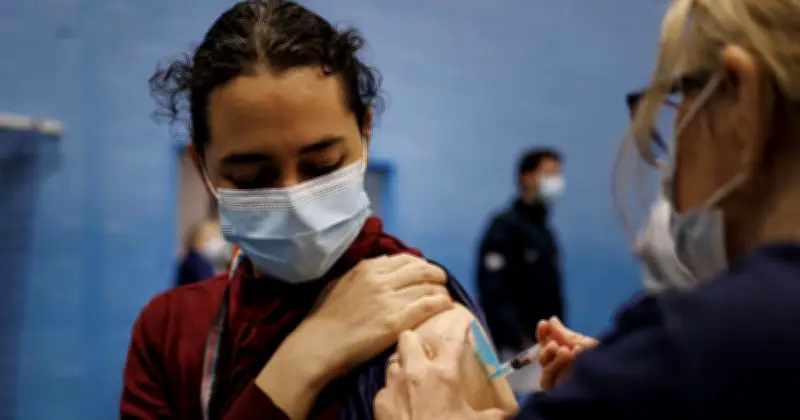
Students queued for jabs in Canterbury as part of the outbreak response. Professor Lim noted that “invasive meningococcal disease is a rare but very serious illness, which can have a devastating impact on lives. JCVI has worked closely with meningitis charities and would like to thank all those who responded, including on behalf of loved ones who sadly died or had life-changing complications. Their lived experiences were carefully considered and our thoughts are with those who continue to be affected by this disease.”