
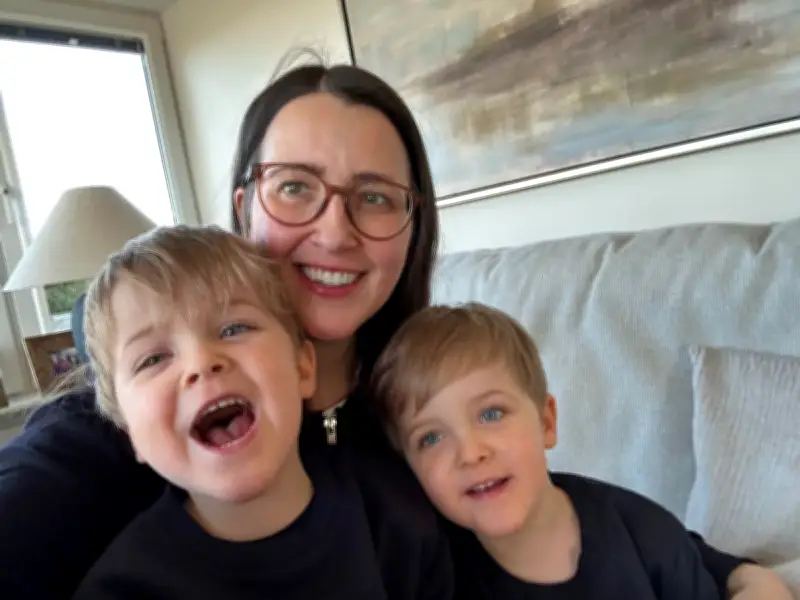
Kim Borthwick, a 36-year-old mother from Glasgow, has been diagnosed with an incurable glioblastoma and fears she will not live to see her four-year-old twin sons, Max and Freddie, begin school. She was diagnosed in January 2026, just a week after symptoms began with a headache that became unbearable, followed by tingling in her hand, loss of feeling down one side, and vomiting.
Diagnosis and Treatment
After multiple GP visits, Borthwick was referred for an urgent CT scan at A&E, where she was diagnosed with a highly aggressive brain tumour. She required surgery that same evening. Borthwick credits NHS staff with saving her life and giving her more time with her family, but she is realistic about her prognosis: if she reaches her 40th birthday, she would be among the longest-surviving 10% of patients with her cancer type.
“I don’t know if I’ll see them start school,” she said. “You take those little moments for granted until you realise they could be taken away. My diagnosis has given me the clarity to enjoy every moment I have with my boys.”
Campaigning for Change
Borthwick has joined the Brain Cancer Justice (BCJ) campaign group, which advocates for greater support and funding for rare cancers. The group is calling for a dedicated minister for rare cancers to ensure continuity in research, funding, and policy. Borthwick highlighted that survival rates for brain cancer in the UK have not improved in decades, unlike many other cancers.
“There’s been no change to outcomes for people diagnosed with brain cancer in 30 years, and brain tumours remain the biggest cancer killer of children and adults under 40. To me, that is scandalous,” she said. She noted that patients in other G8 countries routinely receive surgery, radiotherapy, chemotherapy, and treatment using the Optune device, which slows cancer cell growth—a combination not routinely available in Scotland.
Treatment Gaps in Scotland
Borthwick also pointed out that tumour samples in Scotland are not routinely fresh-frozen during surgery, making patients ineligible for clinical trials and emerging genomic treatments that require preserved tissue. “These aren’t cures. Nobody is pretending they are. But they give people more time with the people they love and, ultimately, that’s what matters,” she said.
“It’s too late for me but I want to make a difference for those who come after me. I know I would have made a really good granny,” she added. Borthwick has a “fire in her belly” to effect change for brain cancer patients in Scotland, despite knowing she is unlikely to benefit from the improvements she seeks.




