
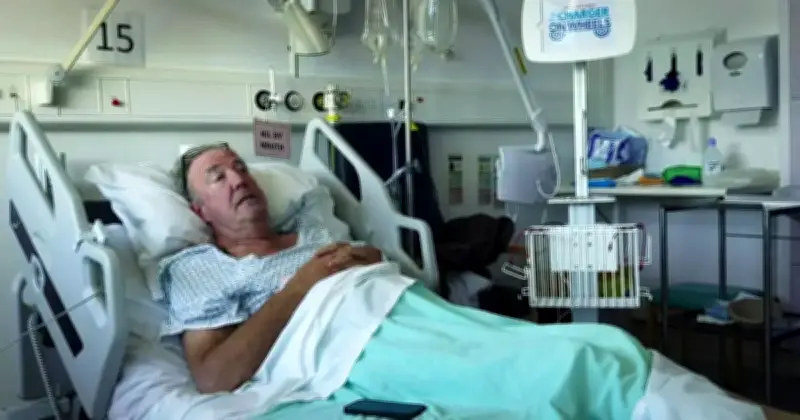
Jeremy Clarkson has revealed that he received the same cutting-edge focal therapy for prostate cancer as former prime minister David Cameron, a treatment that spares patients from severe side effects like erectile dysfunction and urinary incontinence. The 66-year-old TV presenter and farmer disclosed his diagnosis on his Amazon Prime show Clarkson's Farm last week, stating he was diagnosed with aggressive prostate cancer in May last year but caught it early.
Details of Clarkson's Diagnosis and Treatment
Speaking to The Sunday Times, Clarkson said the cancer could have spread, which would have been trouble. He underwent treatment in London last August, though it remains unclear whether he received high-intensity focused ultrasound (HIFU) at an NHS or private hospital. The procedure uses sound waves to destroy cancerous cells.
On his show, Clarkson explained to farm manager Kaleb Cooper: "You know the prostate – 10 per cent of it is dead, the 10 per cent where the cancer is. They use ultrasound. Have you ever got a magnifying glass on a piece of paper on a sunny day? They do that but with sound waves. They direct them onto the cancer and blitz it."
Comparison with Other Patients
Lord Cameron, 59, and Conservative peer Sir Graham Brady, also 59, both had their prostate cancer treated with focal therapy. This method employs high-frequency sound waves, cold gases via needle-thin probes, or electrical pulses to generate heat or cold to destroy cancerous cells. Unlike surgery or radiotherapy, which remove or irradiate the entire prostate, focal therapies target only the cancerous region, preserving healthy tissue.
Limited Availability on NHS
A prostate cancer charity has urged for the minimally invasive technique to be rolled out across the NHS. Currently, only seven NHS hospitals in London and the South East provide the treatment, which is suitable for up to 17,000 men annually with early-stage prostate cancer. More than 500,000 men are living with prostate cancer in the UK, and unlike breast, bowel, and lung cancer, there is no national screening programme. Of the 63,000 diagnosed annually, over 12,000 die because the cancer was not spotted early enough.




