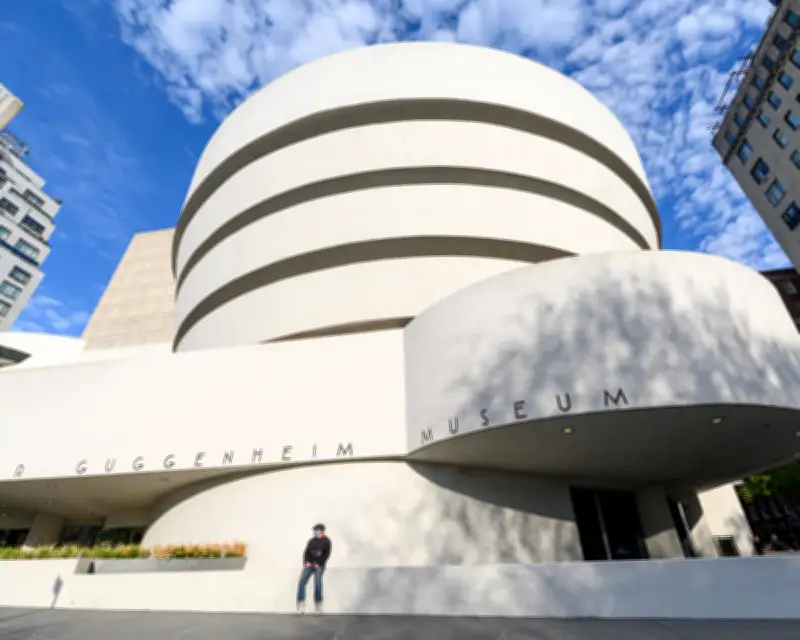
The Solomon R. Guggenheim Museum in New York City was among 31 buildings on the Upper East Side that recently tested positive for the bacteria causing Legionnaires' disease, the city's health department announced on Friday. The iconic art museum, designed by Frank Lloyd Wright and a UNESCO World Heritage site, has already completed required remediation, according to the department's list.
Buildings Ordered to Clean Cooling Towers
The health department ordered all 31 buildings to clean and disinfect their cooling towers as the city addresses the latest outbreak of Legionnaires' disease, a severe form of pneumonia. Nineteen of these buildings, including the Guggenheim, have finished remediation, with the rest expected to complete the work by Saturday.
City officials emphasized that the positive test results do not confirm any building as the source of the outbreak, as the tests could not distinguish between live and dead bacteria. The museum was never closed due to the positive test or remediation work.
Museum Statement and Ongoing Monitoring
“The city has confirmed that there is no additional action needed at this time, and this poses no risk to anyone inside the building,” the Guggenheim said in a statement on Saturday. The museum noted that it employs an outside company to conduct regular monthly testing and treatment of its cooling tower.
Outbreak Details and Health Impact
More than 50 people have been diagnosed with Legionnaires' disease in connection with the Upper East Side cluster, with fewer than 20 remaining hospitalized as of the latest health department data. No deaths have been reported so far. In contrast, a major outbreak in Harlem last year resulted in seven deaths and over 100 illnesses, traced to cooling towers at a hospital and a construction site.
Legionella Bacteria and Transmission
Legionella bacteria typically grow in warm water and can spread through building water systems like showerheads, hot tubs, and cooling towers. Cooling towers, usually on building rooftops, control temperatures for systems like refrigeration but do not affect drinking water or indoor air conditioning. The disease is not transmitted person-to-person; infection occurs by inhaling tiny droplets of contaminated water.
Symptoms and Risk Factors
Symptoms, including cough, fever, headaches, muscle aches, and shortness of breath, develop two days to two weeks after exposure, according to the U.S. Centers for Disease Control and Prevention. People aged 50 or older, smokers or vapers, those with chronic lung disease, or weakened immune systems are at increased risk.
The disease derives its name from an outbreak at an American Legion convention in Philadelphia in 1976.