
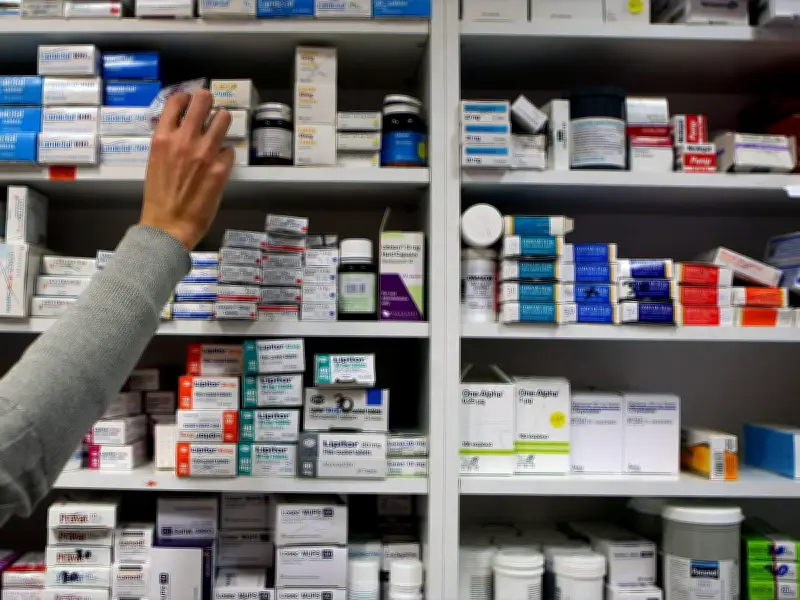
Medicine shortages are causing a serious risk to patient safety, pharmacists have warned. Common drugs, including painkillers, antibiotics, blood pressure medication, and pharmaceuticals for epilepsy, pancreatic cancer, cystic fibrosis, diabetes, and ADHD, are all in short supply. Serious Shortage Protocols are in place for other medicines, including Estradot, a hormone replacement therapy for menopausal symptoms.
Pharmacist Sounds Alarm
Ashley Cohen, a pharmacist for nearly 35 years and a National Pharmacy Association Board Member, told the Mirror: "I have never known such a chronic medicine shortage as at the moment. This is now not an inconvenience and a frustration, it's a patient safety issue." He added: "With certain medicines and disease areas, such as epilepsy, the significance of somebody not getting their medicine may mean they have a seizure, they could be hospitalised or worst case scenario patients have died. I am aware of some instances where shortages have caused significant patient issues."
Root Causes of Shortages
The shortages are blamed on surging global prices, lack of government funding, supply issues caused by the Iran war, and the near total closure of the Strait of Hormuz, leading to shipping delays. The NHS pays pharmacies a fixed price for each medicine, but in April, the government's price concessions list hit a record high with 210 named medications. Mr Cohen, who runs a pharmacy chain in Leeds, said global manufacturers are selling drugs to other countries ahead of the UK as they pay more. He stated: "It's down to supply and demand. Manufacturers are diverting large volumes of stocks to stay in France and Germany because they're prepared to pay more for their medicines than the UK government are willing to pay. The government need to put more money into the medicines market."
Rationing and Patient Impact
Mr Cohen has been forced to ration stocks of Creon, used by patients with pancreatic cancer and cystic fibrosis to digest food. He said: "It is absolutely ridiculous. We're almost a third world country in terms of our supply. Creon has been like this for coming up to two years. I am getting messages back from wholesalers and suppliers telling me no stock is available at all so if I can't get it in, no pharmacy has got it in and we're literally rationing patients." He added: "I'm hearing horror stories of patients going abroad and paying privately for it because you literally can't function without Creon if you've got pancreatic cancer or cystic fibrosis. We've had that also with ADHD and epilepsy medicines where people are coming in on a daily or weekly basis to get that. It breaks my heart to not be able to have solutions for these patients."
Patients Forced Abroad
Cathy Moreau, 71, from Wandsworth, south west London, travels to France to obtain extra Creon supplies. She said: "We don't have a shortage in France. It is cheaper by quite a lot than at private pharmacies in England. If I don't have the Creon I can't digest my food. It's life-threatening because if you can't digest your food you're going to lose weight and that's not sustainable."
Survey Reveals Widespread Concern
A survey by the National Pharmacy Association, representing around 6,000 independent community pharmacies, found 96% of pharmacies feel the situation poses a serious risk to patient safety. Some 83% of pharmacy teams have faced abuse or anger from patients due to unavailable medicines. Olivier Picard, chair of the National Pharmacy Association, said: "These shortages are some of the most severe the UK has experienced. Our medicines market has never been so volatile, with patients and primary care colleagues at the sharp end of events outside of their control. It is deeply distressing to find patients who have travelled from pharmacy to pharmacy to find the medicines they need without success."
Calls for Emergency Taskforce
The National Pharmacy Association wants the Government to convene an urgent taskforce, including manufacturers, wholesalers, and clinicians, to battle the shortages. Mr Picard added: "Pharmacies spend significant time hunting stock and liaising with GP teams when they should be getting on with caring for their patients. We're urging the Government to convene an emergency taskforce to bring together all parts of the supply chain to tackle this issue. As well as this, the Government should amend legislation that prevents pharmacies from making simple substitutions to a prescription, where a safe alternative is in stock."
Expert Support for Change
Dr Leyla Hannbeck, Chief Executive of the Independent Pharmacies Association, said: "Medicine shortages are causing huge problems for pharmacies and patients across the country. Pharmacists are spending increasing amounts of time trying to source medicines, speaking to prescribers about alternatives and reassuring worried patients who are often unable to access the treatments they rely on. We are particularly concerned about shortages affecting medicines used to treat long-term conditions, where interruptions to treatment can have serious consequences for patients' health and wellbeing. We have also received anecdotal reports that some patients, frustrated by ongoing shortages, are turning to overseas websites to obtain medicines. That is deeply concerning because patients can never be certain of the safety or authenticity of medicines obtained from unregulated sources. The Government cannot continue to ignore this issue. Community pharmacies are being left to pick up the pieces, but they cannot continue to shoulder this burden alone. Urgent action is needed to strengthen medicine supply chains and protect patients' access to vital medicines."
The Royal College of GPs is backing calls for pharmacists to be able to make changes to prescriptions when a medicine is unavailable and dispense a safe alternative. Professor Victoria Tzortziou Brown, president of the RCGP, said: "Medicine shortages can be frustrating for patients, GPs and pharmacists alike, especially when patients have to endure lots of back and forth to acquire a suitable alternative. At a time when GPs and pharmacists are working under significant pressures, medicine shortages only add to this. With appropriate safeguards in place, the college is supportive of pharmacists being able to make limited changes to prescriptions when a medicine is unavailable and a safe, clinically appropriate alternative is available within agreed prescribing guidance. We would also support systems that enable timely communication between pharmacists and GP practices when shortages arise, without creating unnecessary administrative burden. The most important thing is that patients are able to access the medication they need safely and without delay. More widely, it's essential that when shortages occur, the underlying causes are quickly identified and resolved."
Government Response
A Department of Health and Social Care spokesperson said: "The overwhelming majority of medicines licensed in the UK are in good supply and patients should know that when visiting the pharmacy, their prescriptions will be available. Ensuring there is robust supply of medicines is vital and this government is making significant investments in the UK medicine manufacturing industry to strengthen it. We have clear plans in place to manage any disruptions and work closely with industry to keep supplies stable, including investing up to £520million to the Life Sciences Innovative Manufacturing Fund to boost UK production."




