If that did not get England fans’ hopes up, surely nothing will.
Thomas Tuchel’s side came through nervy moments but were always in control at Dallas Stadium and were good value for a 4-2 win over familiar foes Croatia in their opening game of the 2026 World Cup.
Harry Kane’s two first-half goals were his 80th and 81st respectively for his country but did not have England ahead at half-time, with Martin Baturina and Petar Musa hitting back.
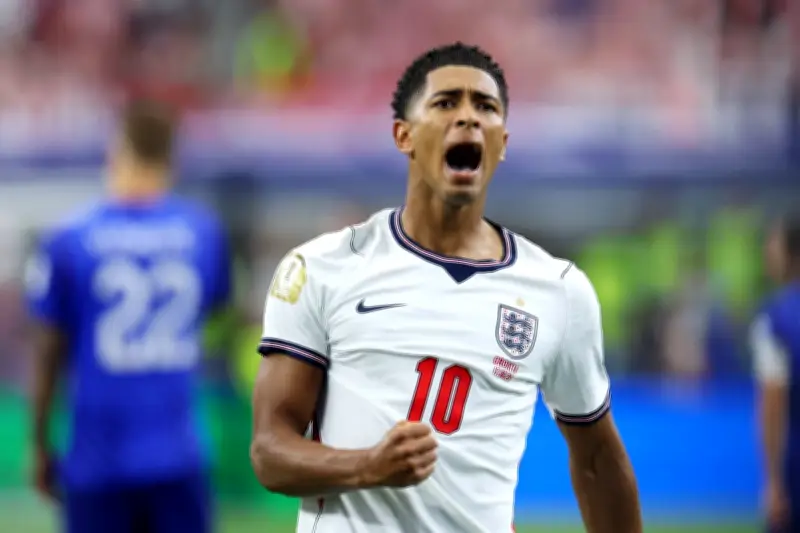
A greatly improved performance followed in the second half. Jude Bellingham announced himself at this World Cup with a sensational goal 90 seconds after the restart, and substitutes Bukayo Saka and Marcus Rashford combined for the latter to net the fourth.
Kane leads from the front
In a chaotic game that featured slick patterns of play but also errors from both sides, the presence of England’s captain and Mr Inevitable was the ace card many fans are counting on it continuing to be throughout the next five weeks.
Kane was a lucky man when referee Clement Turpin ordered a retake of his saved penalty for two offences: slight encroachment into the box by Manchester City’s Josko Gvardiol and goalkeeper Dominik Livakovic creeping mere centimetres off his line.
Second time around, Kane ditched his hesitant approach and went full whack, becoming the record holder for the most non-shootout penalties scored (five) in the history of the World Cup.
On the day he equalled his childhood hero David Beckham on 115 caps, he also joined him as the only Englishman to have scored in three World Cups. He, like England, can click into higher gears than this, but it was an appropriate revving up for the tournament by the skipper.
Kane was at one moment back deep inside his own half, making a critical tackle to deny Croatia a shot on goal after England had been robbed of the ball. Minutes later, he stole a march on the melee in the area to crash a firm header down and in from Declan Rice’s corner to restore the lead. His goal-saving block in stoppage time summed him up: invaluable.
England conquer Croatia’s back three
Croatia’s best team was centred around supreme quality in the heart of midfield, yet the retirements of the likes of Ivan Rakitic and Marcelo Brozovic has lost them much of that impetus, so manager Zlatko Dalic, in the words of his opposite number Tuchel, “dropped their centre of gravity, to a back three”.
It has been both an admission of the beginning of the end of the country’s golden generation and a sensible tactical tweak to shore up defensively, particularly against teams with firepower like England.
Luka Modric, 41 in September, and Petar Sucic did still pose questions of England from midfield, at least until the former was substituted for Mateo Kovacic on 57 minutes. Modric had conceded the early penalty.
Dalic had insisted before the game: “We won't just defend, we want more.” Sure enough, Sucic sat John Stones down in the lead-up to Croatia’s brilliant leveller for 1-1. Baturina, the scorer, had netted a magnificent free-kick against England’s Under-21s at Craven Cottage three years ago. And after Kane’s header, Musa pulled them back level once more, a goal assisted by another battled-hardened face from England-Croatia contests gone by in Ivan Perisic.
Assistant manager Anthony Barry felt England had looked nervous in a first half in which, in his view, they’d played long when they should have played short, and short when they should have played long. That he and Tuchel had given the players a rollicking in the dressing room was clear because of how remarkably quickly Bellingham reinstated their lead, and how much better England were after the interval. Croatia’s back three could not contain an England side that created chance after chance.
Bellingham’s brilliance
Months of debate about whether Bellingham should start for England over Morgan Rogers - the sort of noise only England in major tournaments can attract - had been leading to this point. Rogers is the more reliably disciplined presser, but, when it came down to it, Tuchel did the sensible thing and started the better player, perhaps England’s greatest big-game talent. Oh how he delivered.
Bellingham, given a free role but also the job of pinning Modric’s midfield partner Sucic, became the youngest European player in history to feature at four major tournaments, aged 22 years and 353 days. At one point in the first half, his marauding, galloping run forward went unchecked and though he coughed the ball up to Croatia eventually, the directness and intensity must have felt vindicating for Tuchel on the sideline. He got the big calls right and England made the big moments count.