
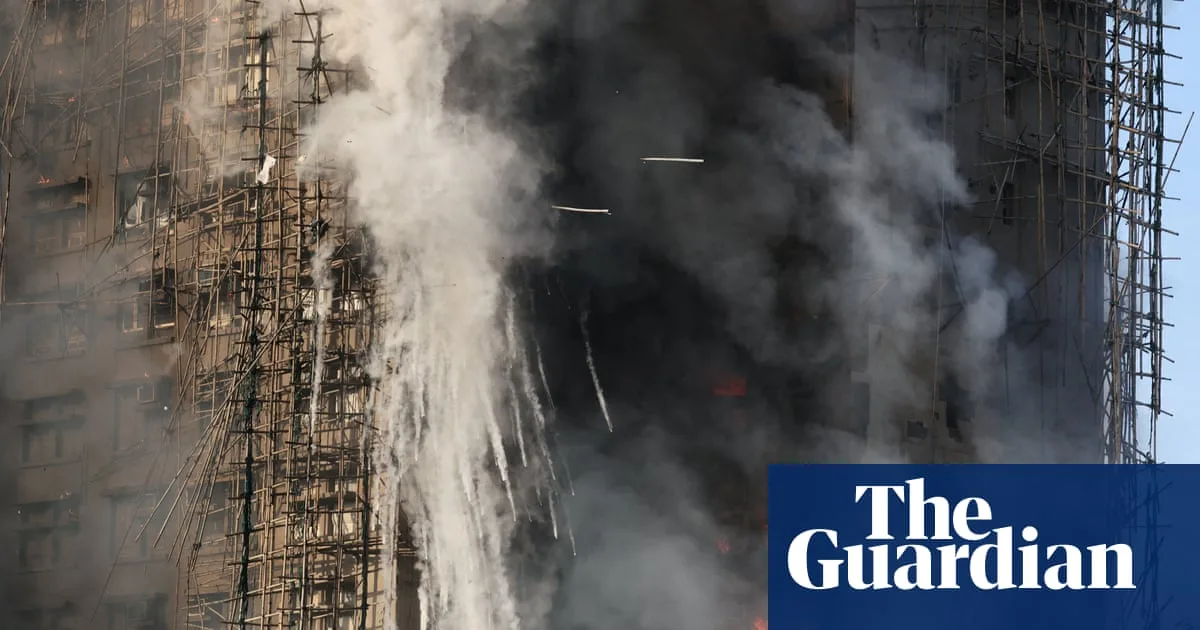
A devastating fire in a Hong Kong residential complex that killed 13 people may have been exacerbated by bamboo scaffolding, a traditional construction material the city has been phasing out due to safety concerns. The blaze tore through the Wang Fuk Court estate in Tai Po, northern New Territories, on Wednesday, marking the deadliest fire in the city in decades.
The complex comprises eight 31-storey towers with about 2,000 flats housing around 4,800 residents. While the exact cause remains unknown, police have indicated that bamboo scaffolding and green construction mesh likely helped the fire spread rapidly across apartments.
Hong Kong is one of the few places globally where bamboo is still widely used in construction. The material, lighter and cheaper than metal alternatives, is bound into intricate lattices with zip ties and wrapped around skyscrapers. Its use is considered an art form, with depictions in Han dynasty scroll paintings from 2,000 years ago.
In March, the government announced a phase-out of bamboo in favour of fire-resistant steel, citing safety concerns. It mandated that 50% of public construction works must use metal frames, which also better withstand Hong Kong's humid climate. Official figures show 23 people have died in industrial accidents involving bamboo scaffolds since 2018.
However, the Hong Kong and Kowloon Bamboo Scaffolding Workers Union has opposed the transition, arguing that the natural variation in bamboo poles requires skilled masters to bind them safely. These workers fear their livelihoods are at risk if steel becomes standard.




