
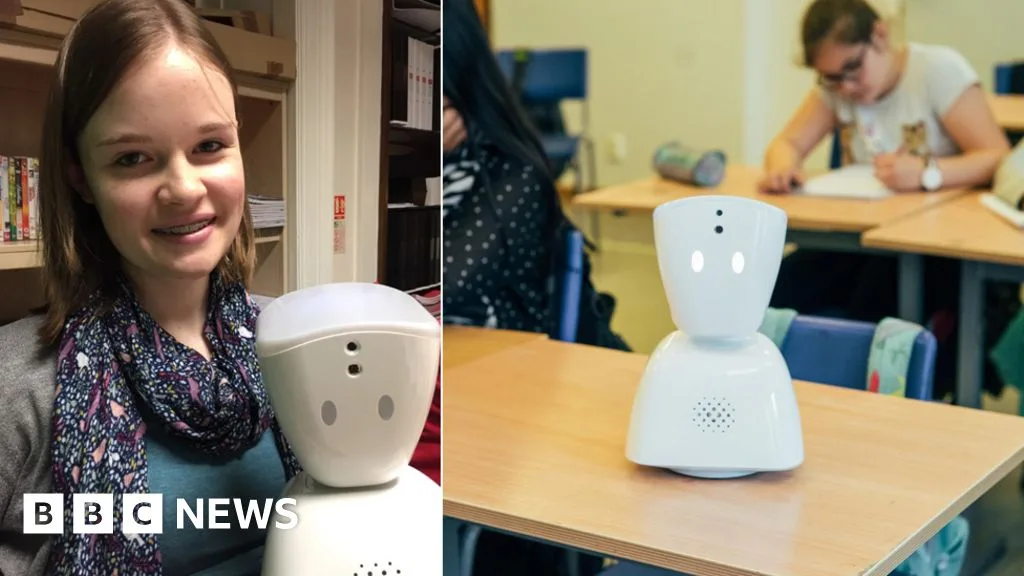
Internet-connected robots that stream audio and video are helping housebound sick children and elderly people keep in touch with teachers, family and friends, combating isolation and loneliness. One such robot, AV1, made by Oslo-based start-up No Isolation, sits in classrooms and live streams to a child's tablet or smartphone at home.
Zoe Johnson, 16, from the UK, has myalgic encephalomyelitis (ME), also known as Chronic Fatigue Syndrome. She missed much of her schooling but used AV1 to take classes alongside former classmates. 'It makes my life a lot more exciting and makes me feel like I haven't been forgotten,' she says. With the robot's help, she took five GCSE exams and will now study History A-level.
Karen Dolva, co-founder of No Isolation, says children wanted a presence somewhere they weren't, but also felt more comfortable not being on display. AV1 allows children to see and hear the classroom, while others only hear their voice through the robot's speaker. The robot costs £2,200 to buy or £167 a month to rent.
Telepresence robots are also used for elderly people. Dor Skuler, CEO of Intuition Robotics, developed ElliQ, an AI robot that suggests activities like going for a walk or listening to music. The market for telepresence robots is expected to grow from $164m to $237m by 2023, according to ABI Research.




