An 11-year-old schoolgirl has received an ultra-rare brain tumour diagnosis after suffering from debilitating vomiting episodes reaching up to 16 times daily, accompanied by sudden vision loss and severe headaches.
Initial Symptoms and Hospital Admission
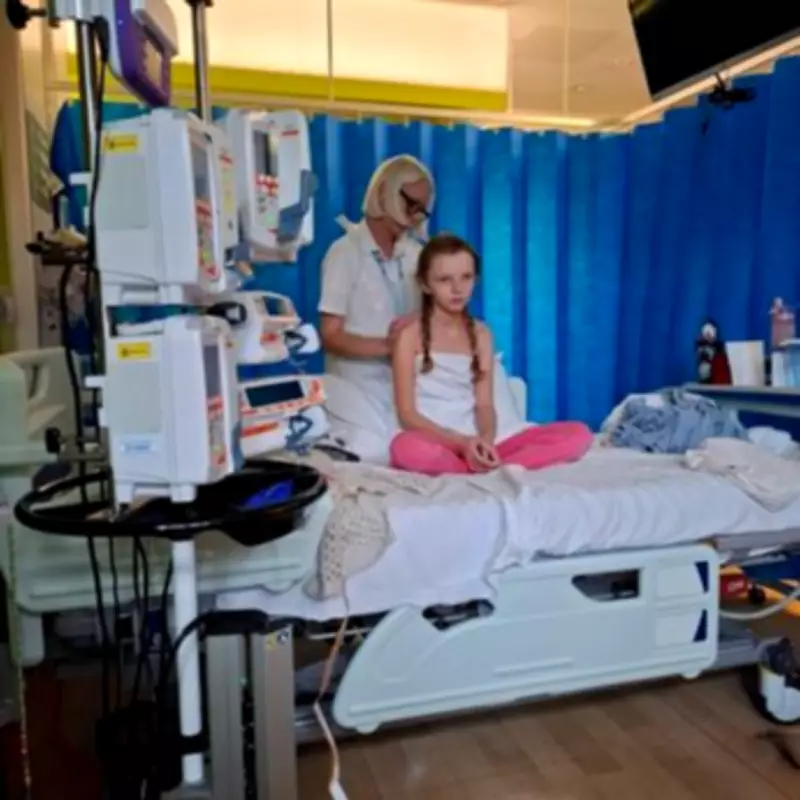
Millie Butler from Cobham, Surrey, began experiencing headaches and nausea in late September 2025. Her father, Conal Butler, 36, received a call from her school on September 26th requesting he collect her due to vomiting. Over the following days, Millie's condition deteriorated dramatically, with vomiting episodes escalating to 16 times per day and the alarming discovery that she had lost her peripheral vision.
Paramedics transported Millie to St Peter's Hospital in Chelsea, where medical staff initially considered stress as a potential cause. However, an MRI scan conducted the next day revealed a significant brain haemorrhage, prompting immediate neurological observation. Millie remained hospitalized for eight days before being discharged, with doctors suspecting an underlying brain tumour but needing to wait three weeks for the blood to be reabsorbed before proper assessment could occur.

Diagnosis and Surgical Intervention
Barely a week after returning home, Millie was rushed back to hospital by ambulance following another severe vomiting episode. Subsequent scans confirmed the blood had cleared, but revealed a brain tumour that had emerged and expanded since her previous examination. The tumour required immediate surgical removal.
On October 22nd, surgeons performed a three-hour procedure to completely excise the approximately 50mm tumour. Subsequent biopsy and testing identified it as a primary intracranial sarcoma dicer1 mutant - an exceptionally rare form of cancer that constitutes just 0.02% of all paediatric brain tumours in the United Kingdom.
Treatment Plan and Prognosis
Millie's consultant confirmed that her cancer is so rare that her treatment plan has been developed with input from leading neurologists and oncologists from America, Germany, and Canada. The family participates in medical meetings twice weekly to monitor her progress.
Millie now faces an intensive treatment regimen consisting of three rounds of chemotherapy, followed by six weeks of proton beam therapy, and a further four to six rounds of chemotherapy. Additional treatment may be required in the future. Remarkably, scans taken just before her first chemotherapy session showed the tumour had already begun regrowing, though subsequent treatment has successfully shrunk it to the point where additional surgery is no longer necessary.
Family Response and Fundraising Efforts
Conal Butler, who has become a full-time carer for his daughter, expressed profound admiration for Millie's resilience. "All my strength comes from her. Millie's been amazing," he said. "I just remember the thing that broke my heart the most was after her surgery when we found out it was cancer and she needed to go through treatment."
He recalled Millie's response to learning she needed chemotherapy: "She was sitting on the sofa after her treatment and said 'I'm so much better, I can go back to school soon.' I told her she needed chemo and she took it so well. I'm convinced, and I can't speak for anyone else's kids, not many kids can handle it like her."
Millie's grandparents, Sue, 63, and Brian, 66, are raising funds to enable her to visit a friend who recently relocated to New Zealand - a celebratory trip planned for September following completion of her treatment. Conal shared that Millie has agreed to donate bone marrow and blood for research purposes, demonstrating her concern for others despite her own challenges. "She's so kindhearted, she would give you her last penny. It's so unfair this is happening to her," he added.
Rarity of the Condition
The extreme rarity of Millie's condition means there is insufficient data to form standardized treatment protocols. Conal estimates that "maybe one or two" individuals in the UK were diagnosed with this specific brain tumour last year, highlighting the exceptional nature of her medical journey and the challenges faced by families dealing with ultra-rare paediatric cancers.