

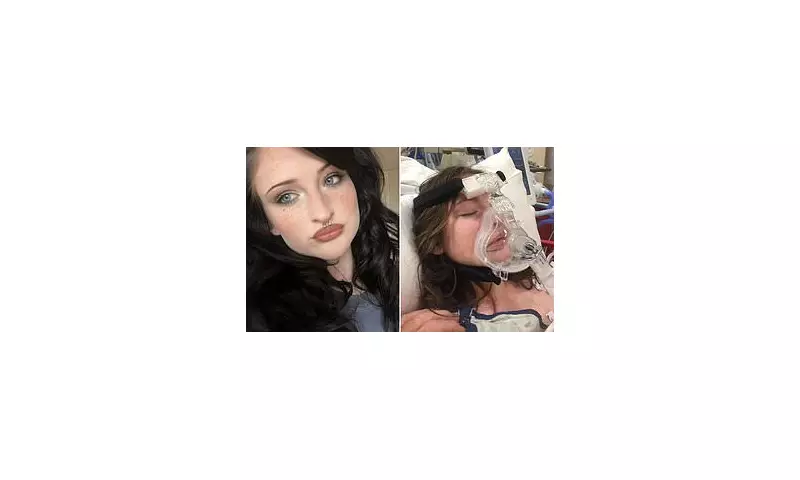
A seemingly healthy 14-year-old cheerleader and football player from Cheyenne, Wyoming, was given an 'almost zero' chance of survival after a common flu virus triggered a catastrophic chain reaction in her body. Trinity Shores' story, from a bad cold to a two-month medically induced coma, serves as a stark warning during a major flu season.
From School Fever to Life Support
In early January 2018, Trinity Shores was sent home from school with a fever of 100F (37.8C). A family doctor diagnosed a simple viral infection. Yet, by lunchtime that same day, she could no longer stand. Her stepfather rushed her to hospital, where doctors delivered a terrifying prognosis.
Her lungs had filled with fluid, starving her brain of oxygen, and her organs were beginning to shut down. She was diagnosed with severe pneumonia, a lung infection, and placed on a breathing machine. The cause was influenza B, a strain responsible for about one in four flu cases.

A Desperate Fight for Survival
Fearing she would not survive the night, doctors arranged an air ambulance to a specialist hospital in Aurora, Colorado, 110 miles away. Before the transfer, her parents were told to prepare for the worst.
To keep her alive for the journey, she was sedated and placed on life support. Thick metal tubes, or cannulas, were inserted into her neck to take over for her failed lungs. She was also put on dialysis after her kidneys stopped working.
"Doctors would tell me to move my hands, and I was screaming inside, 'I AM! Why can't you see it?!'" Shores recalled of the journey, during which her brain created disturbing alternate realities. She was then placed in a medically induced coma to reduce inflammation.
The Long Road to Recovery
For two months, Shores remained in the coma. Her heart stopped daily and had to be restarted by doctors. She eventually developed sepsis, a life-threatening immune system overreaction. After her vital signs improved, doctors began to wake her.
"I woke up and thought I was blind," she said, describing the disorientation. Weak from muscle wastage, it took weeks to relearn how to walk and months to speak again. She endured three open-heart surgeries to remove the cannulas, one of which had failed, causing her to lose a pint of blood.
Her mother's constant presence at her bedside was a crucial lifeline. "She manifested my recovery before anyone believed it was possible," Shores said. After eight months, she finally returned to school.
A Lasting Legacy and a Warning
Now 22, Shores lives with permanent lung damage, a condition called bronchiectasis, which causes daily mucus build-up. She uses a nebuliser and is determined to regain her fitness.
Her case emerges amid a significant flu season in the United States. The Centers for Disease Control and Prevention (CDC) reports at least eight child and teen flu deaths this season, with over 15 million infections, 180,000 hospitalisations, and 7,400 total deaths. This marks a sharp increase from the same period last year.
"I survived for something bigger," Shores reflects. "I just don’t know what yet. I’m just happy to be alive. And to drink my own water whenever I want." Her story is a powerful reminder of the potential severity of seasonal influenza.






