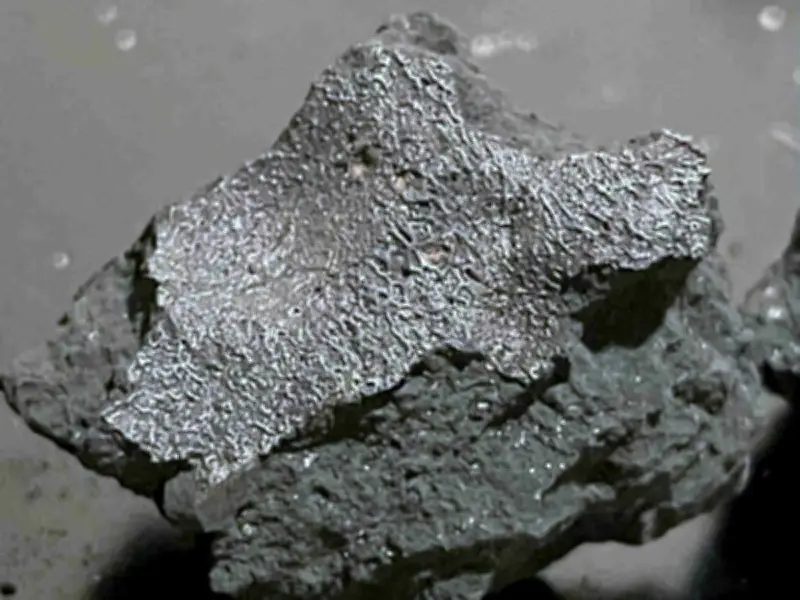
A meteorite that tore through a house roof in New Jersey has been found to contain pristine salty fluids, which scientists say could hold the key to understanding the origins of alien life. The space rock, which crashed into a bedroom in Hillsborough, New Jersey, on July 16, 2024, has been officially named 'Hillsborough' and is now the subject of a study published in the journal Science Advances.
Dramatic Entry and Quick-Thinking Homeowner
The meteorite entered Earth's atmosphere at a blistering 32,000 miles per hour, generating a massive sonic boom that rattled New York City. The fiery spectacle was observed by dozens of stargazers across five states before the meteor broke apart over Staten Island and New Jersey. A two-pound chunk survived the fall, smashing through the ceiling of a home in Hillsborough and landing in the master bedroom.
The homeowner, who was present at the time, described the event: 'I was at home at the time, heard a loud crash, and found a hole in the ceiling of the master bedroom. I smelled a strong sulphur-like odour and saw many black fragments along with debris and black dust that covered my bed, carpet and surrounding areas.' Acting swiftly, the resident donned disposable gloves, wrapped the fragments in aluminium foil, and sealed them in glass jars to prevent Earthly contamination.

Scientific Breakthrough: Salty Fluids and Prebiotic Compounds
That quick action has enabled a major scientific breakthrough. Analysis of the fragments revealed they contain preserved salty fluids from near the surface of a small primitive asteroid. Lead author and meteor astronomer Peter Jenniskens of the SETI Institute and NASA's Ames Research Center stated: 'A forensic study of the fragments revealed that they contained preserved bits from near the surface of a small primitive asteroid where it experienced concentrated salty fluids – a process not previously known from this type of proto-planet world.'
Jenniskens added: 'Thanks to the homeowner’s quick reaction, these are the most pristine CM1/2 meteorites we know of.' The rock also contains a rich mix of carbon compounds, amino acids, and prebiotic ingredients, offering crucial clues about how the essential building blocks of life first arrived on Earth.
Priceless Fragments Headed to Museum
The priceless fragments are now being transferred to the American Museum of Natural History in New York City for preservation and further study. Museum curator Denton Ebel commented: 'We are thrilled that nature delivered such a precious asteroid sample on our doorstep.'