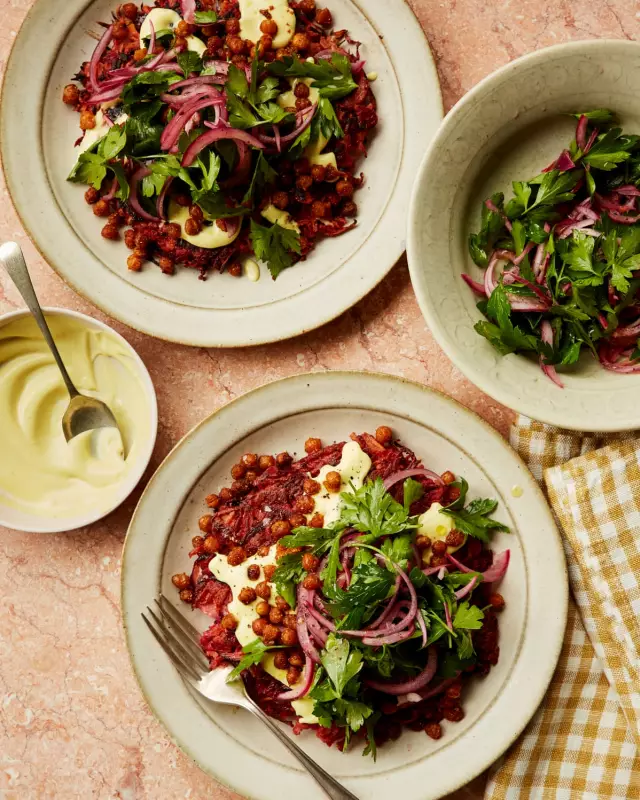
For those seeking a transformative addition to their weekend brunch repertoire, a celebrated chef has unveiled a recipe that promises to delight the senses. Kenji Morimoto's creation for a root vegetable rösti, accompanied by crisp chickpeas, a parsley and red onion salad, and a bold mustard aïoli, offers a masterclass in texture and flavour.
A Dish Built for Satisfaction and Customisation
Morimoto, a self-confessed rösti enthusiast, champions this dish as the ultimate meal for any time of day, but particularly for a leisurely brunch. The recipe cleverly utilises the diverse range of root vegetables available, encouraging cooks to use a combination of at least two varieties such as beetroot, sweet potato, or parsnip for the best results. A significant practical advantage is that these fritters freeze exceptionally well, allowing for effortless future meals.
Deconstructing the Recipe's Components
The dish's brilliance lies in its harmonious components. The star is the rösti itself, made from 300g of grated root veg, bound with plain flour and an egg, then pan-fried to a golden crisp. It's served with three key accompaniments that elevate it from simple to spectacular.

First, crisp curried chickpeas provide a protein-packed crunch. A 400g tin is drained, tossed with olive oil, salt, curry powder, and smoked paprika, then baked for 15-20 minutes until perfectly crisp. Second, a vibrant, quick-pickled salad of red onion and parsley, dressed with lemon zest, juice, and sumac, cuts through the richness with a welcome acidic note. Finally, a punchy mustard aïoli, blending mayonnaise, English mustard, and lemon juice, adds a creamy, tangy finish.
Step-by-Step Assembly for the Perfect Plate
The total preparation and cooking time is around one hour, serving two to four people. The process begins by crisping the chickpeas in an oven preheated to 200C (180C fan)/390F/gas 6. While they bake, the salad can be assembled—even a day in advance—and the aïoli whisked together. The rösti mixture is then formed into patties and cooked in a neutral oil over a low-medium heat for five to seven minutes on each side until golden and crisp-edged.
For easier flipping, especially when serving more people, Morimoto suggests making smaller rösti, noting the cooking time will be slightly reduced. To serve, the warm rösti is placed on a platter, generously drizzled with the mustard aïoli, topped with a sprinkling of the crisp chickpeas, and finished with a heap of the bright pickled salad. Any leftover chickpeas or aïoli can be saved for sandwiches or other salads.
The recipe is featured in Morimoto's latest book, Ferment: Simple Ferments and Pickles, and How to Eat Them, published by Pan Macmillan at £22. It stands as a testament to how layered textures and bold, complementary flavours can create a deeply satisfying and visually stunning centrepiece for any casual gathering.