Tragic Death of 91-Year-Old Following Extended Ambulance Wait at Scottish Hospital
A 91-year-old woman has died after waiting for four hours in an ambulance before being admitted to hospital, in a case that highlights significant pressures on emergency healthcare services in Scotland.
Emergency Response and Hospital Delay
Christina Chisholm, from Nairn, was taken to the Accident and Emergency department at Raigmore Hospital in Inverness on December 8 after developing breathing difficulties. The ambulance arrived at the hospital shortly after 11pm, but paramedics informed her daughters, Elizabeth McDonald and Grace Chisholm, that there would likely be a four-hour wait for admission, with three other ambulances already queuing ahead of them.
Ms Chisholm had been unwell for several days, with a GP visiting her out of hours the night before her hospital admission. "She suggested she could go into hospital then, but mum was always absolutely clear that she never wanted to go in unless it was to be treated for something that could only be cured by going there," Elizabeth explained. "Otherwise she wanted to stay at home and she had a DNR (do not resuscitate) note in her records."

Deteriorating Condition and Hospital Transfer
When Christina's condition worsened the following night, the family called the GP again seeking another home visit. They were instead advised to call an ambulance. Although initially reluctant, Christina was eventually persuaded that hospital was necessary.
Paramedics provided oxygen during the journey, which immediately improved her oxygen levels to 99%. "While she was taking that, her [oxygen] levels were at 99, which was excellent," Elizabeth recalled. "But as soon as it was removed that level immediately dropped."
The family had assumed the ambulance would take Christina to Nairn Town and County Hospital, but paramedics explained that procedure required transfer to Raigmore Hospital instead.
Extended Wait and Critical Incident
Upon arrival, the family discovered for the first time that Christina would not be admitted immediately. "The paramedics cared for her throughout her wait - we don't want to blame any one individual for what happened," Elizabeth stated. "But as time was going on my mum was finding the oxygen mask more and more irritating and she was starting to feel quite claustrophobic in the ambulance."
Christina asked if she could wait in the hospital waiting room instead, but was told this wasn't possible as she required oxygen that couldn't be administered there. A nurse finally assessed her at around 3.30am - the first time hospital staff had examined her since arrival.
Shortly after 4am, Christina said she needed to use the toilet. Paramedics took her inside on a chair while her daughters made their way to the A&E waiting area. "Within about two minutes of getting in the door we heard an alarm going off and then shortly after that a paramedic came and told us we needed to come through," Elizabeth described. "We were told that mum had had a turn in the toilet and that the doctor needed to speak to us."
Fatal Outcome and Hospital Admission
Elizabeth and Grace were informed that their mother's heart had stopped, she was in resuscitation, and they needed to go in quickly as she didn't have long. She died shortly afterwards.
At a subsequent meeting with hospital authorities, a consultant told the family that the wait in the ambulance had been the cause of Christina's death, as she didn't receive the care she required. They were told that had she been admitted to hospital sooner, "she would still be with us."
It also emerged that oxygen had not been taken with Christina from the ambulance to the toilet, which the hospital later confirmed they believed was a contributing factor to the final outcome.
Investigation and Family Concerns
The cause of death was ruled as RSV (respiratory syncytial virus), exacerbated by COPD (chronic obstructive pulmonary disease) - a condition the family said she had been diagnosed with but never directly treated for.

Because of the manner of her death, a police investigation and post-mortem examination had to be carried out, delaying Christina's funeral until Christmas Eve, which Elizabeth described as "horrendous." The matter is now with the procurator fiscal.
The family believes that if Christina had been told about the likely four-hour wait, she would not have agreed to go to hospital. "She had full capacity," Elizabeth emphasised. "She knew what she wanted. If she had decided not to go to hospital then we would have requested a GP home visit. We believe a GP referral would have allowed her to be admitted direct to a ward and not A&E. That is what should have happened."
Systemic Issues and Routine Delays
Elizabeth and Grace expressed shock at how routine and accepted the long wait seemed to be at Raigmore Hospital. "We blame the system," Elizabeth stated, summarising the family's perspective. "Paramedics are working in conditions that are not acceptable but they are coming to expect that on shift they will be sitting outside Raigmore Hospital for six hours or more - that's not right. Something needs to be done about that."
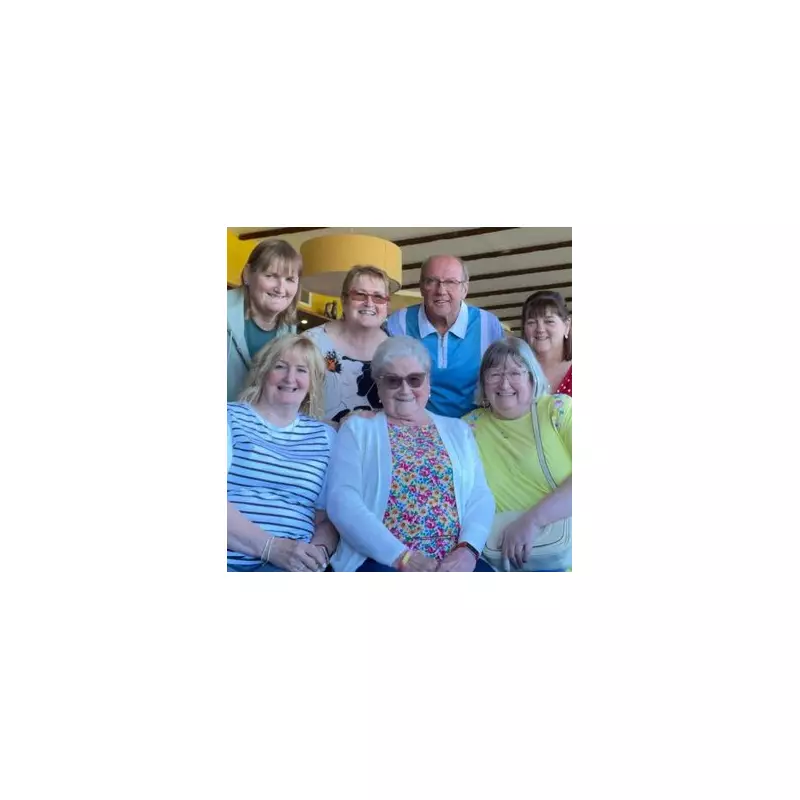
Christina Chisholm, originally from Clydebank near Glasgow, moved to Nairn with her family in the mid-1970s. A mother of six with 22 grandchildren, three great-grandchildren and four great-great-grandchildren, she remained active and independent until her final days. "Even at 91, we feel she still felt in herself that she was capable and had a lot to live for," Elizabeth reflected. "We just want to do what we can to make sure another family doesn't have to go through what we have."
Official Responses
A spokesperson for the Scottish Ambulance Service said: "We would like to extend our deepest sympathies to the patient's family at this extremely difficult time. If the family would like to directly discuss any concerns about our response, we'd ask them to contact our patient experience team."
For NHS Highland, a spokesman stated: "Our sympathies are with the family at this time. Due to patient confidentiality it would however not be appropriate for us to comment on individual cases. We would encourage the family to contact us directly to discuss their case."