The Vagus Nerve: From Obscurity to Medical Breakthrough
How long have you got? That is Professor Owen Epstein's immediate response when questioned about the functions of the vagus nerve. As a pioneering consultant gastroenterologist with special interests in gastrointestinal health, Epstein represents the vanguard of medical professionals exploring this remarkable physiological structure. Much like the gut microbiome before it, the vagus nerve has transitioned from relative obscurity to mainstream recognition, driven by genuine scientific advances that illuminate its critical role in human health.
The Body's Internal Communication Superhighway
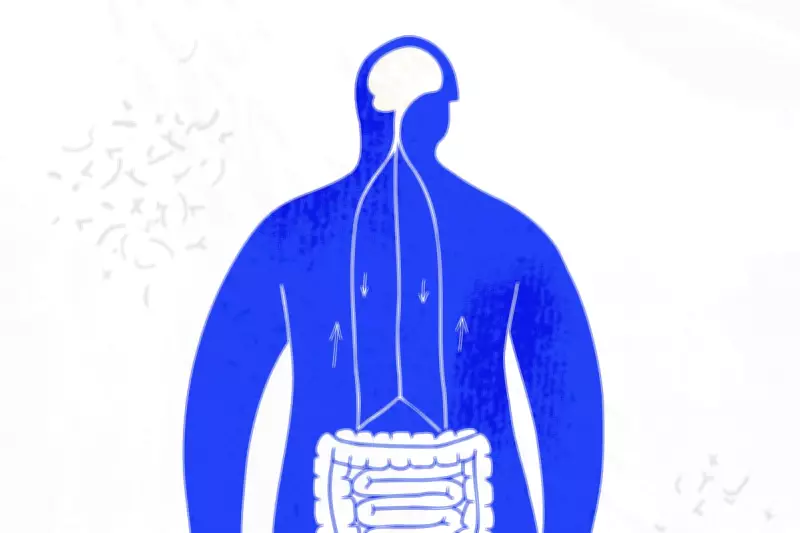
Essentially functioning as the body's intranet, the vagus nerve constitutes an incredibly complex information-sharing system connecting the brain to nearly every internal organ. Professor Epstein explains that it provides consciousness with precise data about our internal state, orchestrating communication between organs to maintain stability and wellbeing. He likens its function to that of an orchestra conductor, constantly modulating organ activity—signaling hunger, fullness, or the need for elimination within the gastrointestinal tract alone.
Technically, we possess not one but two vagus nerves—one on each side—each comprising approximately 100,000 individual nerve fibers. Dr. Kevin Tracey, a neurosurgeon and scientist, emphasizes that every one of these 200,000 fibers has specific origins, destinations, and functions refined through millions of years of evolution. This intricate network serves as the body's internal surveillance mechanism, monitoring organ function with remarkable precision.

Accidental Discovery and Medical Applications
Dr. Tracey's fascination with the vagus nerve began accidentally during 1990s inflammation research. His team discovered that anti-inflammatory molecules administered to animal brains could halt bodily inflammation—a phenomenon inexplicable until they recognized the vagus nerve's role as a communication pathway between nervous and immune systems. This revelation challenged previous assumptions that inflammation regulation occurred independently of neural mechanisms.
Understanding this connection has spawned the field of bioelectric medicine, utilizing vagus nerve stimulation devices to treat various conditions. Clinical trials demonstrate positive outcomes for epilepsy, diabetes, Crohn's disease, fibromyalgia, irritable bowel syndrome, and stroke recovery. Larger studies are planned for multiple sclerosis and obesity-related metabolic syndrome applications. Notably, vagus nerve stimulation has shown depression remission in approximately fifty percent of patients, though scientists continue investigating the underlying mechanisms.
Innovative Devices and Treatment Modalities
Dr. Tracey's team developed the SetPoint System, an FDA-approved implant delivering daily one-minute vagus nerve stimulations to alleviate rheumatoid arthritis symptoms without immunosuppressant risks. Other medical-grade devices include non-invasive wearables like Nurosym, which delivers vagal neuromodulation therapy through ear skin electrical impulses. Researchers theorize that autoimmune diseases may partially stem from faulty vagus nerves losing modulation control, resulting in overactive immune responses against bodily tissues.
Professor Epstein suggests similar mechanisms might underlie long Covid and post-viral fatigue syndrome, distinguishing between hardware issues detectable via imaging and software issues involving corrupted neural communication. This perspective extends to PTSD and chronic anxiety, connecting to Stephen Porges' polyvagal theory describing autonomic nervous system regulation through three states: fight-or-flight mobilization, immobilization shutdown, and social engagement activation.
The Wellness Industry's Murky Claims
Alongside legitimate medical advances, wellness industry exploitation has proliferated, with unverified experts promoting unproven devices and techniques. Professor Epstein warns against indiscriminate vagus nerve stimulation application, emphasizing the need for proper evaluation before treatment. Unregulated practitioners frequently employ legitimate devices on individuals without demonstrated need, while unproven products make spurious stimulation claims.

Dr. Tracey identifies devices retailing for over £300 that claim to tone the vagus nerve using infrasonic waves, citing company-commissioned rather than independent research. These studies typically lack peer review, control groups, adequate sample sizes, or replication. Additional claims regarding deep breathing, cold-water immersion, humming, gargling, singing, and yoga as vagus nerve activators further complicate the landscape.
While these unproven approaches generally pose no direct health risks, Dr. Tracey warns they create significant harm by undermining legitimate science. When overstated or incorrect claims gain social media traction through likes and shares, they cheapen sophisticated research that has genuinely revealed vagus nerve functions. This erosion of scientific credibility ultimately impedes medical progress, creating an environment where people may eventually distrust all related claims—both valid and invalid.