In a landmark move for first responder welfare, the United States government has enacted a new law providing substantial financial support to firefighters who develop cancer in the line of duty. The legislation guarantees a significant compensation payment and covers the cost of university education for their families.
Details of the Honoring Our Fallen Heroes Act
President Donald Trump signed the bill into law on Thursday, 18 December 2025. The provisions were included within this year's annual defence spending bill. The bipartisan measure, known as the Honoring Our Fallen Heroes Act, was first introduced by Senators Amy Klobuchar, a Minnesota Democrat, and Kevin Cramer, a North Dakota Republican.
The law mandates that firefighters who die or are disabled by approximately 20 types of smoke-related cancers will be automatically classified as having suffered a line-of-duty death or injury. This classification makes them eligible for a tax-free, one-time payment of $448,575 (approximately £350,000). Furthermore, their children or spouses will receive financial support to attend a four-year college or university.

"Our first responders epitomise courage and selfless sacrifice, confronting both the immediate perils of their duty which are extreme and the lingering health risks associated with their service," Senator Cramer stated following the enactment. "Their exposure to dangerous carcinogens happens on our behalf. When these heroes make the ultimate sacrifice, their families should not have to bear these burdens alone."
The Human Story Behind the Legislation
The law was inspired by the tragic case of Michael Paidar, a fire captain from Minnesota who died from leukaemia in 2020. During his 15-year tenure with the St. Paul Fire Department, Captain Paidar responded to more than 1,600 fires. He remained in good health for most of his career but passed away just months after his cancer diagnosis.
His widow, Julie Paidar, expressed gratitude for the new act. "Every day, our nation’s first responders selflessly serve and protect their communities," she said. "Unfortunately, through exposures on the job, many are also fighting occupational cancer."
Previously, firefighters were only eligible for federal relief for physical injuries sustained on duty, or for deaths resulting from strokes, heart attacks, mental health conditions, and illnesses linked to the 9/11 attacks.
Elevated Cancer Risks and Ongoing Safety Challenges
The legislation addresses a well-documented occupational hazard. Multiple studies confirm that firefighters face a significantly higher risk of certain cancers due to exposure to toxic substances at fire scenes.
- A 2023 meta-analysis found firefighters have higher rates of skin melanoma and prostate cancer compared to the general population.
- Research from the University of Cincinnati revealed that rates of testicular cancer among firefighters are 100 percent higher than in the general population.
- The same study indicated firefighters are 50 percent more likely to develop non-Hodgkin's lymphoma and multiple myeloma.
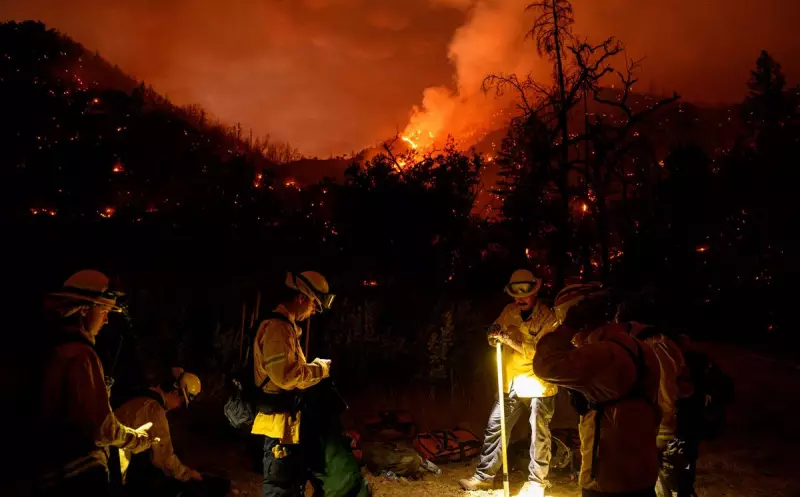
Despite these known dangers, reports indicate that wildfire crews across the US have often been barred from wearing protective respirators while battling blazes, due to concerns over mobility and communication. A separate bipartisan bill introduced in November aims to rectify this by requiring the Forest Service to mandate mask-wearing.
This new support for firefighters comes at a critical time, as wildfires grow more intense and difficult to manage globally. According to the World Resources Institute in Washington, D.C., wildfires now burn more than twice as many trees as they did two decades ago, with rising temperatures being a primary driver.