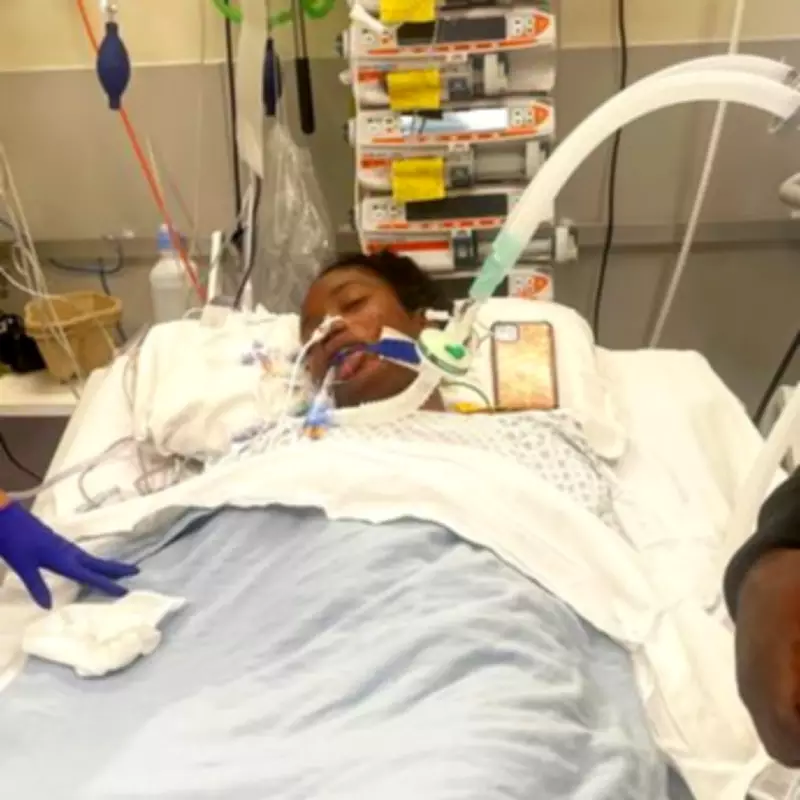
Student's Meningitis Misdiagnosis Leads to Devastating Amputations
Ketia Moponda, a 20-year-old marketing and advertising student, endured a horrific medical ordeal after what she initially believed was fresher's flu turned out to be a life-threatening case of meningitis. The tragedy unfolded shortly after she began her studies at De Montfort University in Leicester, ultimately resulting in the amputation of both her legs and all ten fingers.
From Fresher's Flu to Life-Altering Diagnosis
Ketia fell ill on September 25, 2024, just eight days into her university experience. Like many new students, she suspected she had contracted fresher's flu, a common term for viral infections that spread during the initial weeks of academic life. However, her condition rapidly deteriorated.
She was found unconscious in her room and rushed to Leicester Royal Infirmary hospital, where doctors diagnosed her with meningococcal septicaemia. This bacterial infection triggered both meningitis and sepsis, creating a perfect storm of medical complications that would forever change her life.

The Kent Outbreak and Calls for Action
Ketia's personal tragedy has taken on renewed significance amid a growing meningitis outbreak in Kent. The UK Health and Security Agency (UKHSA) is currently investigating 20 potential cases of meningitis B, with two fatalities already confirmed: an 18-year-old sixth form pupil named Juliette and a 21-year-old student.
"I am devastated that there have been two deaths due to meningitis," Ketia expressed. "I feel so sad that lessons haven't been learned since I last spoke out. It's unforgivable not to have made more of an effort to prevent this."
A Grueling Medical Journey
Ketia's medical battle was both prolonged and traumatic. After being admitted to intensive care, she was placed in a coma for two days. Upon waking, she faced weeks of complications including a flesh-eating bug infection that required skin grafting.
By January 7, 2025, the damage to her extremities had become irreversible. Surgeons at Queen Elizabeth Hospital in Birmingham performed amputations on all her fingers and both legs just below the knees.
"Basically my legs had died because of a lack of blood going to them," Ketia explained. "It was terrible. I just kept crying all the time. I felt so hurt, it was killing my spirit."
Survival Against All Odds
Medical professionals had prepared Ketia's family for the worst possible outcomes. "When I got to hospital my blood oxygen level was at 1 percent," she revealed. "My organs were failing, and doctors told my family that if I woke at all I'd likely be brain dead."
Despite these dire predictions, Ketia survived her five-month hospital stay. She was discharged on February 24, 2025, and has since been fitted with prosthetic lower legs. Remarkably, she has already begun walking in parks without assistance, defying expectations about recovery timelines.
Advocacy for Prevention and Awareness
Ketia has become a vocal advocate for meningitis prevention, particularly targeting the student population. She emphasizes the rapid progression of the disease and the critical importance of early intervention.
"Meningitis progresses very very quickly. It's a matter of seconds between life and death," she warned. "A vaccine can really reduce the likelihood of fatalities."
She specifically calls for awareness campaigns that utilize social media and feature young people who can relate to student experiences. "Universities and the government need to run campaigns using young people and social media so that students can relate to them," she urged.
Rebuilding Life with Determination
Before her illness, Ketia was an active gym enthusiast who dreamed of pursuing modeling. While her physical capabilities have changed dramatically, her ambitions remain intact.
"I loved being active and I will be again," she declared. "At first I thought I'd give up on modeling but I won't. You don't have to hide who you are. This doesn't make me less of a person."

Ketia describes herself as "unapologetically me" and hopes to inspire others facing similar challenges. "I'm very headstrong and I plan to break all the barriers of disability," she affirmed, demonstrating remarkable resilience in the face of unimaginable adversity.
The Ongoing Mystery and Broader Implications
A particularly heartbreaking aspect of Ketia's experience is that medical professionals never determined how she contracted the illness. Her case highlights the unpredictable nature of meningitis and underscores why prevention and awareness are so crucial.
As the Kent outbreak continues to develop, with health authorities declaring it a "national incident," Ketia's story serves as both a cautionary tale and a call to action for improved public health measures targeting vulnerable populations like university students.