
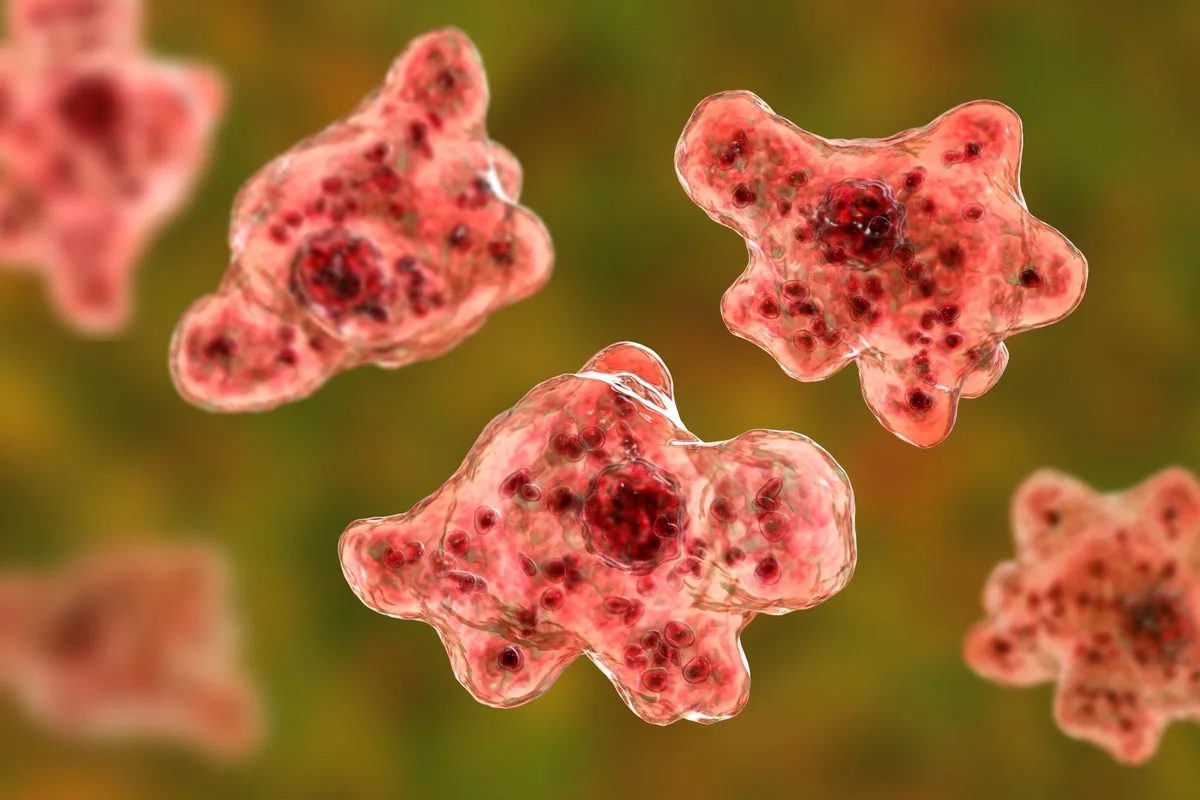
Scientists are calling for urgent action on free-living amoebas, a little-known group of microbes that could pose a growing global health threat. These single-celled organisms, found in soil and water, can change shape and move using pseudopodia, allowing them to thrive in diverse environments.
The most notorious free-living amoeba is Naegleria fowleri, or the “brain-eating amoeba,” which lives in warm freshwater between 30°C and 40°C. Infection occurs when contaminated water enters the nose, typically during swimming, and the amoeba travels to the brain, destroying tissue with a mortality rate of 95-99%. While rare in temperate countries like the UK due to cold weather, it has occasionally been found in tap water, particularly when warm and poorly chlorinated.
Free-living amoebas can also act as living shields for other harmful microbes, protecting them from disinfection. Bacteria such as Mycobacterium tuberculosis and Legionella pneumophila, fungi like Cryptococcus neoformans, and viruses including norovirus and adenovirus can survive and multiply inside amoebas, potentially becoming more dangerous and spreading antibiotic resistance.
Climate change is exacerbating the threat by expanding the habitable zone for heat-loving amoebas like Naegleria fowleri into previously cooler regions. Warmer waters, longer warm seasons, and increased human contact with water are making risk control more difficult. Recent outbreaks linked to recreational water exposure have raised concern in multiple countries.
Most water systems are not routinely checked for free-living amoebas due to their rarity and the need for specialised tests. Prevention relies on proper chlorination, maintaining disinfectant levels, and regular system flushing. Beyond brain infections, these amoebas can cause eye infections in contact lens users, skin lesions in immunocompromised individuals, and rare systemic infections affecting the lungs, liver, and kidneys.




