New Evidence Challenges RFK Jr's Account of 2019 Samoa Visit
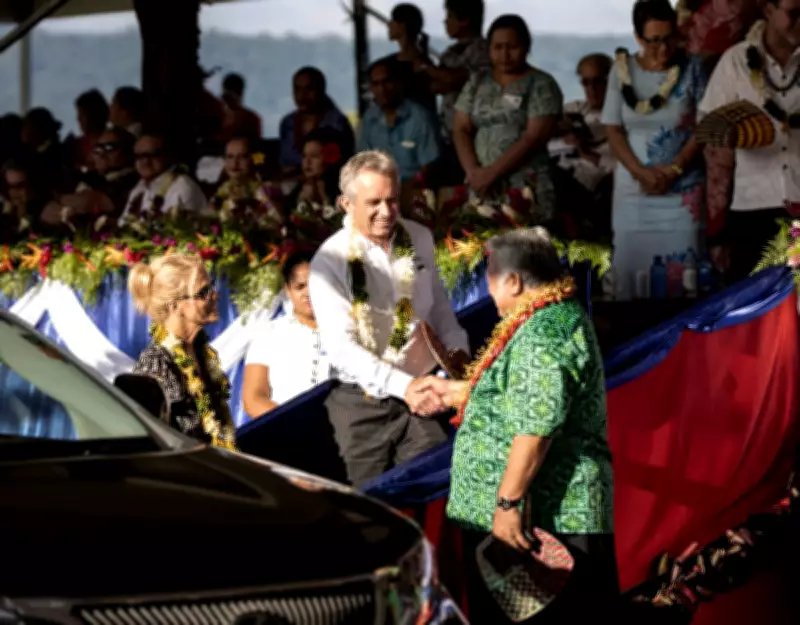
Freshly uncovered email correspondence directly contradicts Robert F Kennedy Jr's repeated assertions that his controversial 2019 trip to Samoa had "nothing to do with vaccines." The documents, obtained through open records litigation, provide unprecedented insight into the planning and motivations behind the visit that occurred just months before a devastating measles outbreak claimed 83 lives, predominantly young children.
Congressional Testimony Under Scrutiny
During extensive Senate confirmation hearings for his appointment as Health Secretary in January 2025, Kennedy consistently maintained that his Samoan journey was unrelated to vaccination matters. "My purpose in going down there had nothing to do with vaccines," he testified before Senator Edward Markey of Massachusetts. When pressed further, Kennedy reiterated: "Nothing to do with vaccines."
However, the newly revealed communications paint a markedly different picture. Embassy and United Nations staff emails from the period explicitly indicate that vaccine safety concerns motivated Kennedy's travel plans. These disclosures have prompted at least one US senator to suggest Kennedy may have provided false testimony to Congress regarding his involvement.

Embassy Involvement Revealed
The documents expose previously unknown details about how Kennedy's visit was orchestrated. Benjamin Harding, then a US embassy employee in Apia, Samoa, actively facilitated connections between Kennedy's delegation and Samoan government officials. In May 2019 correspondence, a staffer from Samoa's Ministry of Foreign Affairs and Trade specifically requested official biographical notes for Kennedy and his associate Dr. Michael Graven to present to the Prime Minister and Health Minister.
This level of embassy involvement contradicts earlier characterizations of US officials as merely passive observers. The emails reveal that embassy leadership became aware of Harding's participation and instructed him to "cease and desist from any further involvement" with Kennedy's travel arrangements.
Timing and Context of the Visit
Kennedy's trip occurred during a critical period in Samoa's public health landscape. In July 2018, two infants died after receiving improperly prepared measles, mumps, and rubella vaccines, prompting the government to suspend the national vaccination program for ten months. During this vaccine hiatus, Kennedy's organization, Children's Health Defense, began outreach to Samoan officials.
January 2019 emails show the group's then-president, Lyn Redwood, attempting to connect Kennedy with Prime Minister Tuilaepa Sailele Malielegaoi. Subsequent correspondence reveals logistical planning for Kennedy's visit, with local activist Edwin Tamasese coordinating with both the Prime Minister's office and embassy staffer Benjamin Harding.
Contradictory Accounts and Aftermath
While Kennedy has since claimed his visit focused on introducing a medical data system to track drug safety, contemporaneous accounts from UN and embassy officials tell a different story. Sheldon Yett, then UNICEF's representative for Pacific island countries, alerted embassy staff that "the real reason Kennedy is coming is to raise awareness about vaccinations" and associated health concerns.
Following the measles outbreak that infected thousands, Samoan officials asserted that Kennedy's visit bolstered anti-vaccine activists' credibility. Kennedy later wrote to the Samoan Prime Minister suggesting unsubstantiated theories about vaccine defects causing the outbreak.
Political Repercussions and Current Context
Senator Ron Wyden of Oregon, who questioned Kennedy about Samoa during confirmation hearings, responded forcefully to the new evidence: "Kennedy's anti-vaccine agenda is directly responsible for the deaths of innocent children. Lying to Congress about his role in the deadly measles outbreak in Samoa only underscores the danger he now poses to families across America."
These revelations emerge as measles outbreaks resurge across multiple US states, threatening to reverse decades of progress toward disease elimination. Kennedy, as Health Secretary, has utilized his position to reshape federal immunization guidance and amplify skepticism about vaccine safety, including regarding measles vaccines.

The disclosure of these emails raises significant questions about transparency and accountability at the highest levels of US health policy leadership, particularly as the nation confronts renewed public health challenges related to vaccine-preventable diseases.