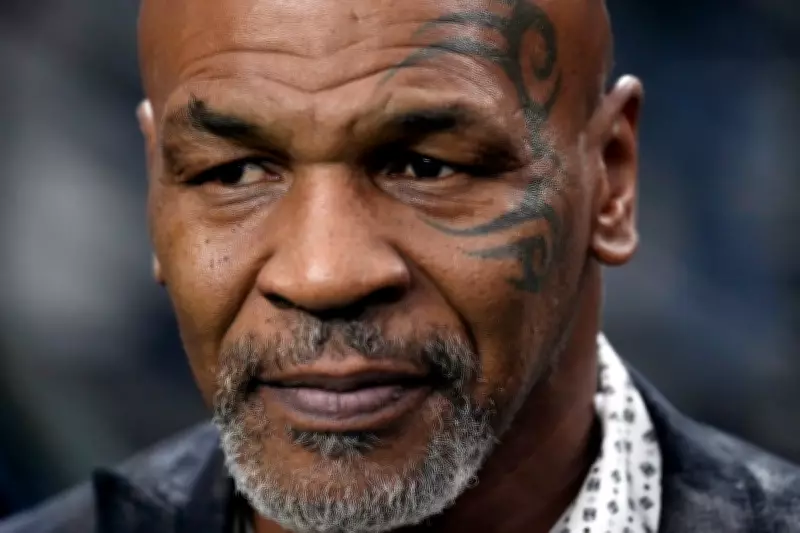
Health and Human Services Secretary Robert F. Kennedy Jr. has publicly commended boxing icon Mike Tyson for his participation in a deeply emotional Super Bowl advertisement that tackled junk food addiction and advocated for healthier dietary habits. Kennedy, speaking on Fox News' The Sunday Briefing, described the commercial as "extraordinarily powerful" and declared it "the most important ad in Super Bowl history."
A Personal Battle Against Processed Foods
The Secretary framed the prevalence of junk foods as a form of "spiritual warfare" waged against Americans, leading to what he termed "ruinous" consequences for the nation's overall health. Interestingly, Kennedy revealed that Tyson was initially provided with a script for the advertisement but swiftly diverged to share his own raw, personal struggles with food.
In the poignant black-and-white clip, released on Friday, the former heavyweight champion opens up about the tragic loss of his sister to obesity-related complications and confesses to his own past addiction to unhealthy, processed foods. "I was so fat and nasty, I would eat anything," Tyson admits directly to the camera, while shown consuming fresh fruit. "I was like 345 pounds."

Promoting New Federal Dietary Guidelines
Tyson emphatically states, "Something has to be done about processed food in this country," before directing viewers to RealFood.gov. This is the Trump administration's newly launched website detailing its revised healthy eating guidelines, which strongly advocate for the elimination of processed foods from daily diets.
The advertisement itself is sponsored by MAHA Center Inc., a governmental advocacy organization aligned with Secretary Kennedy. The group is led by Tony Lyons, a known Kennedy ally who also oversees an MAHA fundraising entity.
Expert Analysis and Criticism
However, the ad's approach has not been universally praised. Lindsey Smith Taillie, an associate professor of nutrition at the University of North Carolina Gillings School of Global Public Health, expressed concerns to The New York Times. She suggested that the commercial's reliance on eliciting feelings of shame might ultimately prove counterproductive to encouraging better eating habits. "It certainly isn't an effective strategy for promoting better eating, individual shame," she cautioned.
Debate Over the New Food Pyramid
While many experts have applauded the administration's broader initiative to promote whole, unprocessed foods, significant reservations have emerged regarding the specifics of its newly introduced food pyramid. This updated guide features an inverted pyramid design that places meat, cheese, and dairy products in a notably prominent position.
Susan Mayne, a professor of epidemiology at the Yale School of Public Health, highlighted this issue in a recent university interview. "What first stood out to me is the new inverted pyramid, where meat, butter and whole milk were given really striking prominence," she observed. "Protein is emphasized but not plant-based proteins such as beans."
Professor Mayne added a critical note on the visual metaphor, stating, "This pyramid conveys a shaky foundation, which is ironically consistent with some of the underlying science." The revised guidelines have thus sparked a nuanced debate among nutrition professionals, balancing support for reducing processed food intake with scrutiny over the specific dietary recommendations being promoted.