A crucial deal to extend federal subsidies that help millions of Americans afford their health insurance is now unlikely to be reached until the end of January, a key Republican negotiator has stated, as political divisions and a presidential veto threat create significant obstacles.
Negotiations Stall Over Hyde Amendment and GOP Support
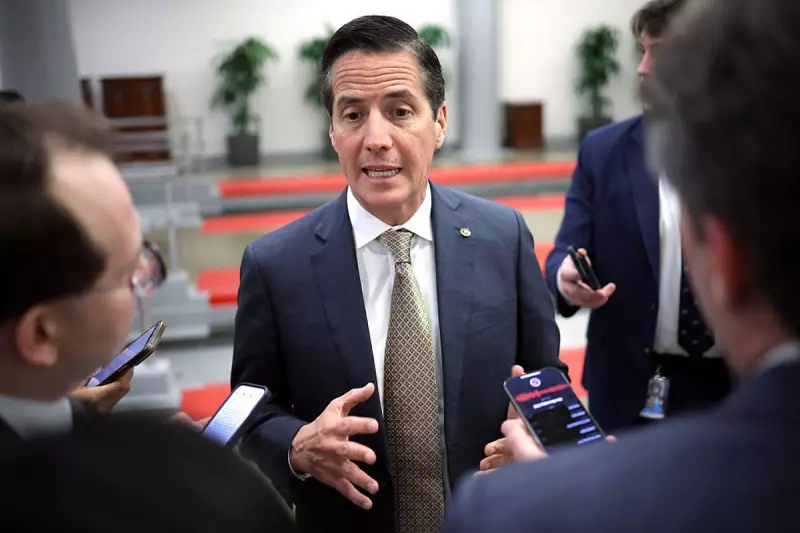
Senator Bernie Moreno, who is leading talks with Democrats alongside Senator Susan Collins of Maine, told reporters on Tuesday that the end of the month is the new target for an agreement. The subsidies, known as premium tax credits, expired at the end of December 2025, leaving many facing sharply higher costs for plans purchased on the Affordable Care Act's public exchanges.
The primary stumbling block remains the Hyde Amendment, which prohibits federal funds from being used for abortion care. According to reports, Moreno is seeking to craft a proposal with new penalties for insurance companies that violate this amendment. He has also insisted he will not advance any bill without the support of a majority of the Republican Senate caucus.

This requirement presents a major challenge given former President Donald Trump's vocal opposition. On Sunday, Trump told reporters aboard Air Force One that he might veto any legislation extending the subsidies, instead favouring direct payments to individuals. Republican senators have interpreted this as a push to divert funds into Health Savings Accounts (HSAs).
Political Fallout and Immediate Consequences for Americans
The delay and uncertainty are having a direct and painful impact. Data from the Centers for Medicare and Medicaid Services shows a sharp drop in sign-ups during the recent open enrolment period, with roughly 1.5 million Americans dropping their health plans entirely since the subsidies lapsed.
Premiums are now rising across the board, with an average increase of around 30 percent in states using the federal healthcare.gov exchange, according to a KFF analysis. More than 90% of plans on the public exchanges were previously supported by the now-expired credits.
Democrats continue to blame Republicans for the crisis, highlighting a failed attempt last year to tie the subsidy extension to votes to avert a government shutdown. However, Senate Democratic leaders have indicated they have no appetite for another shutdown fight in 2026.
Veto Threat and Election-Year Dynamics
The political landscape is further complicated by Trump's strained relationship with Senator Collins, whom he recently urged voters to abandon after a separate policy vote. Moreno, a closer ally to Trump, may need to secure strong GOP support first to build a potential veto-proof majority and avert the threatened rejection from the White House.
Senator Moreno, who voted against a clean three-year extension proposed by Democrats in December, emphasised his political calculus. "I have no interest in a bill that divides our conference," he told the Washington Examiner, stating he wants a bill that would secure around 35 Republican votes, not a minimal bipartisan majority.
With the 2026 midterm elections approaching, and Republicans defending seats in both chambers of Congress, the financial anguish caused by the subsidy lapse at the start of an election year could have significant political repercussions. Democrats hope to capitalise on the rising premium costs, while Republicans seek a solution palatable to their base and their party's standard-bearer.