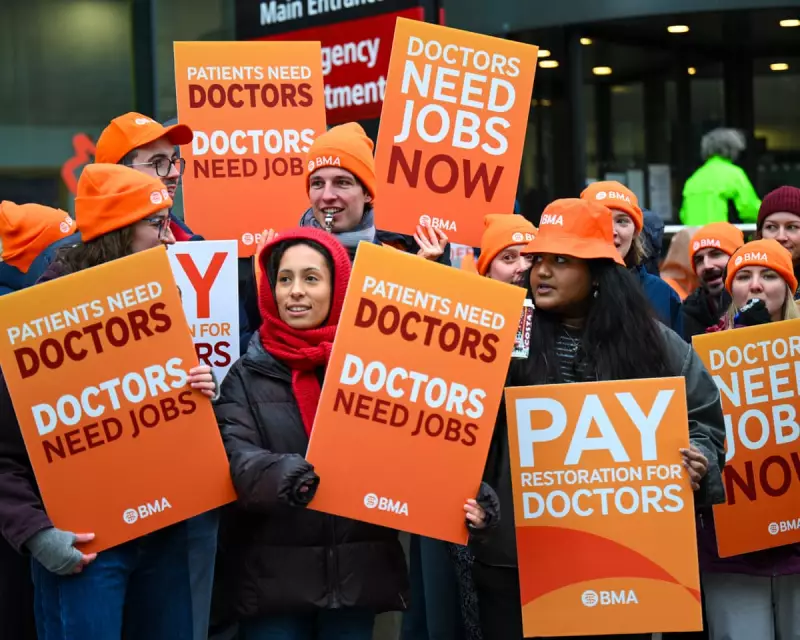
The five-day strike by junior doctors in England has reached its conclusion, but Health Secretary Wes Streeting has warned that the most challenging period for the NHS is yet to come as services attempt to recover during the health service's peak season.
Post-Strike Recovery Poses Greatest Challenge
In an interview, Streeting stated that while the NHS is currently 'coping' with the industrial action, his primary concern lies in the aftermath. He emphasised that the effort to clear backlogs and reschedule appointments now coincides with the NHS's traditionally busiest time, compounded by a surge in flu cases. This creates a perfect storm for an already stretched service.
Streeting has adopted a firm stance in negotiations, having presented a deal that focused on increasing training places for doctors but offered no additional pay – an offer that was rejected by the British Medical Association (BMA). He described the union's position as 'hardline and uncompromising', though he stopped short of labelling doctors as selfish or uncaring towards other healthcare staff.

Broader Political Ambitions and EU Stance Revealed
The health secretary's comments were part of a wider discussion touching on the economy and the UK's relationship with Europe. Streeting, seen as one of the cabinet's more pro-EU figures, argued that a deeper economic partnership with the European Union is essential for boosting UK growth. He acknowledged the 'massive economic hit' from Brexit, citing the lost benefits of the single market and customs union.
However, he was clear that any new partnership 'can't lead to a return to freedom of movement', leaving the door open to discussions on a customs union arrangement – a move currently ruled out by the government.
Leadership Speculation and Policy Differences
Addressing persistent rumours about his leadership ambitions, Streeting dismissed recent media speculation about replacing Prime Minister Keir Starmer as a 'bizarre drive-by'. He diplomatically avoided ruling out a future bid but stressed his support for Starmer, joking about an alleged pact with Deputy Leader Angela Rayner as pure 'idle gossip'.
The interview also revealed policy divergences within the cabinet. Streeting hinted at a more radical approach to social media for under-16s than some colleagues, including the Prime Minister. He praised Australia's regulatory experiments and called the online world a place of 'bullying, intimidation, misogyny, and even radicalisation', labelling it increasingly 'antisocial media'.
Meanwhile, Labour Party Chair Anna Turley, responding to questions about Starmer's low approval ratings, insisted he would remain Prime Minister next Christmas and dismissed talk of resignation after May's local elections as 'nonsense'.