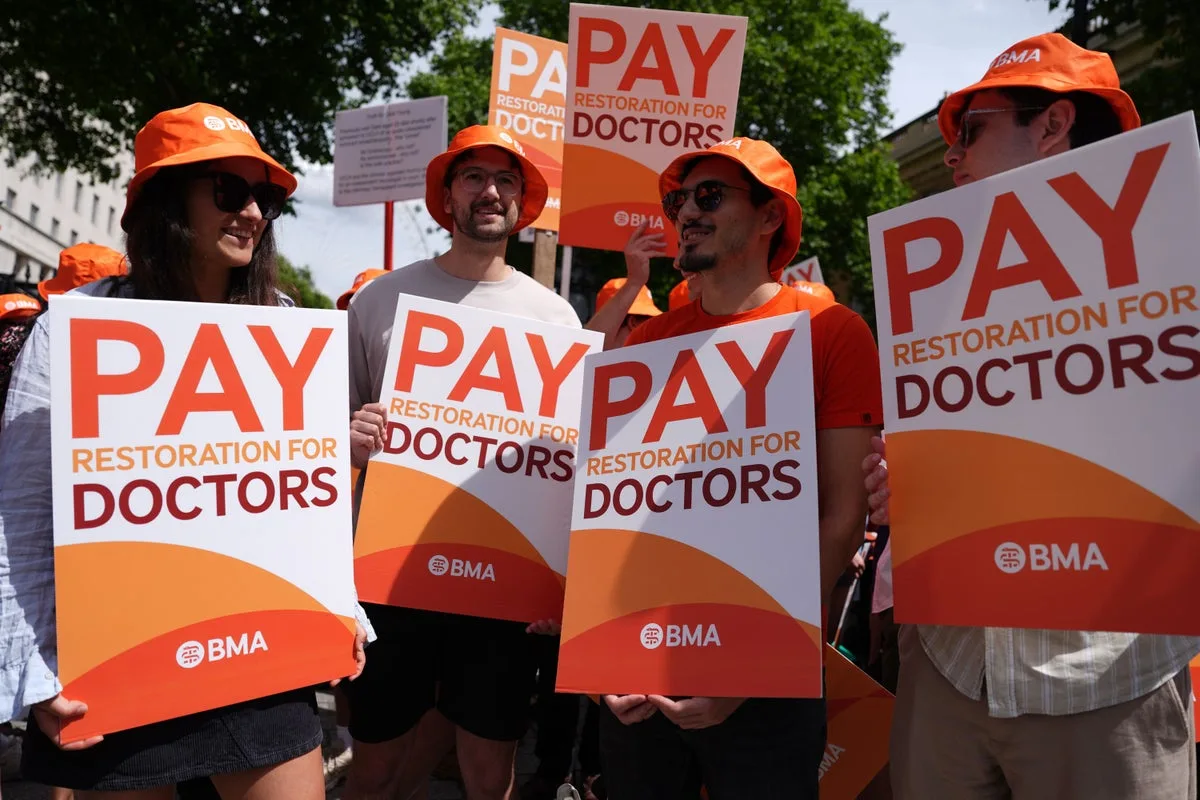
Resident doctors in England will walk out for five consecutive days in a dispute over pay, the British Medical Association (BMA) has announced. The strike is scheduled from 7am on 25 July to 7am on 30 July, with the BMA giving the government two weeks to return to the negotiating table.
BMA resident doctors committee co-chairs Dr Melissa Ryan and Dr Ross Nieuwoudt said they had met with Health Secretary Wes Streeting, but the government would not move on pay, instead focusing on non-pay elements. “Without a credible offer to keep us on the path to restore our pay, we have no choice but to call strikes,” they said. “No doctor wants to strike, and these strikes don’t have to go ahead.”
Resident doctors, formerly known as junior doctors, voted to strike in a BMA ballot on Tuesday, with 90 per cent backing action on a 55 per cent turnout. The union demands a 29.2 per cent pay uplift to reverse “pay erosion” since 2008/09, based on the retail prices index (RPI) measure of inflation.
Health Secretary Wes Streeting called the proposed strike action “completely unreasonable”, noting that BMA members had already received a 22.3 per cent average pay rise over two years and a further 5.4 per cent average uplift for 2025/26. “No trade union in British history has seen its members receive a 28.9 per cent pay rise only to immediately respond with strikes,” he said.
Downing Street said the dispute is “not grounds for strike action”, warning of “extremely serious consequences for patients”. Daniel Elkeles, chief executive of NHS Providers, said five days of strike action with two weeks’ notice “can only be harmful” and “shows a lack of respect for colleagues from many other disciplines”. Previous strikes have postponed some 1.5 million appointments, procedures and operations.