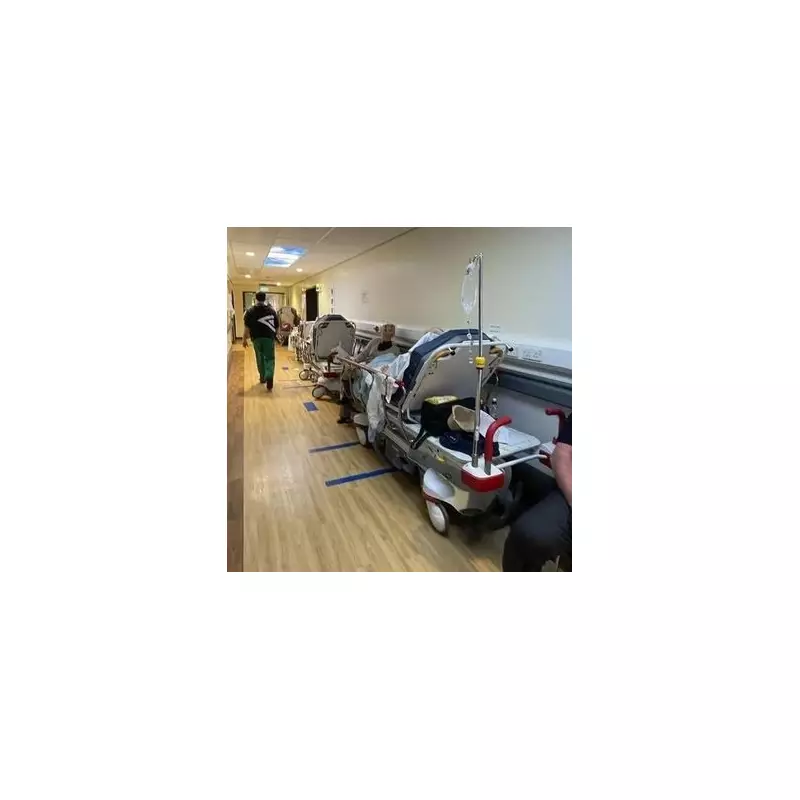
A shocking new report from the Royal College of Nursing (RCN) has declared that the practice of treating patients in hospital corridors and other non-clinical spaces has become a form of "torture" and is now worse than ever within the NHS.
Harrowing Testimonies from the Frontline
The RCN gathered testimony from 436 nursing staff across England, who provided harrowing accounts of the conditions they and their patients are forced to endure. The report details instances where individuals have been left for days without a proper bed, with one patient spending four days in a chair and another dying after choking, undetected, in a corridor.
Nurses reported being forced to deliver care in wholly inappropriate settings, including freezing corridors, staff kitchens, offices, dining rooms repurposed as wards, and even airport-style departure lounges. In one particularly distressing account, a corridor was so overcrowded that an elderly patient had to eat their meal next to another person who was vomiting.

To protect patient dignity during intimate procedures, staff have resorted to holding up white sheets. A nurse from the South West of England told the RCN: "I imagine patients feel deeply embarrassed... wishing they had never bothered to come in and would rather have taken the risk of dying at home than go through the torture. Because that’s what we subject them to, a type of torture."
A 'Permanent Fixture' with Deadly Consequences
The RCN warns that 'corridor care' is no longer an emergency measure but a "permanent fixture" in NHS hospitals, normalised year-round. The consequences are severe, with nurses linking the practice directly to patient harm and death.
One nurse in London reported that elderly patients regularly spend 24 hours on trolleys in corridors, leading to the development of incontinence and the picking up of respiratory viruses, which have resulted in "extreme critical incidents including death." Another, in Yorkshire, described a terminally ill patient who spent a week in a "temporary escalation space" before being moved to a side room to die, an event the nurse said they would never forget.
The psychological toll on staff is also immense. A nurse in the South of England reported having nightmares after a patient died in a departure lounge turned ward. Another from the South East said: "My anxiety is at an all-time high and I will not sleep the day before shift... It’s just awful and there is no end in sight."
Public Witness and Political Promises
New YouGov polling underscores how widespread the issue has become, revealing that 36% of Britons who accessed NHS care in the last six months witnessed treatment being delivered in a corridor or other non-clinical space.
Health Secretary Wes Streeting has vowed to eradicate corridor care by the end of the current parliament. However, the RCN's report indicates that 69% of the public want action faster than this timeline. The nursing union is calling on the government for substantial investment in more hospital beds, nurses, community services, and social care to address the root causes.
Professor Nicola Ranger, RCN General Secretary, stated unequivocally: "The fact remains that there can be no safe, dignified care delivered in a corridor, store room or dining hall, but that has become the norm." This report, a follow-up to a landmark study a year ago that revealed "Third World" scenes, confirms the situation has not improved.
A Department of Health and Social Care spokesman responded: "No one should receive care in a corridor – the situation we inherited is unacceptable and undignified, and we are determined to end it." The department cited immediate steps including a £450 million investment to expand urgent care, 40 new same-day emergency care centres, and 15 mental health crisis centres.