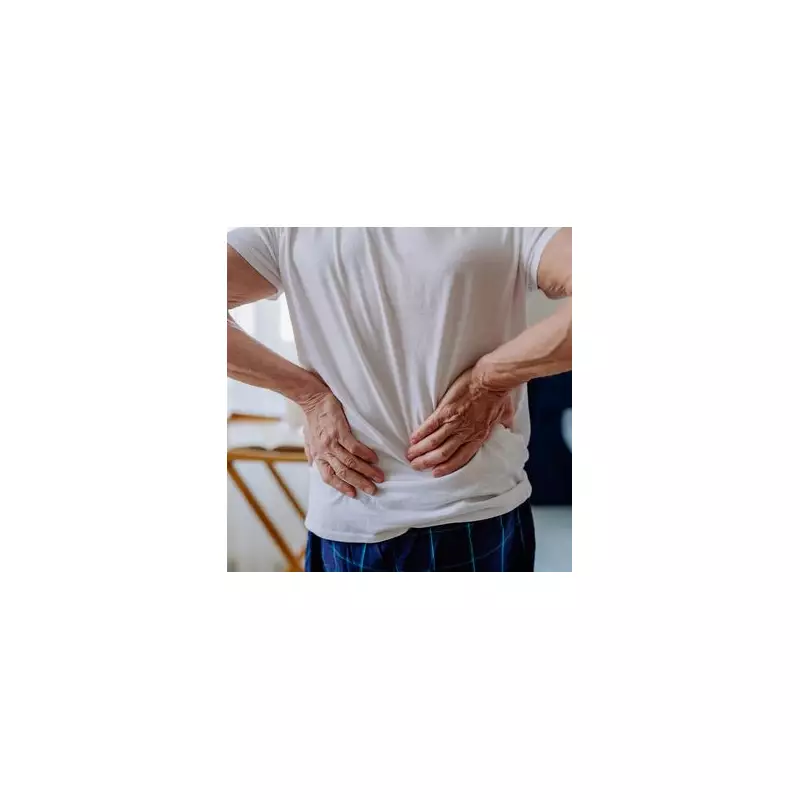
The National Health Service has issued timely guidance for the millions of Britons who suffer from back pain, with a specific warning for the upcoming Christmas period. As GP surgeries prepare to close for the holiday, the health body is urging people to understand how to manage discomfort and recognise when it signals a more serious problem.
Why Festive Activities Can Strain Your Back
NHS experts highlight that while back pain, especially in the lower back, is extremely common, the Christmas season presents unique risks. The flurry of activities like house tidying, cooking large meals, assembling toys, and playing with children or pets can all place unexpected extra strain on your spine.
Health professionals note that a common cause is a simple injury like a pulled muscle (strain). Often, the exact cause isn't clear, but the pain usually improves within a few weeks, though it can sometimes persist or recur.

When Back Pain Could Be Something More Serious
While often benign, back pain should never be automatically dismissed. The NHS cautions that it can sometimes be linked to underlying conditions such as a slipped disc, sciatica (a trapped nerve), or ankylosing spondylitis.
Critically, the guidance states that very rarely, back pain can be a sign of a serious problem including a broken bone, cancer, or an infection. This makes monitoring your symptoms essential, particularly when regular medical services are less accessible.
Practical Steps for Relief and Recovery
For those experiencing discomfort, the NHS advises against staying in bed for long periods. Instead, they recommend trying to stay active and continue with daily routines as much as possible. Key self-management tips include:
- Taking anti-inflammatory medicine like ibuprofen. Paracetamol alone is not recommended but may be used with another painkiller.
- Using an ice pack (or bag of frozen peas) wrapped in a tea towel to reduce pain and swelling.
- Using a heat pack (or hot water bottle) wrapped in a tea towel to relieve joint stiffness or muscle spasms.
- Trying specific exercises and stretches designed for back pain.
Understanding the NHS Pain Scale
The NHS categorises pain to help individuals assess their situation. Severe pain is always present, hinders thought or speech, prevents sleep, and makes moving or dressing very hard. Moderate pain is constantly there, disrupts concentration or sleep, but you can still manage basic tasks. Mild pain comes and goes and is annoying but doesn't stop daily activities.
When to Seek Medical Help Urgently
You should make a GP appointment if your back pain does not improve after a few weeks of home care, stops you from doing day-to-day activities, or is severe and worsening.
Ask for an urgent GP appointment or call NHS 111 if you have back pain along with a high temperature, unexplained weight loss, a lump or swelling in your back, pain that doesn't improve with rest or is worse at night, pain worsened by sneezing/coughing, or pain in the upper back between the shoulders.
Call 999 or go to A&E immediately if back pain is accompanied by pain, tingling, weakness or numbness in both legs, numbness around the genitals or buttocks, difficulty peeing, loss of bladder or bowel control, chest pain, or if it started after a serious accident like a car crash.
The NHS also reminds the public that you may be able to refer yourself directly for physiotherapy through NHS community musculoskeletal (MSK) services without a GP referral, which can be a vital resource during the holidays.