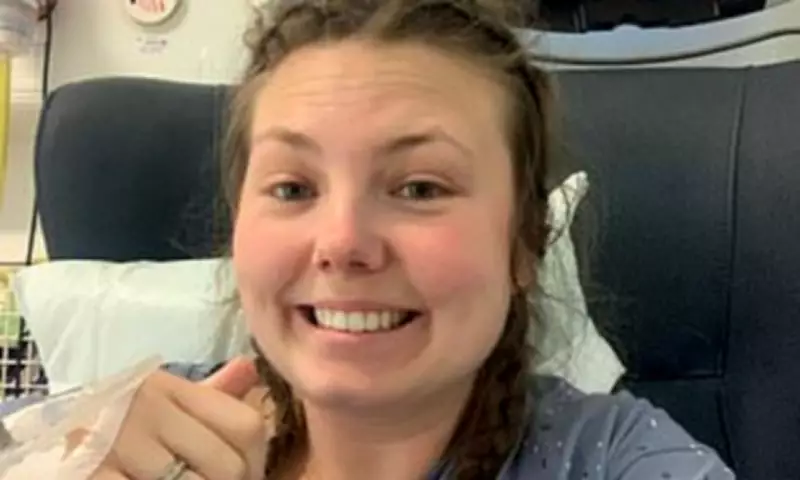
Aged just 27 and a mother-of-two, colon cancer was the last thing on Bronwyn Tagg's mind, especially as she had just given birth to a healthy baby boy. The dental nurse from Cambridge booked an appointment with her GP after passing a worrying amount of blood when going to the toilet. To her surprise, her doctor diagnosed her with piles, a very common condition after birth, without taking the time to examine her.
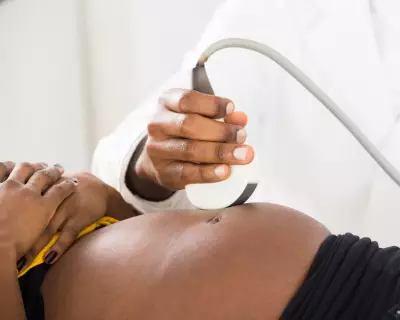
At the start of 2024, she began to experience diarrhoea combined with stomach pains that left her 'barreled over', unable to move. The busy mother-of-two went back to her GP, who sent her for an ultrasound to see if the pain was being caused by a burst ovary or ovarian cancer. But the tests came back clear.
Eventually, in February 2025, she was referred to a gynaecologist who ordered an MRI to rule out endometriosis. Results revealed a 40mm lesion in her rectum. Two weeks later, in May 2025, she was diagnosed with colon cancer. 'I feel like if the doctor had taken the time to examine me in the first place, then I would have been diagnosed earlier,' she says. 'I'm angry, but I can't dwell on it.'

The Life-Changing Diagnosis
Ms Tagg received the life-changing phone call following a colonoscopy, where doctors removed the entire growth (known as a polyp) while she was shopping. 'They asked me to come in the following day for my results and to bring someone for support. I instantly knew it was bad news,' she recalled. 'I felt so numb doing the rest of my shopping, my 18-month-old sat in the trolley, just thinking "What am I going to do?"'
The next day, the couple were handed the devastating news: the polyp removed was cancerous. 'The rest of the appointment was a complete blur, I didn't take anything in,' Ms Tagg said. 'I had no questions at that time. My husband was next to me in tears, but I just felt nothing.'
She bravely elected to undergo surgery to remove part of her rectum, the final few inches of the large intestine, and have a stoma fitted. This involves bringing part of the colon through an opening in the stomach, so part of the colon is on the outside of the body. This is done when there is not enough bowel left to join the healthy intestine to the anus, or if the two ends of the bowel cannot be joined together. Stool then passes out of the colostomy into a sealed bag outside the body.
Further Devastation
'A consultant put it very bluntly and said that this will have already knocked a few years off my life,' she remembers. Six weeks later came more devastating news: a quarter of the lymph nodes removed during surgery tested positive, meaning her cancer had spread. She then underwent chemotherapy to lower the chance of the cancer returning, all the while continuing to care for her young children, now two and five years old.
'Chemotherapy was a lot more mentally challenging than it was physically,' she said. 'I struggled with exhaustion, nausea, and nerve pain, and I found it so hard hyping myself up to go in for treatment that I knew was going to make me feel rubbish. But it also made being a mum really hard. Josie started school in September, and I started chemotherapy the week after.'
The couple had no choice but for Glen to continue working to financially support the family, with the added help of family and friends. But one of the hardest parts, Ms Tagg says, was explaining her disease to her five-year-old daughter. 'We tried not to convey that we were scared,' she said. 'We started off by telling her I needed an operation to remove something that wasn't very nice from mummy's belly. When I woke up with a stoma, I really wasn't sure how she was going to take it.'
Ms Tagg was given a children's book by the nurses at the hospital that helped explain what a stoma was to her daughter. 'She was very unsure at first, asked all sorts of curious questions as any five-year-old would, like "Does it hurt? Why do you have a bag? Why does it look like that?"' she remembers. 'And I was just really honest with her. I change and empty my bag in front of her and will shower with her in the room. I think it's good for her to realise not all bodies look the same and that's OK. I only recently told her that I had cancer. I think I really wanted to protect her to begin with, but really it's about being open and honest with your children.'

Looking Forward
Ms Tagg has now completed chemotherapy and is awaiting results from a recent scan to determine whether she is in remission. 'I'm really hopeful that we're done, but I know that we won't ever go back to how life was before. It's a new normal,' she said. 'A normal where we now understand just how fragile life is. I don't sweat the small stuff anymore.'
She added: 'With the recent passing of Mel Schilling, who was diagnosed with bowel cancer before the disease spread to her brain, I know that being in remission doesn't always mean it's done and finished. I think this whole crazy year has taught me to value my own time, to be a bit more selfish, say no to things I don't want to waste my energy with, and to say yes to everything that excites me.'
Urgent Message for Others
'For anyone noticing any symptoms, I would say go and get them checked with the GP. If you are disregarded because of your age, you need to persist. Early diagnosis saves lives.'
Along with other cancers that start in the bowel and colon, rectal cancer, also known as colorectal cancer, kills 17,000 people in the UK every year. It is typically diagnosed at a late stage, when treatment is difficult, because it causes few symptoms early on, which are often mistaken for less serious problems such as piles, irritable bowel syndrome (IBS), or even period pain. Cancer Research UK estimates that over half (54 per cent) of bowel cancer cases in the UK are preventable.