US Health Official Makes Urgent Appeal for Measles Vaccination
A leading United States health official has issued a direct plea for citizens to receive measles vaccinations, as concerning outbreaks continue to spread across several states. The appeal comes at a critical moment when the nation risks losing its hard-won measles elimination status, a designation achieved through decades of public health efforts.
Measles Outbreaks Intensify Across Multiple States
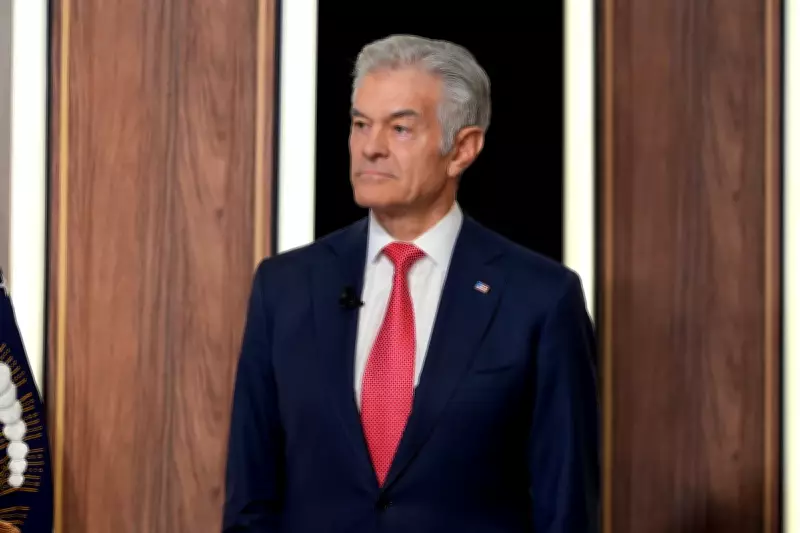
Dr. Mehmet Oz, serving as administrator for the Centers for Medicare and Medicaid Services, delivered his urgent message during a television interview on Sunday. "Take the vaccine, please," Oz stated emphatically. "We have a solution for our problem." His comments arrive amidst confirmed measles cases in numerous states, with particularly significant outbreaks documented in South Carolina and along the Utah-Arizona border.
The South Carolina outbreak has already surpassed the total case count recorded during Texas' 2025 measles outbreak, indicating a troubling acceleration in disease transmission. Multiple additional states have reported confirmed measles cases this year, with children disproportionately affected by these outbreaks. Infectious disease experts warn that declining public trust in vaccines generally may be contributing to the resurgence of a disease once declared eradicated by public health authorities.

Administration's Complex Vaccine Messaging
Oz, a heart surgeon by training, defended recently revised federal vaccine recommendations while also addressing past comments from President Donald Trump and Health Secretary Robert F. Kennedy Jr. regarding vaccine efficacy. "Not all illnesses are equally dangerous and not all people are equally susceptible to those illnesses," Oz explained during his CNN interview. "But measles is one you should get your vaccine."
When questioned whether people should fear measles, Oz responded unequivocally: "Oh, for sure." He assured viewers that Medicare and Medicaid would continue covering the measles vaccine as part of their insurance programs, stating, "There will never be a barrier to Americans getting access to the measles vaccine. And it is part of the core schedule."
Oz attempted to reconcile Kennedy's general vaccine skepticism with support for measles vaccination specifically, noting, "When the first outbreak happened in Texas, he said, get your vaccines for measles, because that's an example of an ailment that you should get vaccinated against."
Policy Changes and Public Health Implications
The Republican administration implemented significant changes to vaccine policy last month, dropping certain recommendations for children in an overhaul of the traditional vaccine schedule. The Department of Health and Human Services stated these revisions responded to a request from President Trump, who asked the agency to review how peer nations approach vaccine recommendations and consider adjusting U.S. guidance accordingly.
While states maintain authority over vaccination requirements for schoolchildren, federal recommendations typically influence these regulations. Some states have begun forming alliances to counter the administration's revised vaccine guidance, creating a patchwork approach to public health policy across the nation.
Declining Vaccination Rates and Rising Disease
Federal data reveals troubling trends in vaccination coverage, with U.S. vaccination rates dropping and the percentage of children with exemptions reaching record highs. Simultaneously, rates of vaccine-preventable diseases like measles and whooping cough are increasing nationwide, creating what public health experts describe as a perfect storm for disease transmission.
Kennedy's past anti-vaccine activism has drawn scrutiny since his nomination to lead the Department of Health and Human Services. During Senate confirmation testimony last year, Kennedy claimed a 2019 trip to Samoa had "nothing to do with vaccines," despite documents suggesting he sought meetings with top Samoan officials. Samoan officials later stated Kennedy's visit bolstered anti-vaccine activists before a devastating measles outbreak that sickened thousands and killed 83 people, mostly children under five.

Mixed Messages and Scientific Consensus
Oz's comments reflect a broader pattern within the administration of delivering discordant and sometimes contradictory statements about vaccine efficacy during an overhaul of U.S. public health policy. Officials have walked a fine line, criticizing past vaccine policies while attempting to avoid straying too far from established scientific consensus.
During recent Senate hearings, National Institutes of Health Director Jay Bhattacharya stated no single vaccine causes autism but didn't rule out potential negative health effects from vaccine combinations. Kennedy, however, has argued that a link between vaccines and autism hasn't been disproven, previously claiming components like thimerosal might cause childhood neurological disorders.
Most measles, mumps, and rubella vaccines don't contain thimerosal, and a federal vaccine advisory board overhauled by Kennedy last year voted to no longer recommend thimerosal-containing vaccines.
Restoring Public Trust in Health Systems
Administration public health officials frequently cite the need to restore trust in public health systems following the coronavirus pandemic, when vaccine policy and pandemic response became highly polarized political issues. Misinformation and conspiracy theories about public health systems spread widely during the pandemic, with longtime anti-vaccine activist groups experiencing increased public interest.
Kennedy, who previously led the anti-vaccine activist group Children's Health Defense, has faced criticism for ordering reviews of vaccines and public health guidelines that leading medical research groups consider settled science. Public health experts have also criticized President Trump for making unfounded claims about politicized health issues, including asserting without evidence that Tylenol and vaccines link to rising autism incidence in the United States.
As measles outbreaks continue to expand across state lines, the tension between public health imperatives and political considerations creates a complex landscape for disease prevention efforts, with vaccination rates serving as the primary indicator of whether the nation can maintain control over this preventable disease.