From Art School Dreams to Surgical Mastery
If you had asked my teenage self in a small Shropshire village about my future ambitions, I would have enthusiastically discussed art and music long before mentioning scalpels or operating theatres. At 18, I was set on attending art school, but my mother intervened bluntly, pointing out that an artist's career might not provide financial stability. As she spoke, a surgical documentary played on our black-and-white television, and I half-jokingly declared that surgery would be my path instead. This led me to retake my A-levels, struggle into medical school, and qualify as a doctor in 1975.
A Renaissance Revelation in London
By 1986, I had become a consultant cardiothoracic surgeon at Papworth Hospital in Cambridge, specialising in repairing failing hearts in a then-nascent field. Over the years, I have mended more than 3,000 mitral valves, surpassing any other surgeon in the UK. However, the pivotal moment that reshaped my approach occurred not from medical textbooks but from an encounter with centuries-old art. In 1977, while completing clinical training at Charing Cross Hospital in London, I passed the Royal Academy and noticed an exhibition of Leonardo da Vinci's anatomical drawings, the first major display of such works in the country.
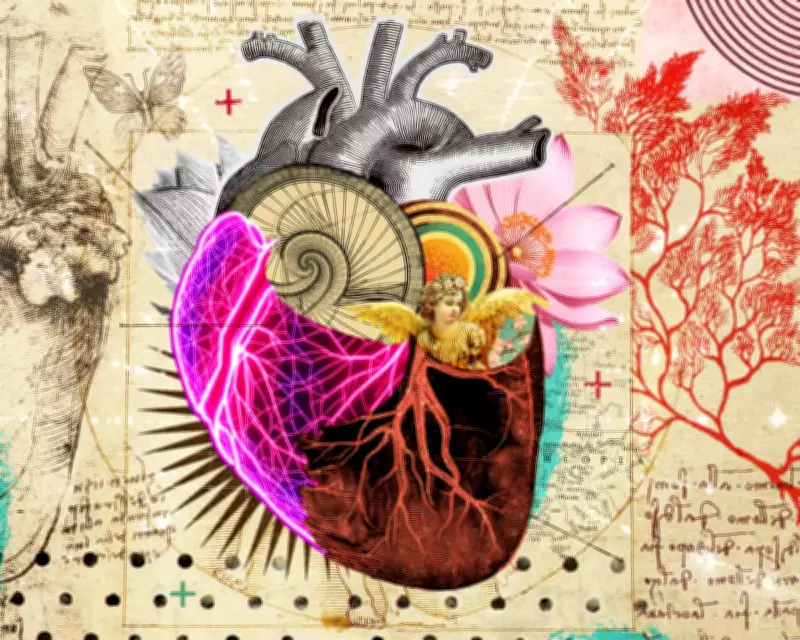
Entering the exhibition, I was awestruck by the warmth and humanity radiating from the drawings. Although I had studied Leonardo during my A-levels, seeing his work in person was transformative. Leonardo's deep scientific curiosity led him to dissect around 30 human corpses and numerous animals, documenting his findings in hundreds of detailed sketches and notes. I was captivated not only by the aesthetic beauty of his lines but also by his insistence that everything in nature possessed purpose and form.

Bridging Art and Surgical Practice
This experience prompted me to draw connections between Leonardo's work and my own surgical practice. At that time, mitral valve surgery often involved imposing artificial solutions rather than restoring the body's natural physiology. Inspired by Leonardo, I began to contemplate how the valve functioned naturally and explored ways to adjust my techniques for a more physiological approach. Early methods of mitral valve repair were effective but could limit natural movement, especially for younger, active patients. This made me question the didactic nature of heart surgery, where high stakes often lead surgeons to rely on safe, prescribed techniques to avoid blame.
Leonardo did not provide direct surgical instructions, but he fundamentally altered my mindset, encouraging me to collaborate with the heart's inherent design instead of reshaping it into something prosthetic. I have always believed that art and science can mutually enrich each other. At Papworth Hospital, I have invited artists in residence to work alongside me and urged students to adopt a broad, artistic perspective. I am convinced that both fields can advance significantly by learning from one another. In 2013, I authored a book titled The Heart of Leonardo, which interprets all of Leonardo's heart-related drawings in light of modern knowledge, comparing his illustrations with contemporary images.
Ongoing Legacy and Charitable Work
In my free time, I continue to paint and draw, and recently, one of my drawings was exhibited at the Saatchi Gallery to raise funds for children's heart surgery through the charity Chain of Hope. For over a decade, I have collaborated with this charity, performing life-saving operations for children in Ethiopia, where heart disease remains devastatingly common. It may seem unusual to credit a Renaissance artist with remaking my surgical practice, but that is exactly what occurred. While my medical training taught me the fundamentals, Leonardo taught me that to heal a heart, one must first understand its dynamic life and view it with an artistic and open eye.