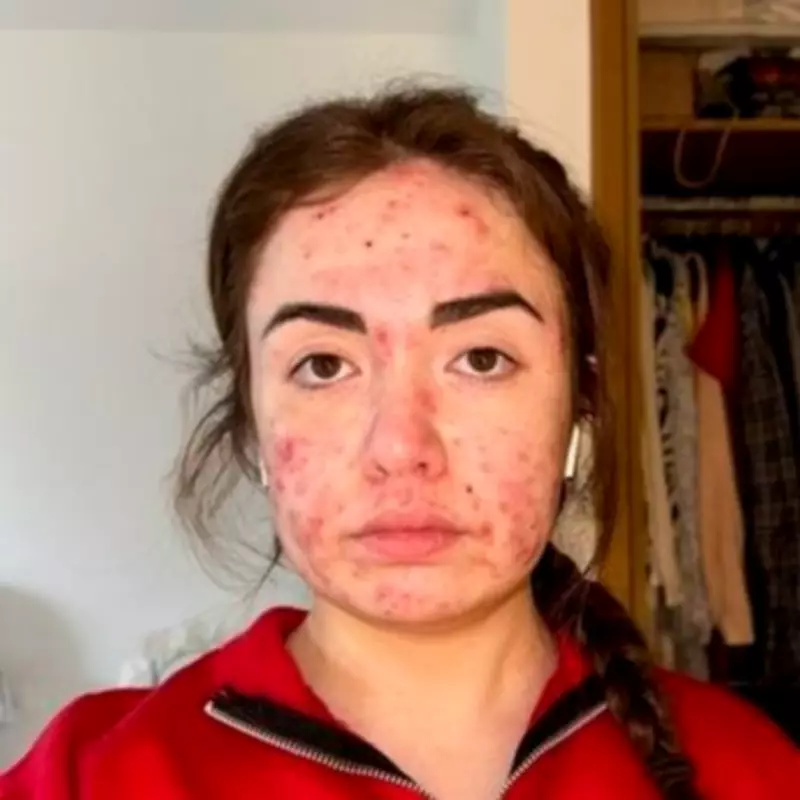
After enduring more than ten years of painful, burning cystic acne that left her skin with a texture she described as "cookie chunks," a woman has finally discovered a solution that transformed her complexion. Stella Chai, a 27-year-old psychological therapist, wishes this effective treatment were accessible through the National Health Service, as it provided the relief that conventional NHS options could not.
The Physical and Emotional Toll of Severe Acne
Stella's battle with acne began when she was just 12 years old, and it escalated to a point where her skin was constantly scabbed, burning, and too painful to touch. She recalled sitting at work and feeling her skin ache, with visible spots that even makeup could not conceal. "My skin was scabbed and completely covered in spots. It was painful," she said. "When I didn't wear makeup, I felt exposed. But when I did wear a bit of BB cream, everything was still visible. It was horrible."
The impact extended far beyond physical discomfort, severely affecting her self-confidence. "My self-confidence was absolutely on the floor. Even if I tried to hype myself up and do my makeup, you could still see everything, and the pain was genuinely excruciating," Stella explained. She felt her self-confidence was on the floor, constantly preoccupied with her bumpy face.

NHS Treatments and Complications
While seeking help from the NHS, Stella faced additional challenges due to her ulcerative colitis, an inflammatory bowel condition. Standard oral medications for severe acne aggravated her IBD, and topical creams dried her skin to the point of cracking. "It felt like a fine balance between keeping my colitis in check and managing my skin. It was too much of a compromise, it felt like choosing between my physical sanity, my mental sanity or my skin. I genuinely felt I had run out of options," she said.
After several months of NHS treatments, including consultations with specialist dermatologists, Stella learned about LED phototherapy. However, she was informed that this therapy was not available on the NHS for acne treatment, leaving her to explore alternatives independently.
The Breakthrough with LED Phototherapy
Taking matters into her own hands, Stella discovered a company offering Dermalux, a medical device that combines three clinically proven light wavelengths, each with distinct effects on the skin. Initially skeptical, she noted, "I thought there's no way this severity of acne can be treated with a light. I'd tried SAD lamps before and they did nothing. So I dismissed the idea."
Despite her doubts, Stella decided to try the therapy and noticed significant improvements within weeks. Her breakouts reduced by approximately half, and the scabs and superficial scarring softened. To maintain these results, she was advised to use an at-home LED light mask, specifically the Dermalux Flex MD, a portable version of the device.
How LED Light Therapy Works
LED masks, such as the popular Shark CryoGlow and CurrentBody Series 2 models, operate by emitting three different types of light:
- Blue light - Destroys acne-causing bacteria through antimicrobial properties and reduces biofilm formation.
- Near-infrared light (NIR) - Penetrates deeply into the skin to reduce chronic inflammation, calm the skin, and stimulate cell renewal.
- Red light - Stimulates collagen production, reduces inflammation, accelerates cell renewal, and helps improve scarring.
A Transformative Outcome
For Stella, the change has been life-altering. "My confidence is definitely back. It freed me from constantly thinking about my skin. It felt like something finally came off my mind," she shared. Reflecting on her pre-treatment skin texture, she described it as "like a cookie, bumpy, scabby, like cookie chunks." Looking back, she wonders how she managed to go out in public.
At the end of her treatment course, Stella expressed profound gratitude to the clinic, telling them they had saved her life. Her journey highlights the potential of LED phototherapy as an effective solution for chronic acne, especially for individuals who cannot tolerate standard NHS treatments due to other health conditions.