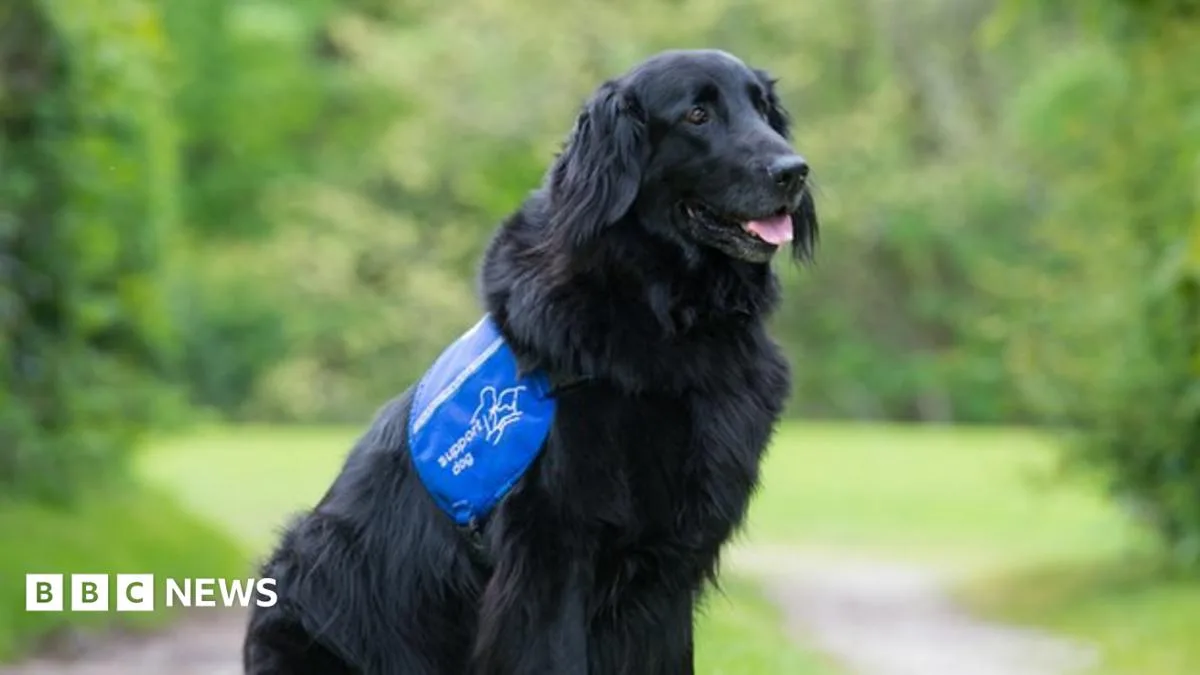
If you have ever pondered what constitutes the world's best job, this distinctive profession might be a formidable contender. Ellie Brown, aged 30, serves as a 'dog matchmaker,' or more formally, a Guide Dog Mobility Specialist. Blending elements of a finishing school with a canine dating service, Ellie's responsibility involves applying the final touches to guide dogs' training and pairing them with their new human companions.
The Training Process
Ellie dedicates up to five months to training her dogs, intimately understanding their specific needs and determining which owner can best unlock their potential. This is not merely about finding a dog and owner who get along; the correct pairing profoundly impacts both lives. Guide Dog Mobility Specialists like Ellie must consider numerous factors, from traffic conditions near the owner's home to the presence of squirrels in local parks.
Ellie explained to the Daily Mail: 'You invest heavily in the match, ensuring the dog is paired with the right person. The dog has a profile. The human has a profile. Our task is to find the matches that align.'
From Puppy to Professional
The journey for a potential guide dog commences at just eight weeks old. At this stage, dogs are placed with 'puppy raisers' who care for them throughout initial training. Serious preparation begins at 13 months when puppies enter one of Guide Dogs' training centres across the UK. Here, they meet their GDMS for the first time and embark on a five-month program to ready them for guiding visually impaired owners.
The GDMS is tasked with teaching all necessary skills, such as standing still while a harness is fitted and learning tailored tricks. For instance, Pippie, one of Ellie's current trainees, practices with a button that plays traffic sounds to overcome a fear of motorbikes. Each dog also learns to rest its head on a folded towel, facilitating grooming by visually impaired owners.
Street Training and Challenges
The real test occurs on streets near the training centre, where dogs practice stopping at curbs, navigating parked rental bikes, and ignoring distractions. Some require special training, like riding the Tube or escalators. Not every dog completes the program; approximately one in three lacks the temperament or skills to graduate. Those that do not make it become household pets or 'buddy dogs' for visually impaired children.
Ellie remarked: 'As trainers, we always strive to address challenging behaviours, such as distractions from squirrels or sensitivity to wearing a harness.' She noted Bella, a yellow Labrador initially slow but now excelling, as an example of progress.
The Matchmaking Art
Training is only half the battle for a GDMS. Towards the end of training, Ellie faces the complex task of matching dogs with suitable owners. This involves assessing lifestyles, routes, and personalities. For example, Bella excels on the London Underground and would suit a commuting owner, while other dogs might thrive in routine or varied environments.
Ellie elaborated: 'Every dog is different. We consider lifestyle and routes. Some dogs adore routine, while others prefer variety.' She cited cases like an owner living on a narrow boat, requiring a dog adaptable to constant change, or a primary school teacher needing a dog comfortable in a bustling classroom.
Owner Training and Bonding
Once a match is agreed upon, Ellie teaches new owners how to handle their guide dogs, covering care, following the dog through streets, and learning new routes. This 'class' period integrates the GDMS into the owner's life, even assisting with details like finding the service desk in a local supermarket.
Ellie shared: 'A huge part of my job is working with visually impaired individuals, teaching them to work with their dog. It is challenging but immensely rewarding.' Some owners have never had a dog before, making this transition critical.
Success and Setbacks
The pairing process does not always succeed; sometimes, dogs are unsuited to an owner's lifestyle, or owners realise they cannot care for a dog. Ellie reflected: 'You pressure yourself to make it work, but it is okay if it does not.' She recalled her first pairing with a dog named Jerry and an owner with total sight loss, which took 20 weeks instead of the usual five but ultimately succeeded.
When a match is right, Ellie often sees the bond form immediately on the first walk. She concluded: 'What I love is witnessing the dog start to look to its new owner. You just know if it is going to be right.'




