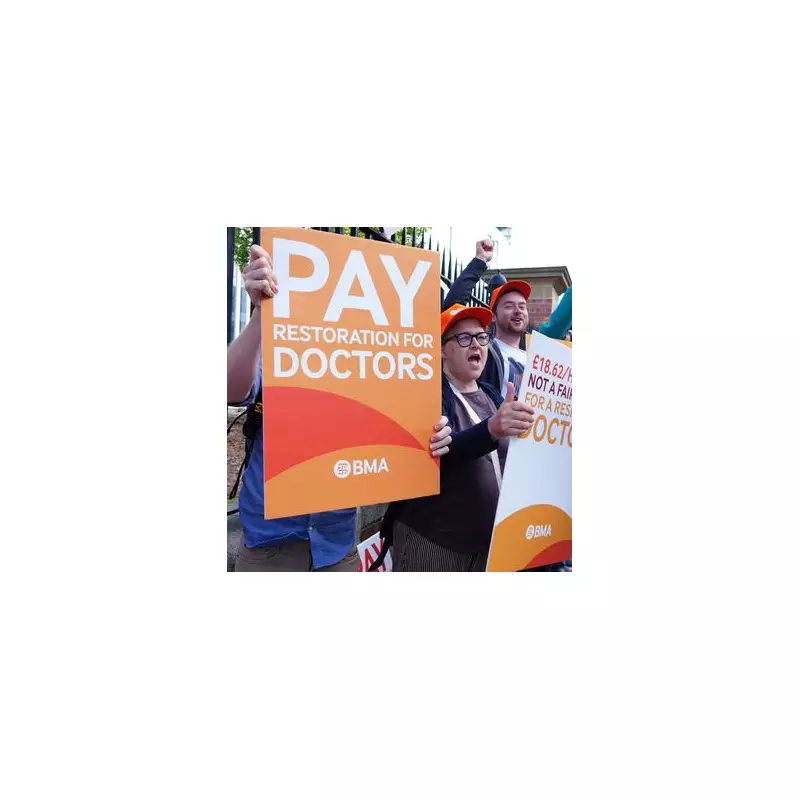
Hospital leaders have issued a stark warning that NHS operations and appointments face being cancelled well into the new year, as a five-day strike by junior doctors begins in the run-up to Christmas.
Strike Action Deepens Long-Running Dispute
This week's industrial action marks the 14th walkout by resident doctors in England since 2023, deepening a bitter dispute now in its 33rd month. The British Medical Association (BMA), which represents the doctors, called the strike after its members rejected a last-minute government offer aimed at creating more training posts.
The Health Secretary, Wes Streeting, has refused to increase the headline pay rise of 5.4% for 2025/26, leading to an increasingly acrimonious war of words with union leadership. The BMA is calling for a commitment to restore pay, arguing salaries have eroded by about a fifth since 2008.

Patients Bear the Brunt as Cancellations Mount
NHS trusts estimate that up to 70,000 operations and appointments could be cancelled this week alone, with many patients facing an uncertain Christmas not knowing when their treatment will be rescheduled.
Nick Hulme, chief executive of the East Suffolk and North Essex NHS Foundation Trust, stated: "With any industrial action, it's always the patients who pay the price." He explained that senior staff covering for striking colleagues would subsequently need rest, forcing further cancellations deep into January and beyond.
Daniel Elkeles, chief executive of NHS Providers, described the situation as "the worst possible Groundhog Day." He told Times Radio the strike would cost the NHS "a fortune" and prevent it from focusing on public improvement, adding that the deadlock feels no closer to resolution.
Calls for Mediation Amid Government Offer
The NHS Confederation, representing health service leaders, has urged both the BMA and the government to agree to independent mediation. This call was echoed by Mr Elkeles, who described the government's rejected offer as a "good" one.
The offer included legislation to prioritise homegrown doctors for specialty training roles and plans to tackle bottlenecks in career progression. Key points were:
- An increase of 4,000 specialty training posts over three years.
- 1,000 of these posts brought forward to start in 2026.
- Funding for mandatory exam and Royal College membership fees.
However, Dr Jack Fletcher, chair of the BMA’s junior doctors committee, said the weekend's ballot result sent a clear message that the offer was "insufficient." He called for a "genuinely long-term plan" with a clear route to restore pay and create genuinely new jobs to prevent further strikes.
The walkout coincides with a record seasonal surge in flu hospitalisations, placing additional strain on the health service as other staff, including nurses, are redeployed to cover essential services.