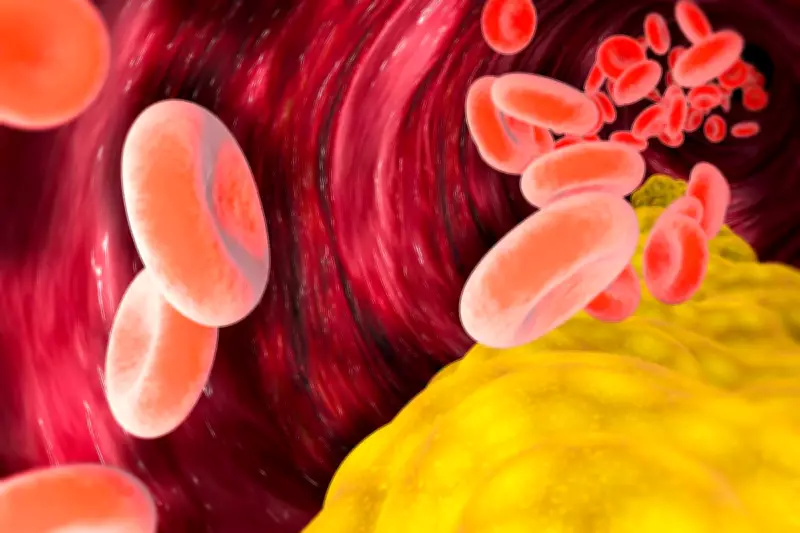
A groundbreaking experimental pill has emerged as a potentially transformative option for millions of individuals struggling with dangerously high cholesterol levels, despite being on standard statin therapy. Researchers announced significant findings on Wednesday, revealing that the oral medication, called enlicitide, could dramatically lower artery-clogging LDL cholesterol by as much as sixty percent.
A New Mechanism for Cholesterol Control
Enlicitide operates through a novel biological pathway, assisting the body in actively eliminating cholesterol from the bloodstream. This mechanism of action is currently only available through injectable medicines, making the development of an effective oral formulation a notable advancement in cardiovascular pharmacology. If approved by regulatory authorities like the US Food and Drug Administration, this pill could provide a far more convenient and accessible treatment modality for patients globally.
Addressing a Critical Treatment Gap
Statins remain the foundational therapy for managing high cholesterol, primarily by inhibiting the liver's production of LDL. However, a substantial number of patients find that even maximum tolerated doses of these drugs fail to bring their cholesterol down to the stringent targets recommended by medical guidelines, particularly for those at very high risk of heart attacks and strokes. This persistent elevation leaves them vulnerable to major cardiovascular events.

The new research, published in the prestigious New England Journal of Medicine, involved a rigorous study of over 2,900 high-risk patients. Participants were randomly assigned to add either a daily enlicitide pill or a placebo to their existing statin regimen. After six months, those receiving the active drug experienced an average LDL cholesterol reduction of approximately sixty percent, a result that maintained most of its effect over a full year of observation.
Superior Efficacy and Safety Profile
"While there are other oral agents that can be added to statins, none approach the magnitude of LDL reduction we observed with enlicitide," stated the study's lead author, Dr. Ann Marie Navar, a cardiologist at UT Southwestern Medical Center. The research also indicated no significant safety differences between the enlicitide group and the placebo group, a crucial finding for any new therapeutic. A notable practical consideration is that the pill must be taken on an empty stomach to ensure optimal absorption.
The Broader Context of Heart Disease Management
Cardiovascular disease persists as the leading cause of mortality, with elevated LDL cholesterol being a primary modifiable risk factor. For healthy individuals, an LDL level around 100 mg/dL is acceptable, but doctors often aim for levels below 70 mg/dL—or even lower—for patients with established heart disease or very high risk. Injectable PCSK9 inhibitors, which work by blocking a liver protein to enhance cholesterol clearance, are powerful but underutilised, partly due to cost, administration complexity, and patient preference against injections.
The study, funded by pharmaceutical company Merck, provides compelling data necessary for seeking regulatory approval. The FDA has already included enlicitide in a programme designed to expedite its review process. An independent expert, Dr. William Boden of Boston University, noted in an accompanying journal commentary that the pill appears to lower cholesterol nearly as effectively as the injectable PCSK9 drugs, calling the evidence "compelling."
Future Research and Clinical Implications
However, Dr. Boden and other observers caution that while cholesterol reduction is a strong surrogate marker, definitive proof that enlicitide reduces actual heart attacks, strokes, and deaths will require longer-term data. Merck has initiated a much larger clinical trial involving more than 14,000 patients to answer precisely this critical question about long-term cardiovascular outcomes.
The development of enlicitide represents a significant stride in personalised cardiovascular medicine, potentially offering a simple, potent oral option for the many patients for whom current therapies are insufficient. Its success could reshape treatment protocols and improve quality of life for millions at risk of life-threatening heart conditions.