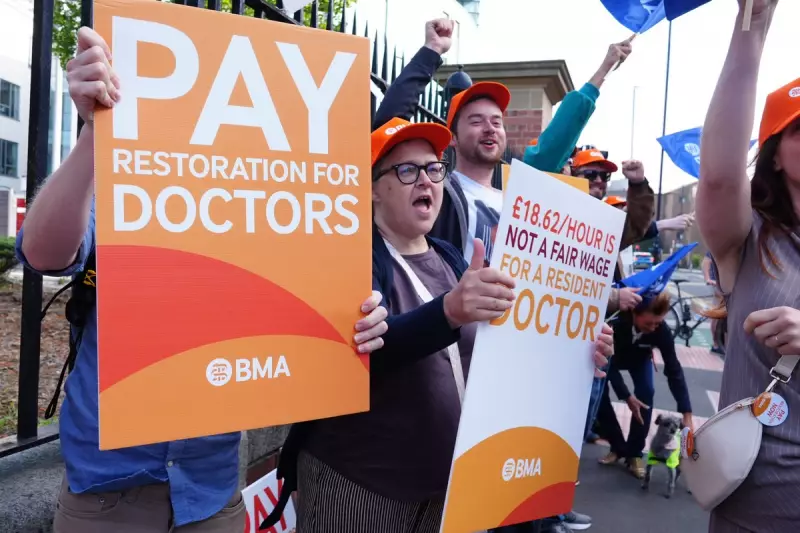
The National Health Service faces a severe pre-Christmas crisis as resident doctors prepare for a five-day walkout, coinciding with a record-breaking surge in flu cases across the UK.
Strike Action and Escalating Health Pressures
The British Medical Association (BMA) has confirmed that its resident doctor members will stage their 14th strike since March 2023, walking out from 7am on 17 December until 7am on 22 December. This industrial action follows the rejection of a last-minute government offer aimed at ending the long-running dispute over pay and training posts.
The timing intensifies pressure on health services, with the UK gripped by a significant flu outbreak. Last week, an average of 2,660 patients per day were in hospital with the virus, marking a 55 per cent increase from the previous week.

Government Offer Rejected Amid Accusations
Health Secretary Wes Streeting has strongly criticised the BMA's decision, stating the union has chosen to strike at the "worst possible time" to cause "maximum impact and damage to the NHS." He labelled the action "irresponsible and dangerous" and offered to facilitate rescheduling the strikes to January.
The government's rejected offer, made on Wednesday 10 December, proposed creating an additional 4,000 speciality training posts over three years by repurposing existing roles. It also promised to prioritise UK graduates and fund certain expenses like exam fees. Crucially, it contained no new pay increase.
The BMA responded by accusing Mr Streeting of "scaremongering" and "exploiting patients and public fears." Resident doctors voted overwhelmingly to reject the offer by 83 per cent to 17 per cent.
The Core Issues: Pay Restoration and Job Competition
Resident doctors, formerly known as junior doctors, argue their pay has eroded in real terms since 2008. The BMA states that despite a 28.9 per cent pay rise over the past three years (including 22.3% since Labour took power), an additional 26 per cent increase is needed over coming years to restore its value.
With the current 5.4 per cent uplift awarded this year, the union claims pay restoration would not be achieved until 2036. Their demands include boosting foundation doctor salaries to between £47,308 and £54,274, with specialist training salaries rising to a maximum of £90,989.
A critical secondary issue is fierce competition for speciality training roles. In 2025, there were over 30,000 applicants for just 10,000 posts. The BMA dismissed the government's offer on jobs, with Dr Jack Fletcher, chair of the BMA's resident doctors committee, stating it merely "cannibalised" existing roles.
As the strike dates loom, the standoff between the government and resident doctors deepens, threatening significant disruption to patient care during a period of exceptional seasonal demand on the NHS.