
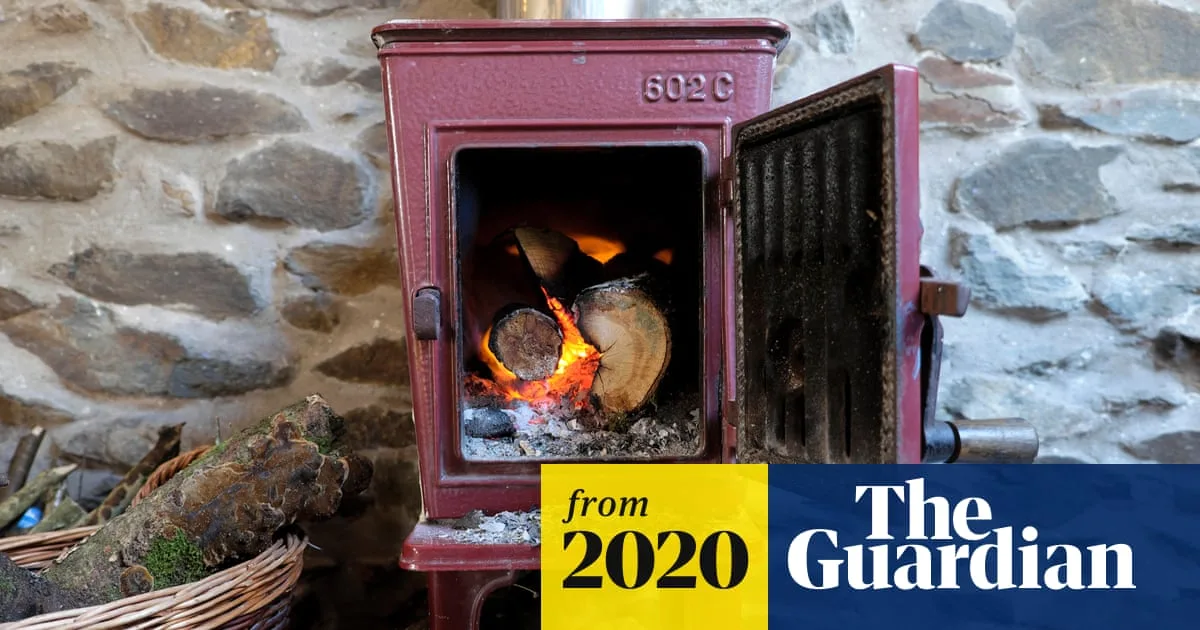
Wood burners triple the level of harmful pollution particles inside homes and should be sold with a health warning, according to scientists. The study, published in the journal Atmosphere, found that tiny particles flood into rooms when burner doors are opened for refuelling, with spikes two to four times higher for those who refuel twice or more in an evening.
The research, conducted in 19 homes in Sheffield over a month in early 2020, used only government-certified “smoke exempt” appliances and dry, seasoned wood. Despite this, average particle levels during four-hour burning periods rose to between 27 and 195 micrograms per cubic metre of air, exceeding the World Health Organization’s 24-hour limit of 25μg/m³.
“Our findings are a cause for concern,” said Rohit Chakraborty of the University of Sheffield, who led the study. “It is recommended that people living with those particularly susceptible to air pollution, such as children, the elderly or vulnerable, avoid using wood-burning stoves.” The particles can pass through the lungs into the body and are linked to a range of health damage.
The scientists recommend that new residential stoves be sold with a health warning and that government approval schemes assess indoor pollution. James Heydon of the University of Nottingham added: “Instead of being seen as a harmless appliance, wood-burning stoves should be recognised as having the potential for harm.”
Wood and coal burning in homes causes nearly 40% of outdoor tiny particle pollution, and about 175,000 wood burners are sold annually in the UK. The study did not call for a ban, but advised people to avoid using burners if not necessary and to minimise the time the stove is open during refuelling.




