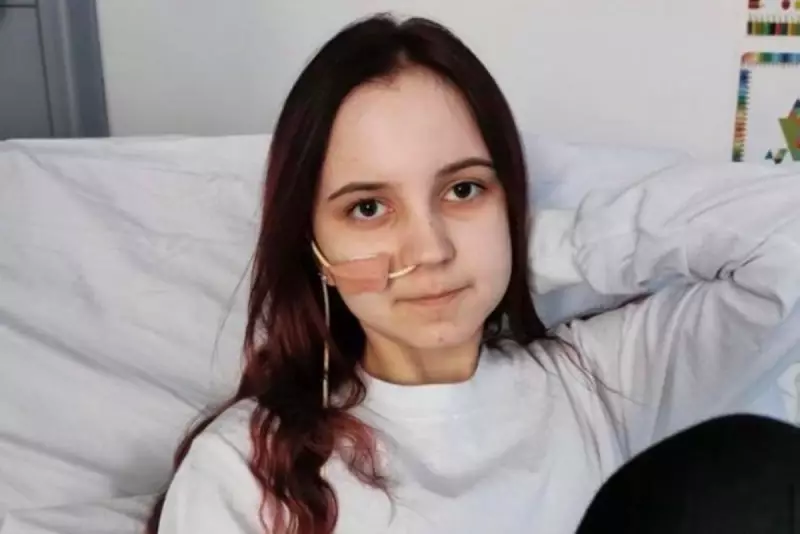
A young woman has revealed the devastating impact of a years-long struggle to get a correct diagnosis for Crohn's disease, which became so severe she ended up vomiting faecal matter and requiring emergency surgery.
A Painful Journey Begins in Childhood
Lucy Dare, now 21, first began experiencing symptoms at the age of 12. These included severe rectal bleeding, agonising abdominal pain, dramatic weight loss, extreme fatigue, and needing to use the toilet up to 15 times a day. For years, the cause of her suffering remained a mystery to both her and her doctors.
Crohn's disease is a chronic inflammatory bowel condition with no current cure. It leads to recurring flare-ups characterised by diarrhoea, stomach cramps, anal pain, weight loss, and blood or mucus in stools.

At just 13 years old and weighing only 38kg, medical professionals initially believed Lucy was suffering from an eating disorder. Symptoms like an urgent need to use the toilet immediately after eating led doctors to suspect anorexia or bulimia.
"Because I was such a low weight, and a young girl, they just assumed it was an eating disorder," Lucy explained. She was admitted as an inpatient to an eating disorder unit near her home in North London for six months.
"It was really horrible," she recalled. "There were girls in there self-harming, ripping tubes out, getting restrained, and I was just there in pain. I was confused about what was going on, why I was there, because I didn't feel how they felt."
Diagnosis and a Life-Threatening Crisis
When her symptoms failed to improve after six months, Lucy was finally referred for an endoscopy and colonoscopy. In 2019, the colonoscopy provided the answer: Crohn's disease.
She was prescribed the medications infliximab and azathioprine and placed on the Modulen liquid diet to rest her bowel, meaning she couldn't eat solid food for six weeks.
After nearly a year in hospital and the eating disorder unit, Lucy secured a weekend job at a hairdressers. After her first shift, she felt well enough to go out with friends, enjoying a meal at a restaurant before heading to a friend's house.
Tragedy struck shortly after her arrival. "Suddenly, it just came on," Lucy said. "I rushed to the toilet. I was just going to the toilet and vomiting non-stop... I couldn't walk or anything."
Her mother had to carry her downstairs and take her to A&E. For two days, doctors suggested her symptoms were "all in your head" or possibly food poisoning. Her vomit was brown, later confirmed to be faecal matter, and her diarrhoea was a "luminous green" colour.
Her mother, Leza, fearing a perforated bowel and a severe infection called peritonitis, insisted on a CT scan. The scan confirmed her worst fears: Lucy's bowel had perforated, a life-threatening condition requiring immediate surgery.
"I was left to the point when I was actually dying to get any sort of help," Lucy stated. "If they sent me home the weekend my bowel perforated like they tried to, I would have died."
An Ongoing Battle for Treatment and Life
During the five-hour emergency operation, 60cm of her small intestine was removed. She woke up in ICU covered in tubes. Thankfully discharged just before the Covid pandemic, her recovery was long and painful.
Five years on, Lucy's struggle continues. She has been unable to work, faces difficulties claiming Personal Independence Payment (PIP), and deals with severe anxiety about leaving the house due to pain and fear of inaccessible toilets.
She missed two years of school, losing crucial education and social time. "Since starting treatment, things have actually got worse," she confessed. She finds some solace in fitness, which she shares on Instagram @liftwithlucyyy, saying it "gives me clarity, control, and a sense of strength."
Her most recent tests, including a duodenoscopy on Sunday, 28 November, diagnosed gastritis, and she awaits the next steps.
Lucy and her mother are now determined to raise awareness. Pearl Avery, IBD Nursing Lead at Crohn's & Colitis UK, said Lucy's experience is not isolated. A quarter of people with Crohn's or Colitis wait over a year for a diagnosis.
"Don't let embarrassment stop you from seeking help," Avery urged. "The sooner you find out what's going on, the better."