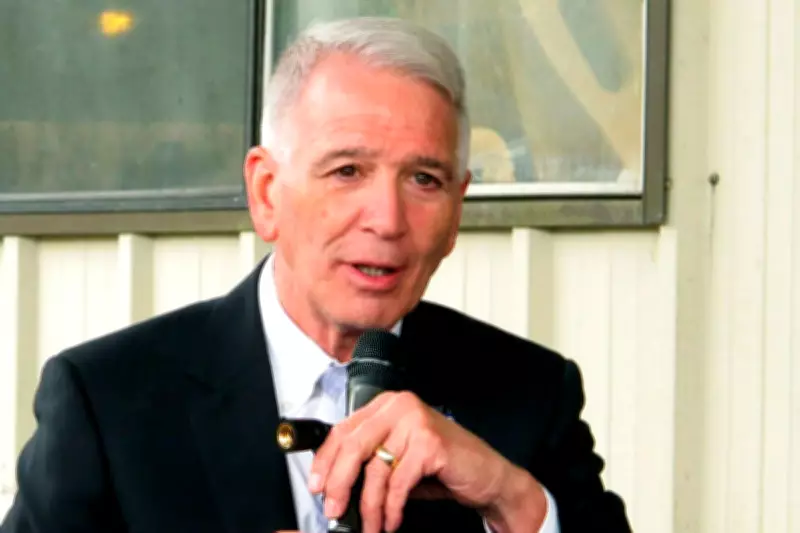
The US Centers for Disease Control and Prevention (CDC) has announced the sudden resignation of its principal deputy director, Ralph Abraham, effective immediately. This development marks the second departure of a top official from the agency in February alone, intensifying concerns over stability and leadership within the critical public health body.
Unforeseen Family Obligations Cited for Departure
In a statement released on Monday, the CDC attributed Abraham's exit to unforeseen family obligations, though it provided no further details. The agency, which is currently being led on an interim basis by Dr Jay Bhattacharya, did not comment on who will succeed Abraham in his role. This lack of clarity adds to the uncertainty surrounding the CDC's operational continuity.
Abraham's Brief Tenure and Background
Ralph Abraham began his role at the CDC on 5 January, serving as second in command. Prior to this, he was the surgeon general of Louisiana, where he garnered attention for his stance against mass vaccination promotion and criticism of Covid-19 shots. His departure follows that of Jim O'Neill, who stepped down as acting CDC director on 13 February. O'Neill had also served as deputy secretary of the federal Department of Health and Human Services (HHS) since August.

Wider Turmoil Under HHS Leadership
The CDC has been grappling with significant challenges, including budget reductions, staff losses, and a series of controversies under HHS Secretary Robert F Kennedy Jr., a longtime vaccine skeptic. In August, Kennedy fired Susan Monarez, the director he had appointed, after she resisted changes to vaccine policy that she believed contradicted scientific evidence.
Monarez's removal prompted resignations from four senior officials, who cited anti-vaccine policies and misinformation propagated by Kennedy. This exodus has raised alarms about the agency's ability to function effectively amidst political pressures.
Interim Leadership and Political Implications
On Wednesday, Dr Jay Bhattacharya, who also directs the US National Institutes of Health (NIH), assumed the role of acting CDC director. Sources within the Trump administration have suggested that these leadership changes are part of strategic positioning ahead of the November midterm elections, highlighting the politicization of public health agencies.
Further complicating matters, Reuters recently reported that a US vaccine advisory committee meeting scheduled by the CDC for late February has been cancelled, with no new dates announced. This move has sparked concerns about delays in critical public health decision-making.
Expert Warnings and Future Outlook
Experts have expressed apprehension that Bhattacharya's dual role leading both the NIH and CDC could push an agenda aligned with Kennedy's vaccine-skeptic views, often referred to as "RFK Jr's agenda." This has fueled debates over the integrity of scientific guidance during a period of ongoing health challenges.
As the CDC navigates this turbulent phase, the resignations of key figures like Abraham underscore the deep-seated issues within the agency. Stakeholders are calling for transparent leadership and evidence-based policies to restore public trust and ensure effective disease prevention efforts moving forward.