
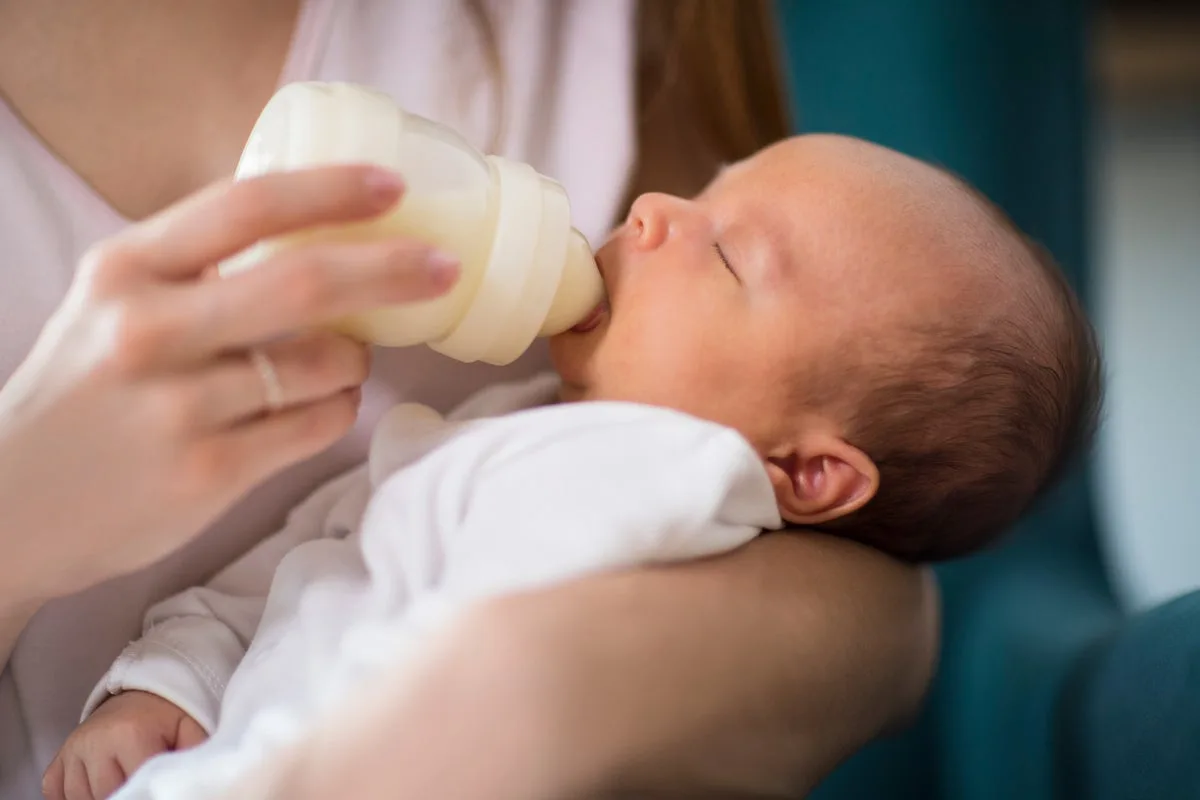
A unique California programme that provides the world's only treatment for potentially fatal infant botulism also sends personalised birthday cards to children who have recovered from the condition. Each year, staff at the state’s Infant Botulism Treatment and Prevention Program craft and dispatch around 200 cards to mark the recovery of affected infants.
Recently, many of the recipients have been U.S. babies affected by a botulism outbreak linked to contaminated ByHeart formula. Amy Mazziotti, from Burbank, California, received a birthday card for her son Hank in September, months after his 12-day hospitalisation for botulism contracted from the formula. “The fact that they take the time to send hand-drawn cards to each baby is incredibly special,” she said.
The cards are coordinated by programme assistant Robin Hinks, who decorates, tracks and mails them. “I am a big fan of drawing animals with party hats,” said Hinks, who favours crayons and coloured pencils. “Like, here’s a frog with some balloons and a little penguin.”
The programme’s primary purpose is to diagnose and treat infant botulism, which occurs when babies ingest spores that produce a toxin attacking the nervous system, causing paralysis. Death rates were once as high as 90 percent but are now less than 1 percent with treatment. The only treatment, known as BabyBIG, is an IV medication made from immunised adults’ blood plasma, and California’s programme is the sole source worldwide.
Because the disease is rare—about 200 cases treated each year—the centre has become a source of information and connection for families. Dr. Jessica Khouri, the programme’s senior medical officer, said: “Support of the babies and their families remains paramount to our program and our mission.” Heather Goody, of Gallipolis, Ohio, whose daughter MaryEllen contracted infant botulism in 2016, still runs a Facebook group, Infant Botulism Awareness, which now has over 500 members. She recalled how touching it was to receive a card on MaryEllen’s first birthday.
The late Dr. Stephen Arnon, who identified the rare form of botulism affecting babies under one in 1976 and spent 45 years developing the treatment, stayed in close touch with families. Today, nearly 1,500 families are part of the programme’s parent network, which includes children treated two decades ago. “Former patients have gone on to have families of their own and keep in touch with us,” Khouri said. “It really is an incredible part of the work we do.”




